Seoul: Mijae Kim has a talent for making room for new encounters and fresh synapses in one of the busiest cities in the world. For over two decades, she has brought people into orbit around one another, ushering them into different worlds and formats that feel both transportive and deeply rooted in Seoul’s cultural life. It’s an unassuming skill, and an even rarer one to sustain with appetite and modesty—navigating life as a young single parent when she began, and holding fast to the belief that, as our lives accelerate towards hyper-digitisation, gathering people in real time and asking them to interact remains essential.
In September, we finally opened Apartamento’s community in Seoul with Mijae, a moment long in the making. Our presence in the city has gradually taken shape through the pages of the magazine, from features on artist Hong Seung-Hye and graphic designer Na Kim to singer Oh Hyuk, painter Chung Eun Mo, designer Minjae Kim, and chef and restaurateur Daniel Bowien—each a vital thread in the web of community we continue to weave far from home. Our Seoul debut took the form of an Apartamento dinner at Geumdwaeji Sikdang, followed by a late-night afterparty at Nyapi. The evening was a collaboration with Mijae’s TEA Collective, her Korean tea project, which began in close conversation with local tea farms and has since expanded into a global practice rooted in tea culture, nature, and a quiet insistence on placing Korean tea at the forefront.
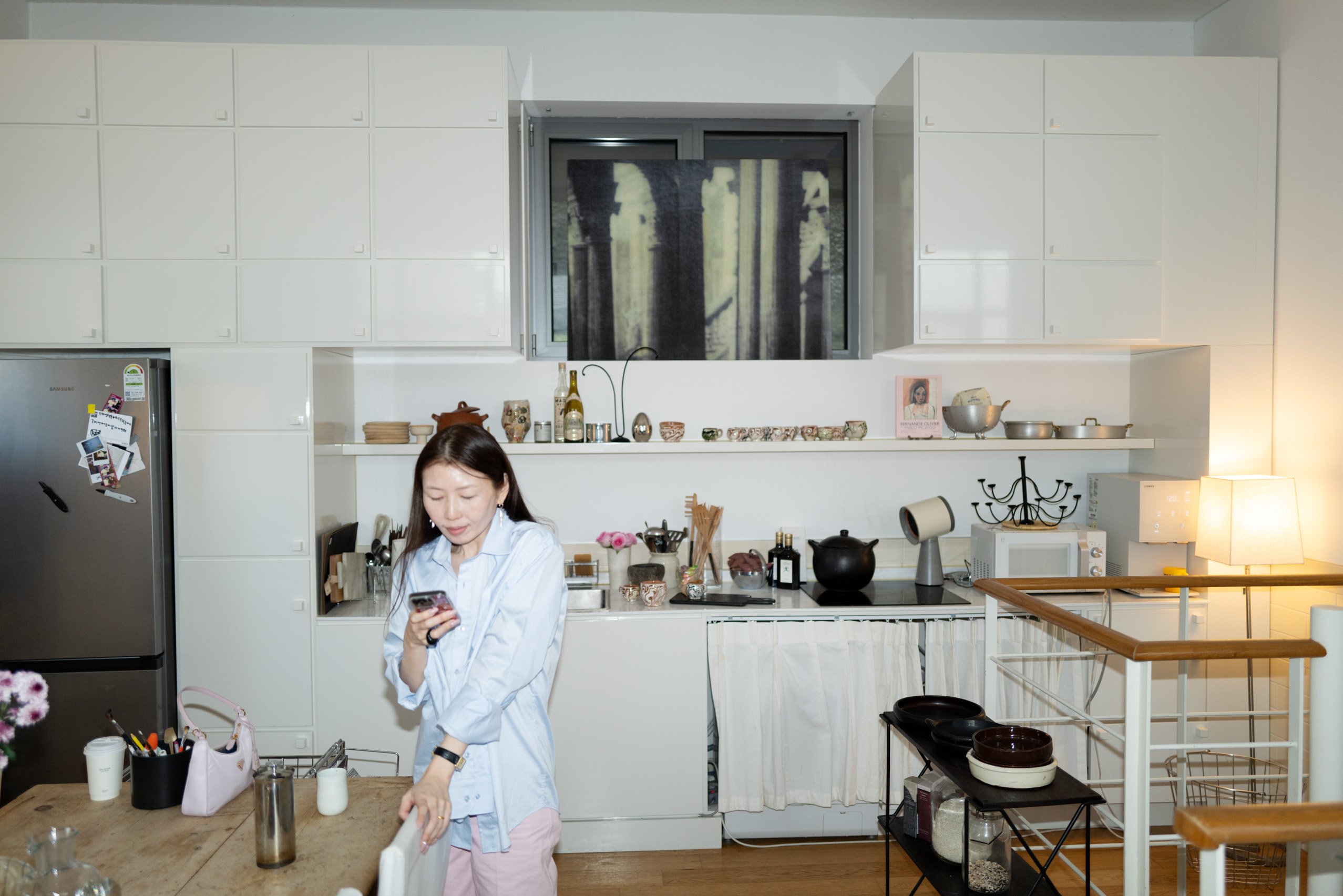
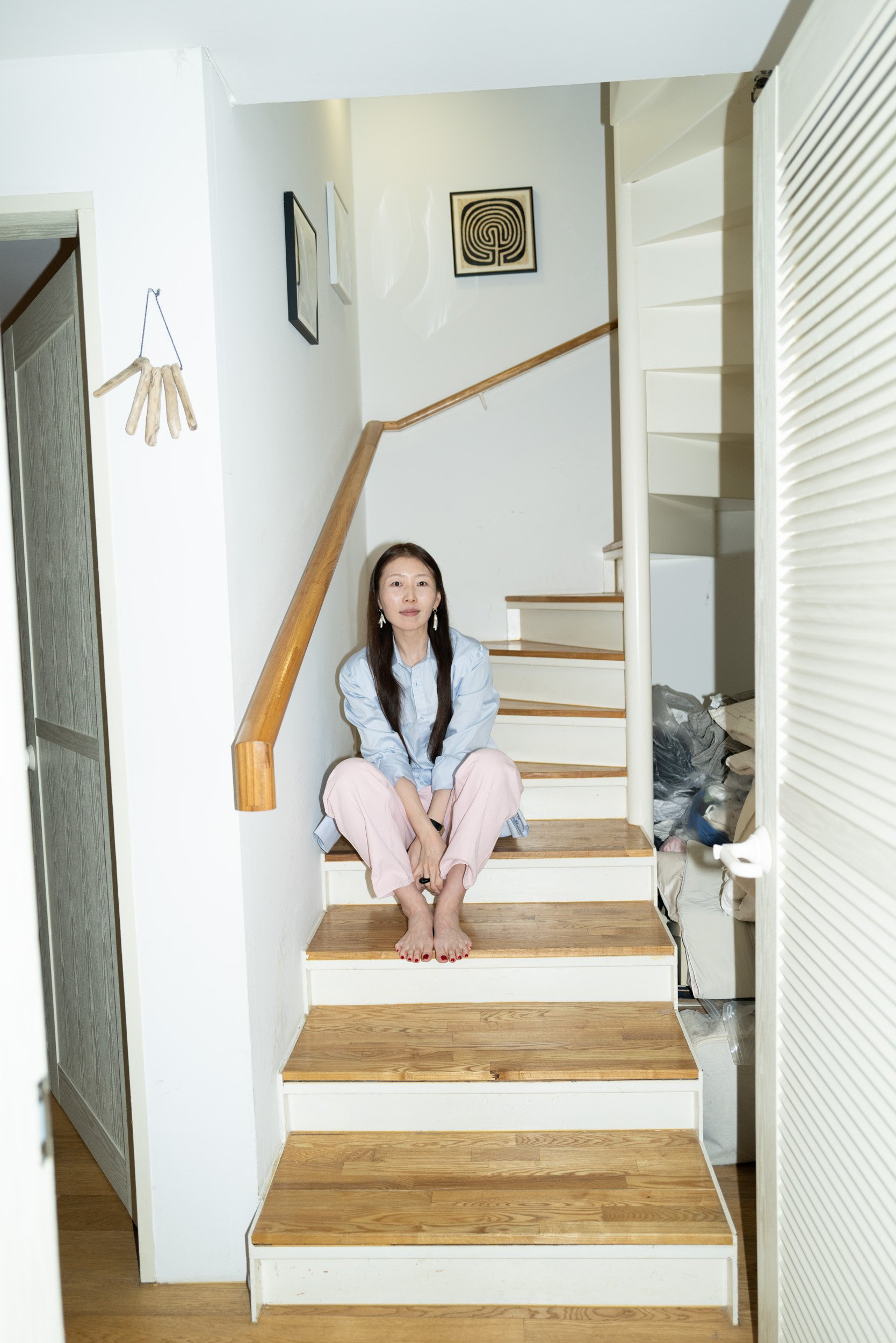
As Mijae guided us through the city—opening doors to readers, collaborators, and friends—we also followed her home. There, we spoke about 16 years of nomadic life before settling in Seoul; art direction alongside motherhood; and the idea of ‘spatial storytelling’ that underpins both her practice and her home.
A conversation with Mijae Kim
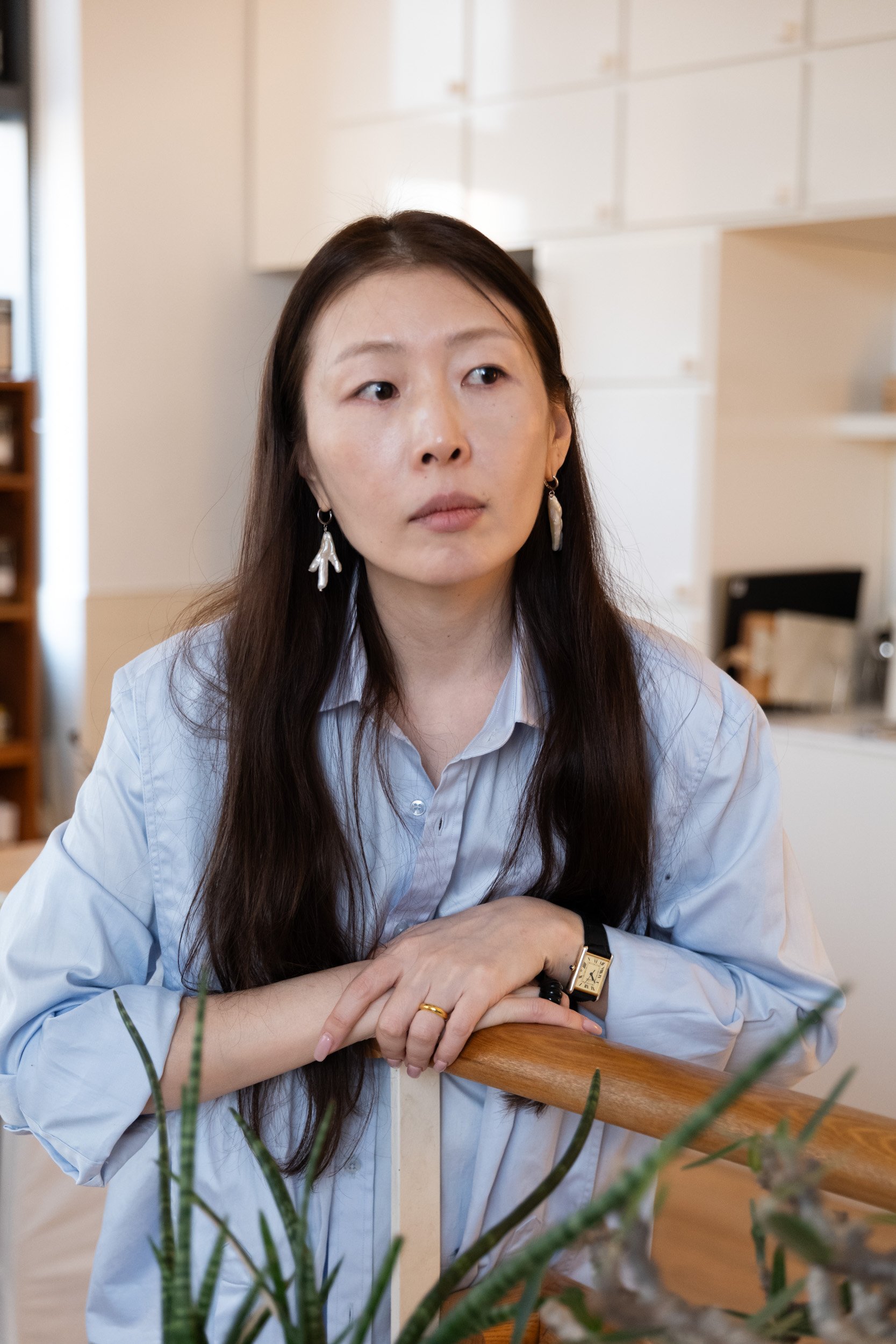
You were notorious for moving homes, cities, neighbourhoods, countries, throughout your youth. You lived in so many different places.
I grew up in Tokyo, then moved to London for university. And because it was London, and because I was young, I moved all the time: East, North, South. I never stayed anywhere for more than a year. After that I took a gap year and came to Seoul, completely alone. Until I met my husband and we moved in together six years ago, I moved every single year, for 16 years.
16 years! Do you miss it?
Not at all. I think I was able to do it because I somehow really desired it. In a way, it’s why I did my job so well. If I’d been satisfied with where I lived, I might not have fought as hard for my work when I was 20. But I always dreamed of one day being in one place.
How does Tokyo compare to London?
When I was a teenager, Tokyo felt like a bubble. It was hectic—Louis Vuittons everywhere, magazines, pop-ups, fashion brands exploding. It’s a bit like Seoul now. London felt much bigger. The people were completely different. They’re totally different because the people in Tokyo always care about each other, but the people in London, they don’t. It’s not about being selfish, they have their own character, they’re more independent, they do what they want. I’m really inspired by that. I was really a Japanese girl at heart at the time, so their freedom really shocked me.
What was it like moving from one ‘extreme’ city to the other?
I was homesick. I knew I had to get back to Seoul somehow, that’s why I went there for my gap year. I literally landed, rented a place, and flipped open a fashion magazine. I saw a job ad for a small clothing shop and applied. The owner then asked me to help her open a new café. The office was enormous and beautiful, unlike anything I’d seen, even in London. Suddenly I was doing interiors, branding, menu development, sourcing—I worked with her for two years. The café became very popular, and I ended up meeting a lot of creative people in Seoul. That experience made it clear I didn’t want to do just one thing. I wanted to oversee the whole process. I went back to London and did everything, even ventured into studying textile design. But my eyes were always open. After that, London became a lot more exciting.
Artment.dep, your Seoul-based creative studio, often speaks about ‘spatial storytelling’. What does that mean exactly? How do you practise it?
I named the company Artment.dep after a school or university department, the way you explore every corner of art in an art department. I always had the itch to do everything: graphic design, art direction, interiors, music, content creation, decoration. It’s exactly what I’m doing now.
For me, spatial storytelling isn’t about a grand narrative, it’s about the power of small details. When directing a space, I consider the texture of the menu paper, font size, lighting, even the movement of the staff as essential elements.
My goal is to ensure that from the moment you enter to the feeling that lingers after you leave, the experience has a consistent ‘tone and manner’. That unity is what creates the story. In the past, Seoul didn’t have many spaces with this kind of density or consistency. Recently, however, the younger generation has become very sensitive to these details, and I feel the city’s spaces are maturing and growing because of it.
You’re nearing your 200th project, is that correct?
180 last year. 200 this year.
How do you sustain that ambition? When does it become too much?
I’m not easily satisfied. I’m rarely happy with my work. A large part of those 200 projects happened in the last 10 years, during a period when Seoul was growing incredibly fast. I grew with it, at its speed. When I feel blocked, I go back to the beginning. I look at the references and the notes from meetings with clients. Sometimes a small detail from a client’s comment becomes the key solution. It can be overwhelming, but I’m curious—I get energy from people. My husband is the opposite. It sounds paradoxical because he’s a DJ and runs a club, but he gains energy from being alone. He doesn’t really want to see anyone. I refuel by diving into the social sphere of my work.
In a short piece for It’s Nice That, part of a series exploring the experiences of parents working in the creative industries, you spoke with striking honesty about how, before becoming a mother, you only cared about visual aesthetics. It’s a very interesting admission.
Before having my son, everything had to be exactly where I wanted it. A cup belonged in one precise spot, and it was forbidden for my partner or my mum to move it. With my son, I couldn’t be like that. I had to learn how to share my space, how to live with someone who needed to share it with me. Even when he was five or six, he understood this about me. He’d say, ‘Oh, mummy, this is your favourite tea, where should I put it?’ He always cared. And I still do, I care about placement and aesthetics, but through becoming a mother I now care in a very different way. He’s 15 now, and he’s perfect. He knows everything about me.
How did you balance being an art director and being a mother?
I had him when I was 26, so I was quite young. I worked incredibly hard because I had him. It catapulted both my personal life and my career. Actually, next year marks my 20th year.
In my 20s and 30s, there was no balance. I worked constantly, but I had my mum’s help. After she passed away 10 years ago, I moved in with my father—it was the hardest time of my life. After that, I really tried to find balance. Now I’m 41. I have a husband and a 15-year-old son, and my team is very small. This is my balance. COVID was really important for me. It forced me to regroup, make my team smaller, share my time with my family.
Are there similarities between the two roles?
At work, I try very hard to be a good listener—that’s the most important thing. I have to listen carefully to my clients and my team, otherwise it never works. It’s the same with my son. I don’t try to talk too much; I try to listen. That’s the point, in both roles.
Art direction, and the pretense of art direction, feels somehow omnipresent in this hyper-visual digital world we’re all subscribed to. Is it possible to stay authentic? How do you avoid imitation or superficiality?
I always ask my team, ‘If you were the customer, would you buy this? Would you actually use it?’ I’ve trained myself to think like this because Seoul is growing so exceptionally fast, and so many brands are copying each other. Cafés and shops open and disappear within months.
When a client comes to us saying they want to start a brand, I ask about their reason, the value, the motivation behind it. I want to help them build something that lasts. That’s what I respect about Japan and England: brands stay for longer.
That’s also why I started inviting brands from abroad to Seoul through pop-ups—Atelier September, Caro Editions, Gohar World, and you guys, Apartamento! People couldn’t understand why I was doing it, whether it was for money or for my portfolio. They couldn’t make sense of it. But especially at the beginning, I lost money doing it. I was exhausted, my team was exhausted. But it was the only way to communicate a brand’s identity and the person behind it, and to truly find an opening through which to communicate with people in Seoul.
Pop-ups sound simple, but to de-digitalise and ask people to engage, especially in a city like Seoul, is very hard.
We have Atelier September by Frederik Bille Brahe in common. We published the cookbook last year, and you hosted their spring pop-up in Seoul last May. It’s a book that somehow captures the quality of Danish daylight—how it feels and filters through a space—and how that light shapes the airiness and daytime joy of the food, both so defining of the project. Bringing that atmosphere into real life is a very different task. How did you approach translating that sense of ‘Danishness’ into Seoul in a way that felt genuine?
If it hadn’t been Atelier September, I couldn’t have done it. I believe in Frederik—his energy. Before agreeing, I had one condition: He had to come to Seoul. And he did, even with his three children and his busy schedule. We curated the menu in his style and furnished the space with HAY furniture. I focused on bringing the mood, pace, and warmth I felt when I first visited Atelier September in my 20s. I wanted Frederik to be there, smiling, talking to people. That was the most important part.
He brought Denmark to Seoul.
Exactly. Frederik is the key—just like Laila Gohar is the key. The founder or director carries the core value. They are the brand.
You founded Tea Collective, the first local Korean tea brand established by a design studio in Korea. How did it begin?
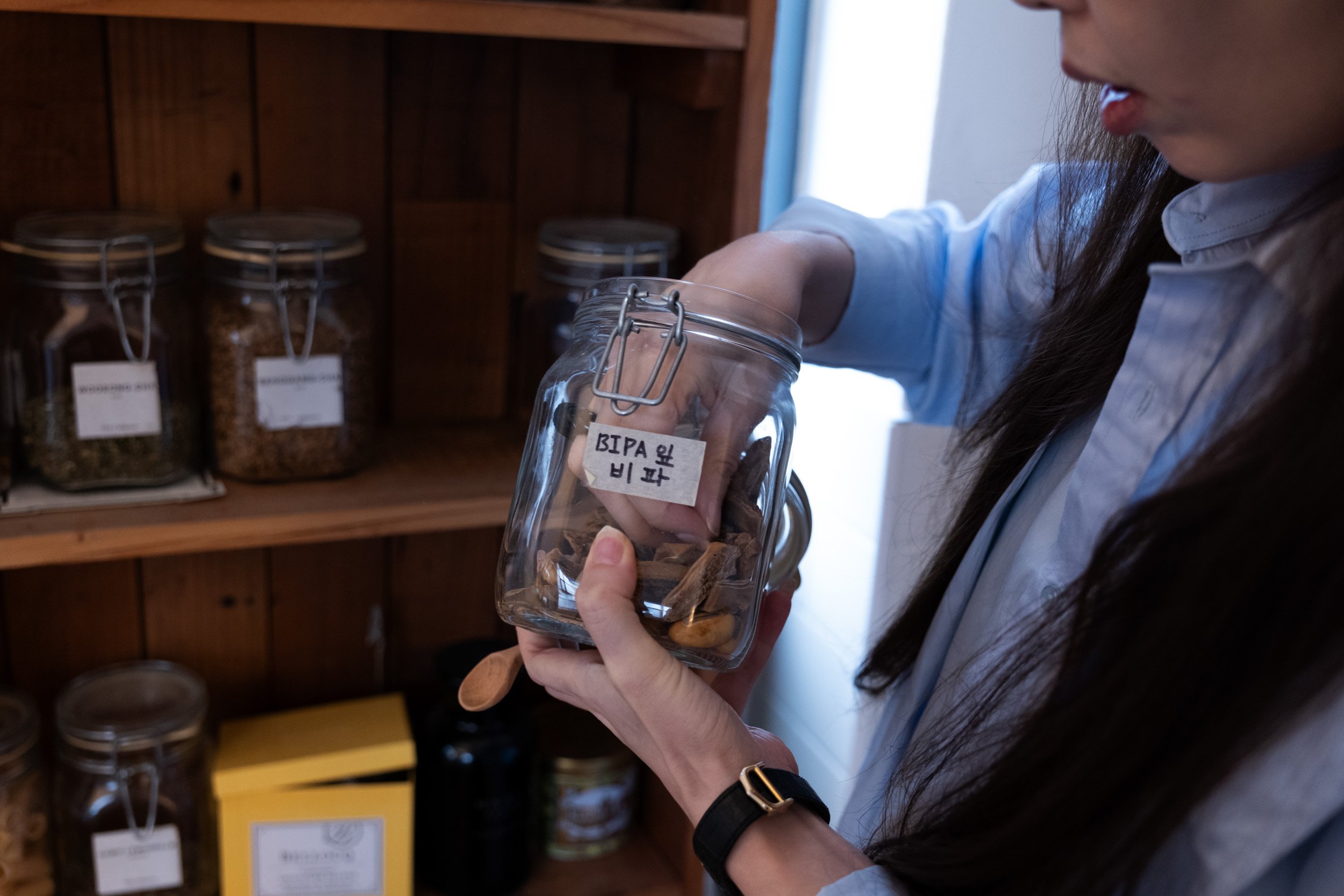
It began eight years ago, during a consulting project for Shinsegae Department Store. I was working on their lifestyle zone and proposed a tea space, but I couldn’t find the right Korean tea brand, so we created our own.
One of my designers travelled to Hadong County, four hours from Seoul, and went to the local community centre saying, ‘We’re a design studio from Seoul looking for the right tea farm’. That’s how it started. It began as a six-month pop-up, but it was pure joy. I loved Korean tea, yet none of my Japanese or European friends knew about it. I wanted to introduce it through design. I focused on packaging—expensive paper no one was using—and illustrated Hadong County.
At the time, I had two small ambitions: to be featured in Monocle, and to present the brand at the Freunde Von Freunden apartment in Berlin. Both happened. From there, collaborations followed—Aesop, Cartier, Cos, Blue Bottle. It was a new challenge, and I’m still doing it.
How do you make something so ancient feel contemporary?
When I started, there were no modern Korean tea cafés. Traditional tea rooms felt inaccessible to young people. I wanted to create a space that wasn’t traditional, but that wasn’t disconnected either—a place to relax, like a resort or spa. I mixed materials: ceramics from Mexico, glass from Germany, alongside Korean collaborations. If it was too traditionally Korean, it would be limiting and I knew that.
Has tea culture changed anything about your everyday life?
Tea forces you to stop. Even for five minutes, it’s your time. It helps me pace my day and regulate my body. It’s a small retreat I never had before. I drink tea with my son and husband now—they didn’t before. It’s not a ritual, just a family drink. When you’re cold, you drink this tea. When you’re anxious, you drink that tea. Korean tea is easy, that’s what I love about it.
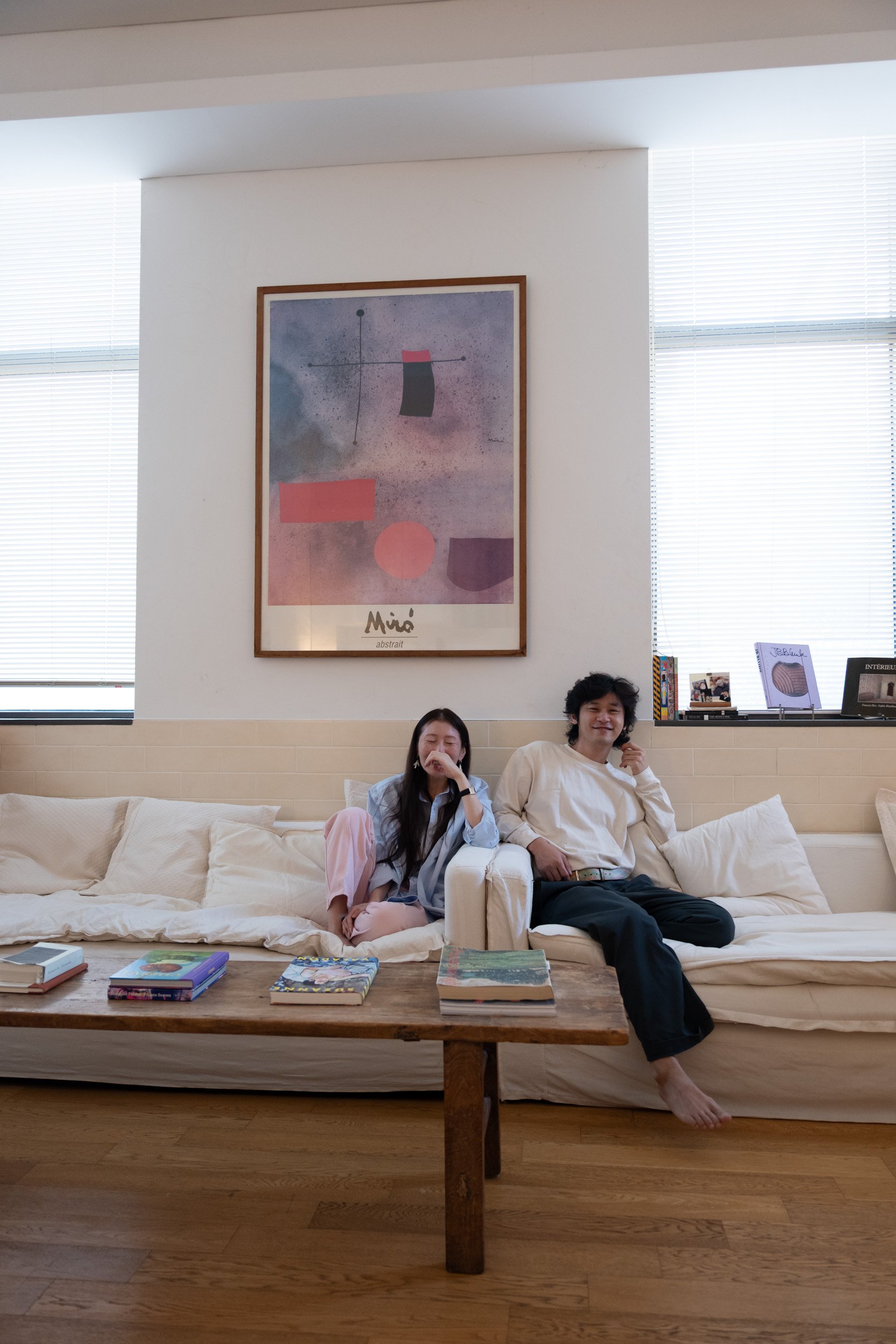
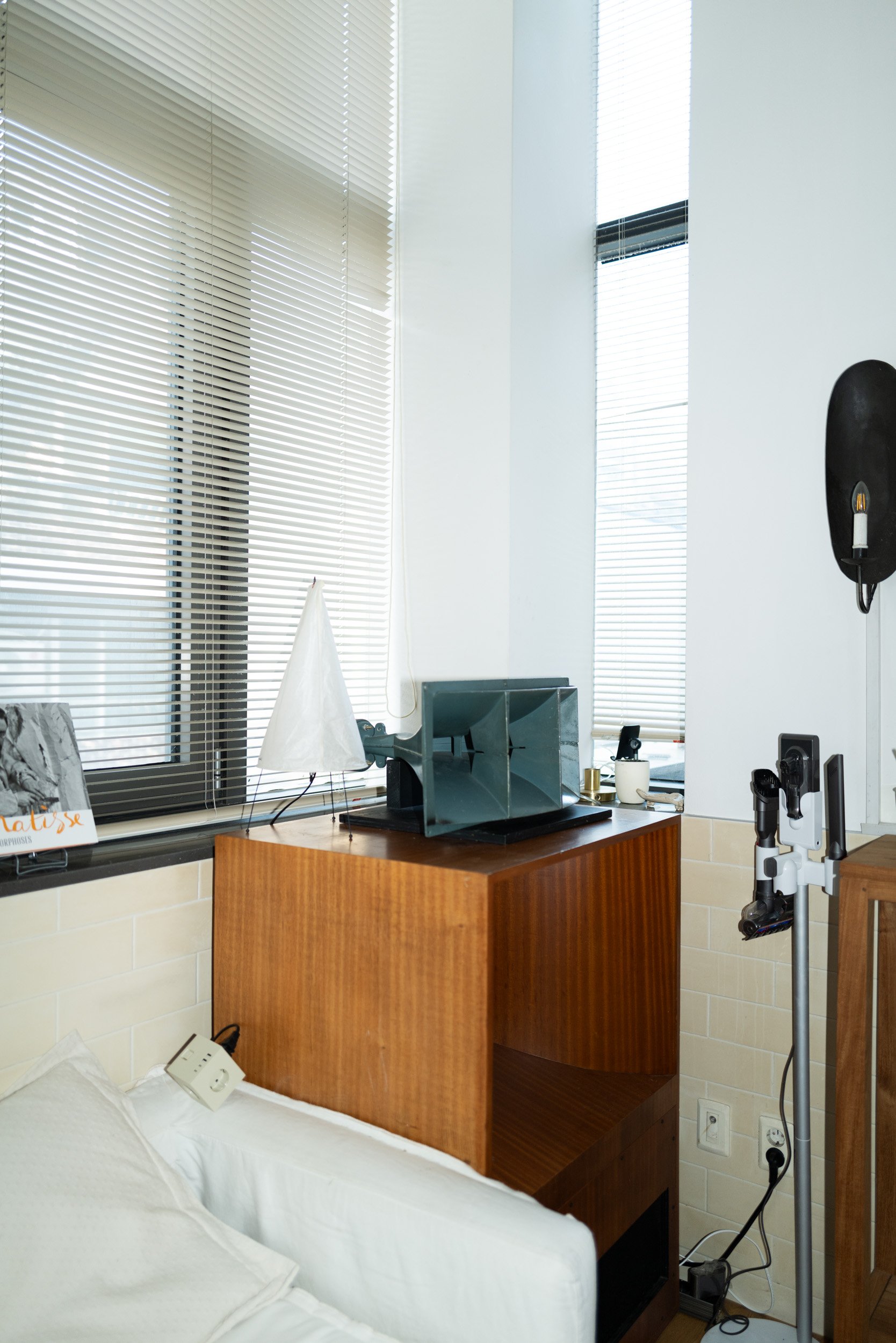
Tell us a little about this apartment. There seems to be a balance between the soft light that filters in and the artificial light throughout the house.
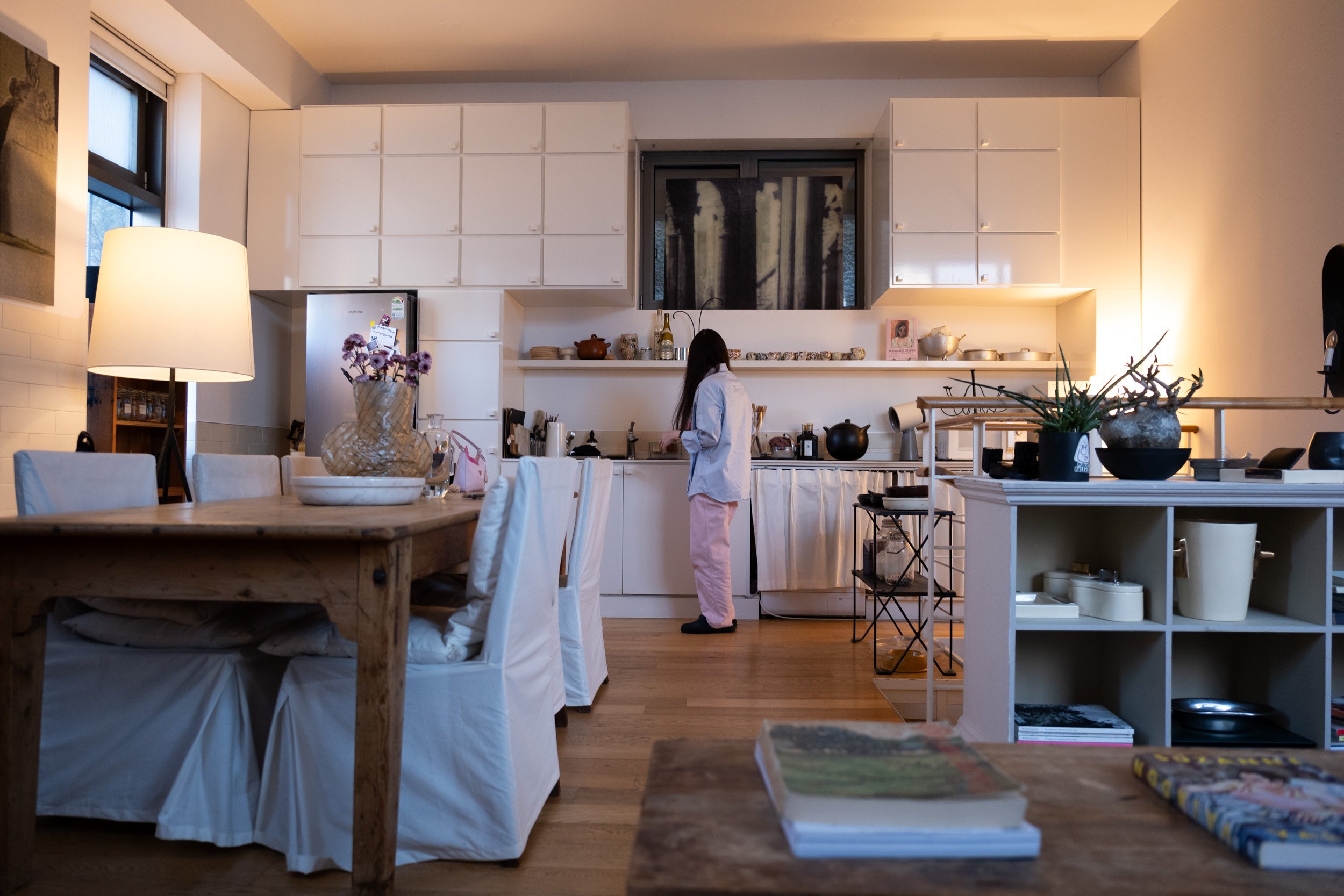
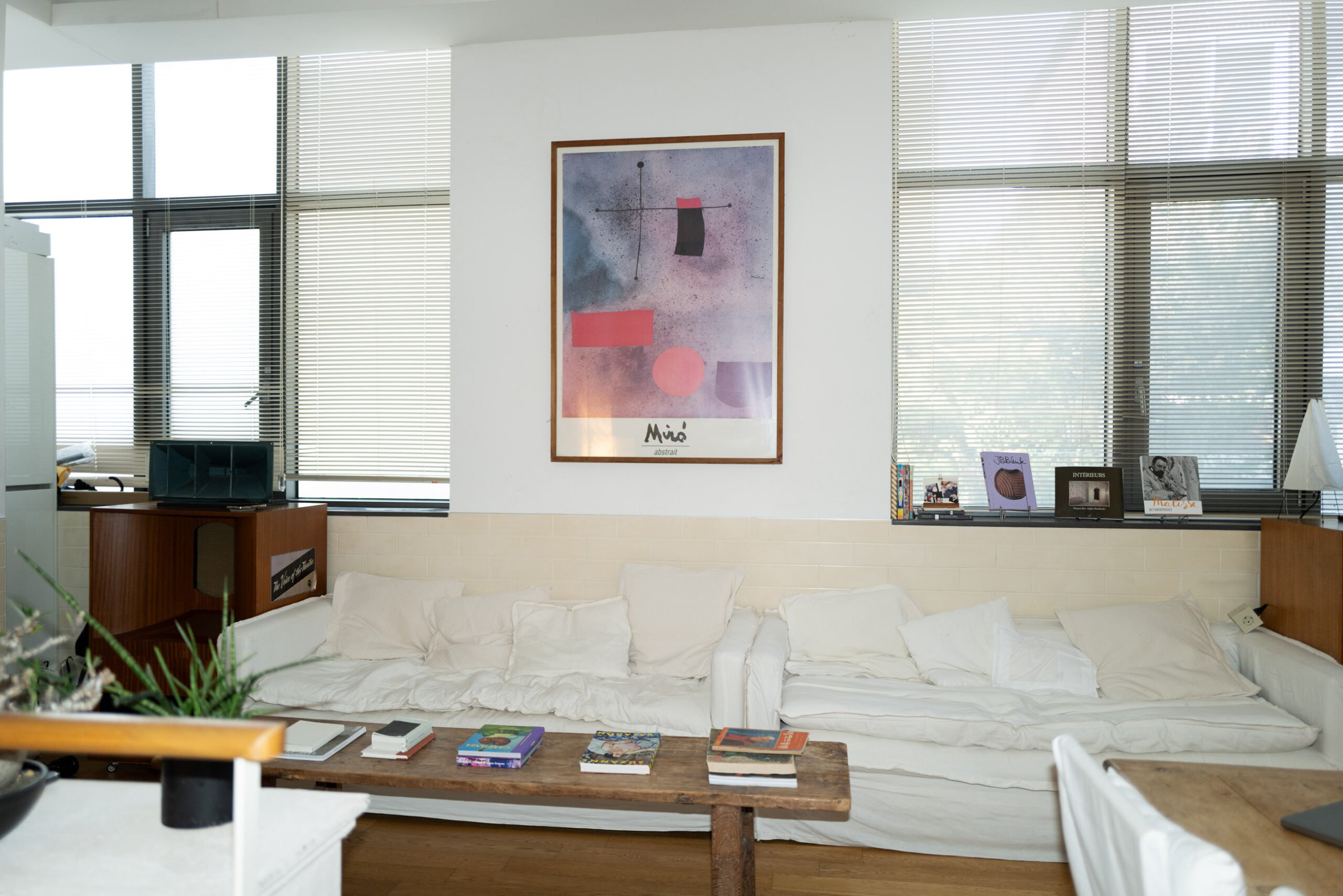
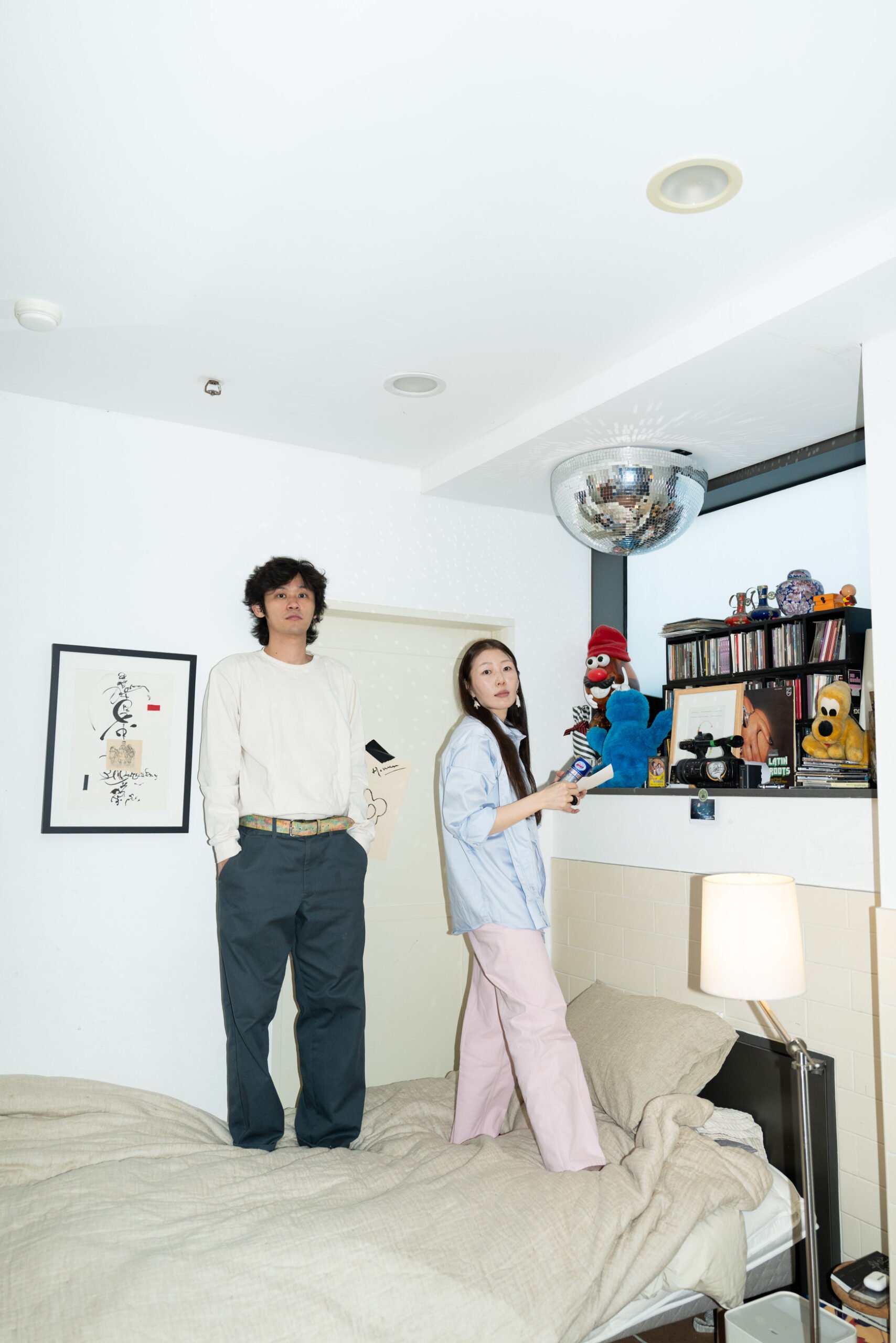
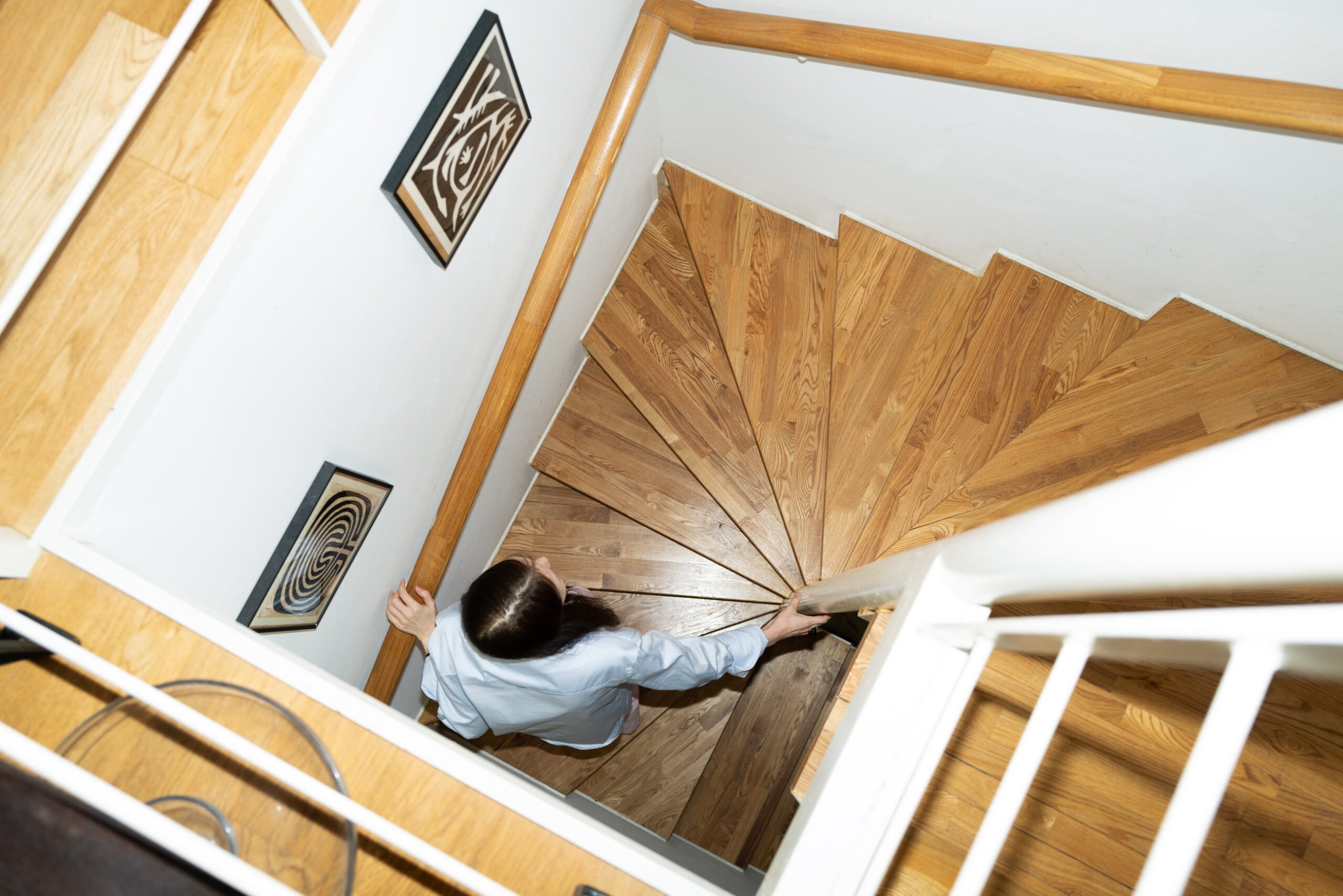
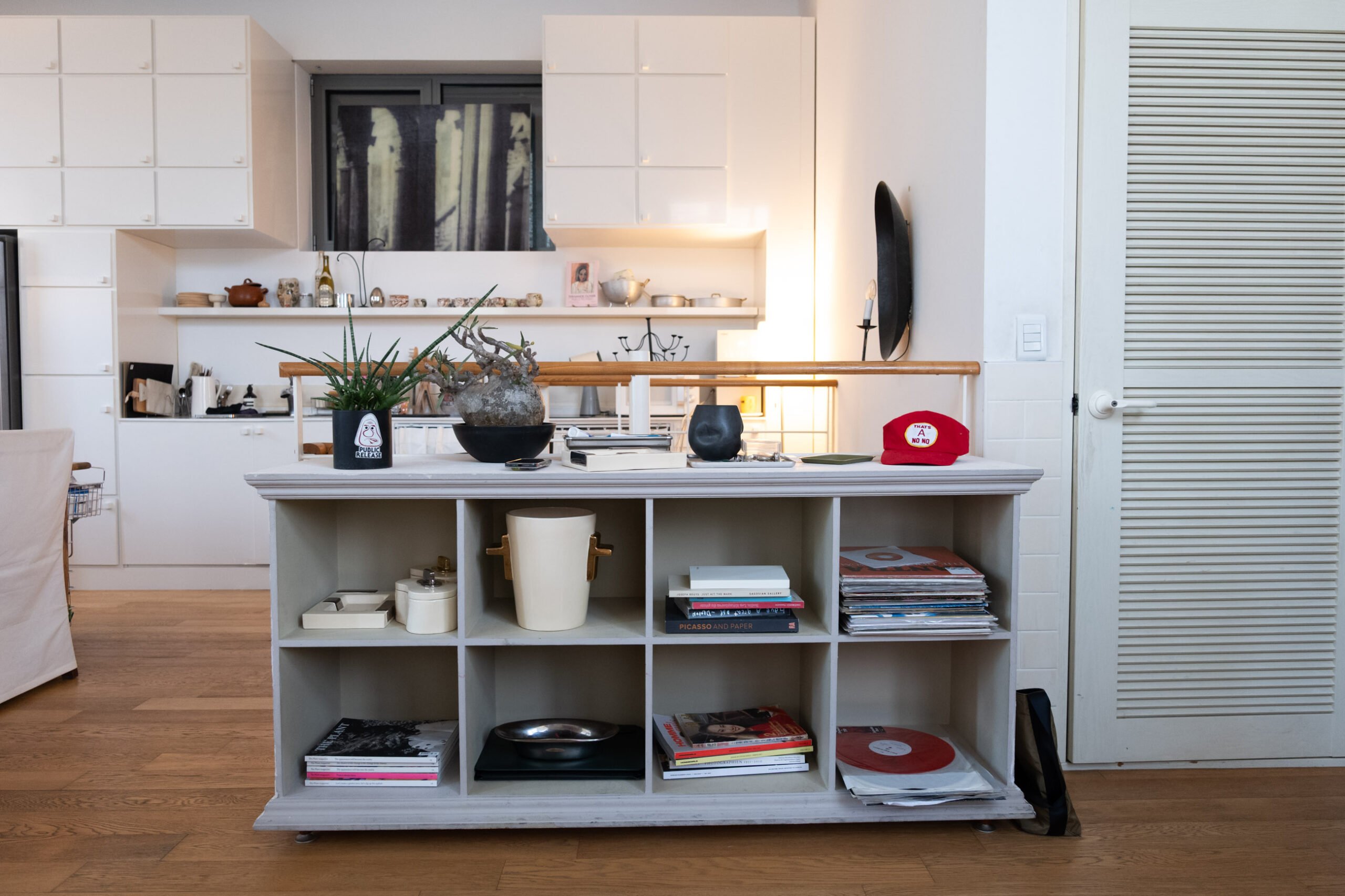
My husband FFAN, my son Gyuha, and I all have different characters, but we are all quite delicate people. Even though we live together, we needed a home where we could each have our own corners to breathe and recharge. So, I try to maintain a subtle balance in our home—not too perfectly organised, but not messy either. It is a private sanctuary that embraces our distinct sensitivities. Most apartments in Seoul have standard ceilings of about 2.8 to 3 metres, but the deciding factor for this place was its 4-metre high ceilings. With high ceilings in the living room and kitchen, a duplex structure, and terraces on each floor, it creates a sense of openness that is rare here. Despite its small physical footprint, it never feels cramped.
It feels like the home centres around this table.
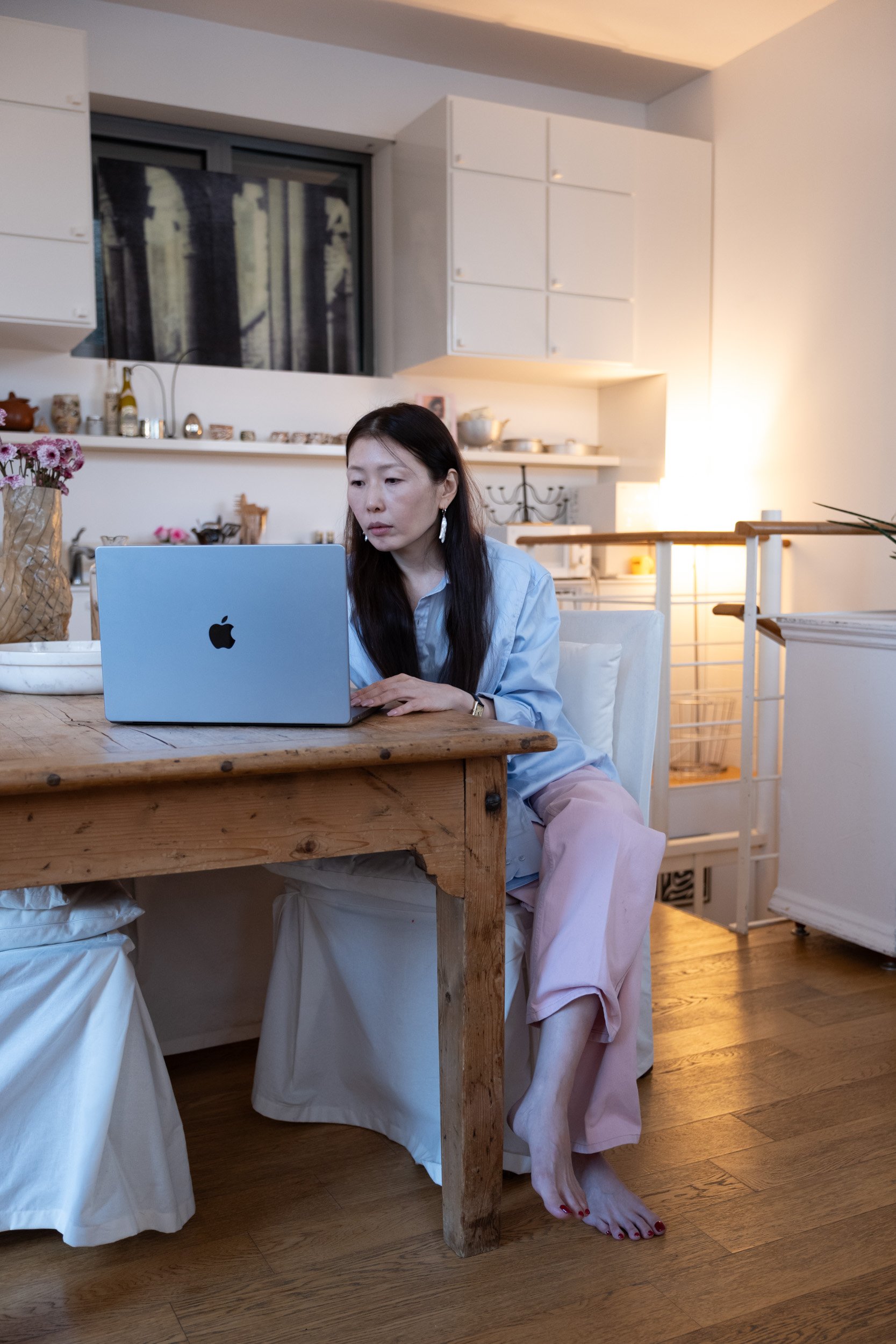
It’s my favourite object in the house. It has quite a history. It’s an old wooden table imported from LA; it used to sit by the window at Tea Collective, and it even anchored the centre of the Atelier September pop-up in Seoul. Now, it serves its purpose in our home. It’s large enough for 10 people to squeeze in, and we use it to share meals, drink wine, talk endlessly. It ages beautifully with time and is the piece of furniture that holds the most stories of my life.
You’ve also created sound walks and playlists for Tea Collective. Why music?
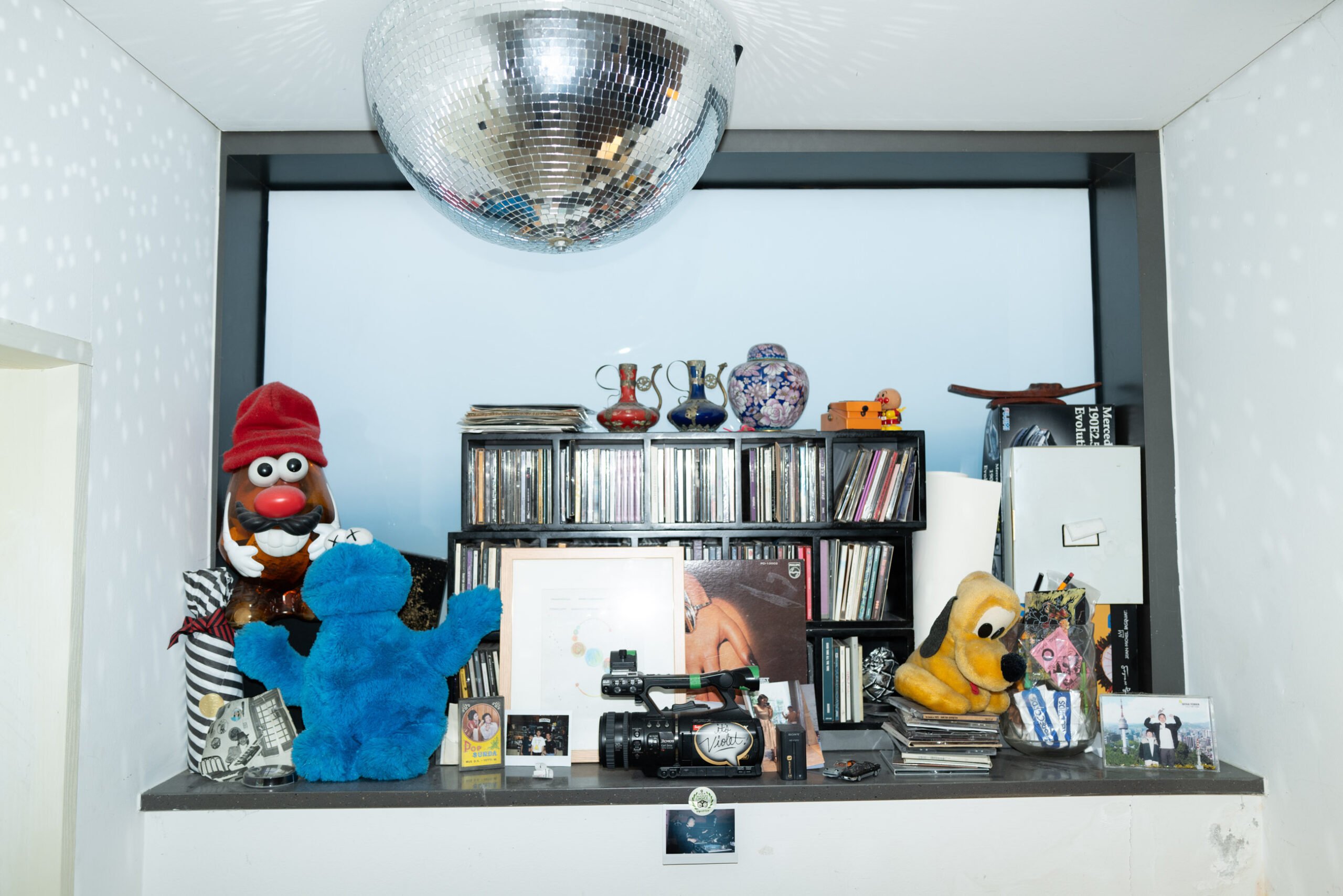
They started during COVID, after I closed my café. Without a physical space, I needed another way to communicate mood and values—so I chose music. I was inspired by my husband, who’s, as I mentioned, a techno DJ. I began uploading one playlist a month, with new artwork. After a year, we hosted an offline listening event, masked, of course, where my husband played records and we drank tea together. At that time, I worried I might have to quit the brand. But feeling that connection moved me deeply. Music resets me. It gives me energy. That’s why I still go to Nyapi, the club my husband runs—the same one where we hosted Apartamento’s afterparty. Music is the second thing I love most.
Would you ever be a musician?
Not in this life. Maybe the next.
So what’s next, in this life?
Realistically, many collaborations—artists and chefs from abroad. Pop-ups, presentations. Sophie Bille Brahe in February, then Simuero’s first Seoul pop-up, and then a café pop-up and food class with a very exciting person. We’re also opening a Tea Collective flagship store and small tea room in January. My team will stay small. I don’t want to grow bigger, I want to focus on what we can do well. With AI, we can handle projects more efficiently. We’re also looking towards Europe. During Salone in Milan, I’m planning a Tea Collective pop-up. I’m excited.
So we’ll definitely see you at Salone then!
Yes, come say hi!
Related stories
Xavier Mañosa’s Ceramic Bookstand

Solange Knowles
Vila Atelier Mathé
 close
close
01/12

02/12

03/12

04/12

05/12

06/12

07/12

08/12

09/12

10/12

11/12

12/12