
A conversation with</br>Laura Amelia Guzmán & Israel Cárdenas

A conversation with
Laura Amelia Guzmán & Israel Cárdenas

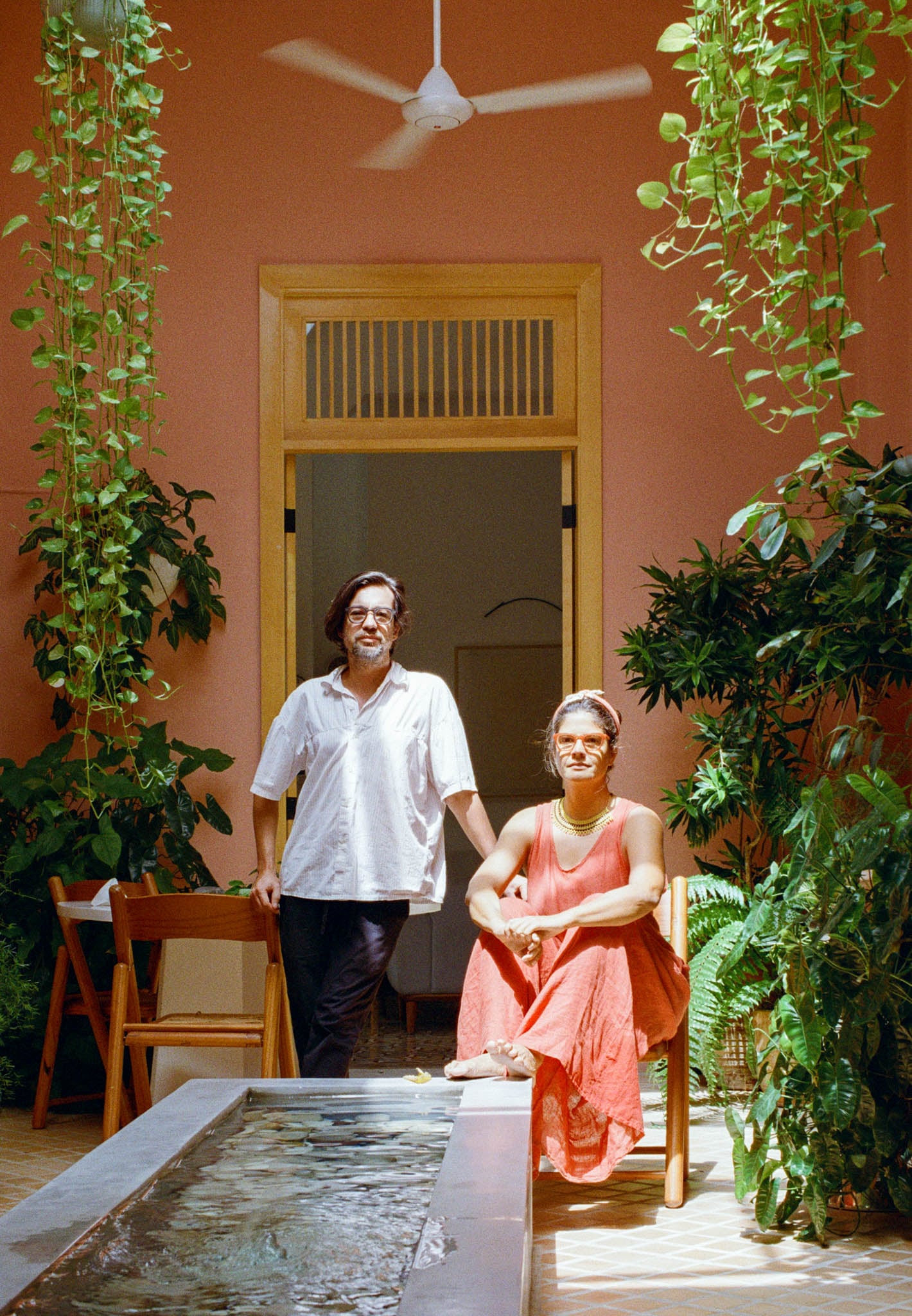
Santo Domingo: Laura Amelia Guzmán and Israel Cárdenas fell in love filming a movie 20 years ago, and have been together ever since. Their relationship, like their lives, is deeply entangled with cinema. Everything they experience feeds into their work, beginning with their home countries: the Dominican Republic and Mexico. Across more than seven feature films, for which they share script, production, and direction credits, locality is a force whose pervasive presence is impossible to overlook. Spanish, Rarámuri, French, English, and Haitian Creole are among the languages that appear in their films, pointing to the linguistic diversity and complex cultural identity of the Caribbean. Out of the totality that is cinema, they create immersive, self-contained worlds that extend beyond the screen and linger long after the film has ended.

When I first encountered their work, I was struck by its honesty, and when I encountered them for the first time, I understood where it comes from. In Dólares de Arena (2014), one of their most acclaimed films, French actress Géraldine Chaplin is capable of conveying an entire world through a single expression or a moment of silence. How can a director elicit such a thing? Laura and Israel explain to me that their way of working consists of leaving space—for actors to play, for audiences to interpret. Allowing things to unfold according to their own internal logic. Imposing order only in the assembling process.

As the years have passed, and because of the stability family life requires, they stress the importance of drawing a line between work and personal life. Yet they refuse to give up that symbiosis, that cross-contamination, and cannot imagine one without the other. As Laura admits to me: ‘The thing is… cinema is life’.
Apartamento Magazine - A conversation with</br>Laura Amelia Guzmán & Israel Cárdenas

You both began your careers in photography. Do you think that background translates into the films you make today? Is there still a strong influence from those early years?

Israel Cárdenas: I really enjoy recording images, but moving images rather than still photographs. I hardly ever take photos. I’m very connected to storytelling through images. Cinema is like photography: composition, colour, all of that is always there. Generally speaking, I’m the one who takes primary responsibility for the cinematography of our films. Right now we’re working on a project that relies heavily on archive material, images, and photographs taken by other people. The challenge is figuring out how to convey something with that.

Laura Amelia Guzmán: Honestly, I would like to think that photography carries as much weight as narrative, or even that narrative is more important than photography. I don’t like it when people watch a movie of ours and say, ‘The cinematography is beautiful’. The image is just one of the elements, but I don’t give it greater protagonism than the others. Maybe when we were younger we did, but not so much anymore. I think the most important thing is both the sound and what you’re feeling, what is happening before you. Music is as powerful as the image; it is crucial in creating a tone or ambiance. Dialogue, atmosphere, and sound all play an important role in cinema. Everything is interconnected, and part of a whole.

Even though you have this holistic view of cinema, is there any particular aspect of filmmaking that you enjoy the most?

Israel: What I’ve been working on more lately, and what I’m really enjoying, is film editing. I feel it’s a way of rewriting, or even writing. Mostly now, working with archival material, it’s like taking pieces and slowly putting them together. I find that very liberating. It’s very different from other film projects we’ve worked on, where you have to write, convince a lot of people, raise money, oversee pre-production, production, post-production… It’s a very rich process because it generates teamwork, which is one of the unique aspects of filmmaking, but at the same time it can be limiting. Right now, we’re exploring another way of making and telling stories.

Laura: Israel has always edited and assembled our films. I feel that’s where they really happen. Usually it’s a process that lasts anywhere from nine to 12 months. Then come the surprises; new histories emerge, new nuances that you didn’t find during the filming process. A whole world of possibilities opens up and, as Israel mentioned, even the possibility of rewriting.

Israel: Yes, a lot can happen. Even to the point where you say, ‘You know what? We’re going to reshoot this scene because it can completely change the meaning of the film’. We take a long time, but that’s also because we’re not working on the film continuously. We also believe that stepping away from the films we’ve written, edited, photographed, and directed is necessary to reenter the project with fresh eyes.

Apartamento Magazine - A conversation with</br>Laura Amelia Guzmán & Israel Cárdenas

When you begin a new project, what is the first thing that comes to you? Is it the story, the characters, the message, or does it depend on the film?

Laura: It depends on the film. For example, with a film we made called La Hembrita (2023), it started with an image and a feeling. From that point on, it was about how to extend that, and to find the reason why that sensation felt so important to me.

An image triggered the idea for an entire film?

Laura: Yes.

Israel: Of course, it depends on the project. It can be an idea, an image… Dólares de Arena, for example, started with the music—with Ramón Cordero’s bachata. There was a recurring piece of music, and the movie started to emerge from that.

Dólares de Arena, which would become the Dominican Republic’s submission to the Academy Awards, is based on a novel set in Las Terrenas. What was it about the book that stood out as meriting adaptation to film?

Laura: It was the locality. We were looking for a story to tell in that town, and we found this novel through a friend who had translated it. Through him, it was also easier to get in touch with the author. Las Terrenas is a town I’ve been visiting since I was a child, and I’ve watched it transform from a small fishing village into a tourist hub. We were particularly interested in the relationship between locals and foreigners. At the same time, something interesting happened within the novel: the author, despite being a foreigner, came across more native than I did, even though I am Dominican and local myself. He had achieved immersion in the local culture in a way that I found very surprising. That’s what made me want to adapt it.

Apartamento Magazine - A conversation with</br>Laura Amelia Guzmán & Israel Cárdenas

Did you stay in close contact with the author during the adaptation? How did he respond to the changes you made?

Laura: Throughout the scriptwriting process, we shared several versions with him. He was very curious to see the finished film, and he even came to the premiere in Toronto. He was deeply moved by it. He said that his book had grown enormously through the film.
The story was originally set between two men, and we transformed it to two women. We found an actress, Géraldine Chaplin, whom we had initially imagined for a secondary role. But when we came to realise her enthusiasm and great interest in working on this movie, we thought, ‘What if she were the main character?’ From that moment on, we claimed the story as our own. It became something completely different.

That decision really stood out to me, because I imagine it must have triggered many other changes. Changing the gender of both protagonists is going to inevitably change their relationship.

Israel: Yes, it was intentional. To distance ourselves a bit from the book and from the expectation of making a good, faithful adaptation. We wanted to tell our own story, while sharing a common starting point with the novel. It became a dialogue between the two: You can watch the film and then read the book, and certain things complement one another and vice versa. We wanted to make room for a different work to exist, rather than make a literal adaptation of the novel. So yes, it changed quite a lot, but it was a shake-up that we needed at that moment.

It was also the first time you worked with professional actors, right? How did that change the filming experience?

Laura: It was a joy and pleasure to work with Géraldine Chaplin as the first trained actress we ever directed. She’s fearless and very professional, very rigorous, but she also loves playing and having fun. And we love exploring through staging. We try many different things; we’re the kind of filmmakers who will do 15 takes. We often start with one thing and end up somewhere completely different. There are some actors that don’t know how to play this game. They’ll say, ‘No, but that’s not what was in the script’.

Since it was a pairing between a non-actress, Yanet Mojica, and a very experienced one, rather than expecting the former to rise to her level, Géraldine chose to play the game and let the process guide her. She was very authentic and gave a great deal of herself to the character. She found a balance and was very smart in her relationship with the young girl. She behaved almost the same way with her on and off-camera, so as to not confuse her.

Israel: Géraldine is extraordinary. As Laura says, for many other actors trained in a different tradition, skipping a line can create conflict—a kind of impasse in the work.

Apartamento Magazine - A conversation with</br>Laura Amelia Guzmán & Israel Cárdenas

I can imagine how this way of working—leaving room for freedom and improvisation—must lead to unexpected things that wouldn’t occur under a very rigid plan.

Laura: Absolutely.

Israel: Yes. There’s more surprise, more discovery. Personally, I find it difficult to think that I am in complete control of everything. I like leaving windows open, creating possibilities for things to develop according to their own logic. With every project, we like to follow what we encounter along the way, and often the pieces we find already carry their own tone, their own colour, their own way of telling their story. I really like that because it makes me feel like I’m witnessing something that we are enabling and documenting. That’s also why editing has become so important, because it’s where all these unforeseen elements are organised. And with actors, instead of limiting them, we let them teach us. We let them express themselves as they are, and then we bring things into line.

One thing I particularly appreciated about Dólares de Arena is that it doesn’t impose an opinion on the viewer. You achieve telling a story without passing judgement.

Laura: I think that’s the richest aspect of filmmaking for us—you’ll generally find that in our work. We won’t tell you how you should watch a film. We even like the audience to feed the story with their own experiences, and arrive at whatever interpretation they want to have. When I watch films that allow me that freedom, I leave feeling enriched because I feel like I’m part of the story.

Israel: I think it comes down to where you position yourself in relation to the story—from where you’re looking at it. And then it’s also about keeping that distance throughout the process so that, later in the editing room, you can make different choices; ‘We have this version where this character makes a certain decision; we already shot it, but what if they didn’t make that decision?’ That’s where the game begins: how much space do you leave for the viewer to resolve the scene through his own experiences?

Laura: We often shoot multiple versions of things. Since we’re two directors, whenever we don’t completely agree, our strategy is to film both options and let the editing decide. That way we already have different perspectives from which to tell the same story. This happens mainly with our endings. For almost every one of our films, we shoot multiple endings. Then, as the story unfolds, it will ask for the appropriate one.

Apartamento Magazine - A conversation with</br>Laura Amelia Guzmán & Israel Cárdenas

What is it like working together as a couple? How has your relationship evolved over the course of these 20 years?

Laura: We fell in love shooting a movie together. For us, that is the foundation of our relationship: creative work. There’s never been much separation between home life and work time; we’re always working. And that can get exhausting. Over the course of these 20 years, we’ve had to learn how to set boundaries, how to recognise when it’s time to stop, break away, and talk about something else. But, the thing is… cinema is life. Everything we experience feeds our cinema.

And yes, things have changed. When we started with our first film, that was all we did. We were both 100% focused and devoted to that film. As the years go by, life fills up with other things: First children, then there’s other projects. Israel works as an editor on other films, and I sometimes notice new things he brings back to our writing table—ideas and working methods. For me, that’s very enriching, because suddenly I’m learning from other directors through him.

Do you have a set way of dividing the work on your projects?

Israel: It depends on who brings what curiosity or concern to the project. We’ll organically say ‘I think this task is yours, it’s coming naturally to you. Keep going in that direction, and I’ll focus more on this other area’. There are so many different crafts within filmmaking that you can never really run out of things to do. For example, La hembrita was a world that Laura had a much clearer vision of, and so I placed myself at the service of that vision, of that world. Then there are other projects where I bring an idea to the table and, as the project grows, Laura joins in through a particular role or area of expertise. We adjust our responsibilities depending on the project.

La fiera y la fiesta (2019) follows an actress at the end of her career who is about to film her last movie, a movie about the legacy of one of her closest friends, Jean-Louis Jorge. What did this layered ‘film within a film’ structure allow you to express that a more linear narrative couldn’t?

Israel: Jean-Louis Jorge was Laura’s uncle/godfather. That’s how the project began. He was among the first filmmakers here in the Dominican Republic, and everything he wrote had to do with what happens behind the scenes—the backstage at a theater or the dressing rooms of a cabaret—so we naturally decided to use the filming process of a movie as the setting for ours. That was the starting point. Then we started noticing that this director’s work was very fragmented, made up of small moments—highly melodramatic at times, and almost fantastic at others.

Laura: Yes, it was almost like a conversation with him. He died when I was 20 years old, before I realised I wanted to work in filmmaking. I wanted to get to know him as a filmmaker; I already knew him very well as a person, but not through his work. I also wanted to give continuity to his work, to preserve it and remember him.

Apartamento Magazine - A conversation with</br>Laura Amelia Guzmán & Israel Cárdenas

Do you think that personal connection added a kind of pressure that you hadn’t felt with your other films?

Laura: In my case, there was an important familiar component and I experienced it from a different place, almost as if it was a gift to my parents. His death had been so painful that many people chose to create distance in order to protect themselves. My parents, however, never forgot him; he was always present. My hope with this film was that when you watched it, even though you never actually saw him, you would somehow feel him—almost smell his presence. And of course, I cared deeply about how my mother would react when she saw it. She cried a lot, but she also really appreciated it. His entire generation of friends was grateful that this document existed, that this work endures  as an homage to him.

Israel: I never met him, so my relationship was very different to Laura’s. In that sense, I didn’t feel any kind of pressure or fear. I wasn’t thinking of meeting anyone’s expectations. Rather, I was simply focusing on what I was finding in his writings and photographs, trying to communicate something through them—that was my approach. I thought, ‘I’m working with someone who is no longer here, physically present, but who still exists in memory’. It was like working with ghosts and that has always fascinated me, because cinema itself is made of ghosts: images that preserve an energy, even though they aren’t necessarily physical or tangible.

Apartamento Magazine - A conversation with</br>Laura Amelia Guzmán & Israel Cárdenas

In Interior Apartamento Día (2025), your most recent film, you explore expectations and the ways professional success can affect one’s identity and self-worth. Have you ever felt professional success as a weight throughout your career?

Laura: That’s an interesting way of putting it. Professional success as a weight—yes, it can be. You always want to do better, and it’s not easy. I feel that, throughout our career, cinema itself has changed, along with the way it is perceived. Movie theaters have gradually disappeared, streaming and digital platforms have become more dominant, and television series have taken on a greater role. All of this implies a different way of living cinema and perceiving success. For us, success has always meant the same: a movie giving us the possibility of making a new one.

Israel: Yes, I completely agree. It’s also true that the idea of ‘success’ is very relative. Every film sets itself a particular challenge or goal—reaching and engaging with a particular audience, or simply expressing something internal. Each film has its own version of success as a project. If the movie we’re making allows us to keep working on what we love, that is already a very good starting point. I think every profession defines you as a person in some way. Sometimes more, sometimes less, but it shapes how you live your life and the way you engage with the things around you. We’ve learnt how to live our lives with cinema in between.

Laura: What really brought about a big change in our cinema is the stability that home and family demands. When Isra and I didn’t have children or they were still little, we would move from one place to another much more easily. In fact, our early films were so distinct because we were constantly changing locations; moving between Mexico and the Dominican Republic, between the country and the city… But as the children grew older, we started to stabilise ourselves. And then the creative search became more internal; it was less about observing others or working in faraway places. The gaze was redirected towards ourselves, inward.

Apartamento Magazine - A conversation with</br>Laura Amelia Guzmán & Israel Cárdenas

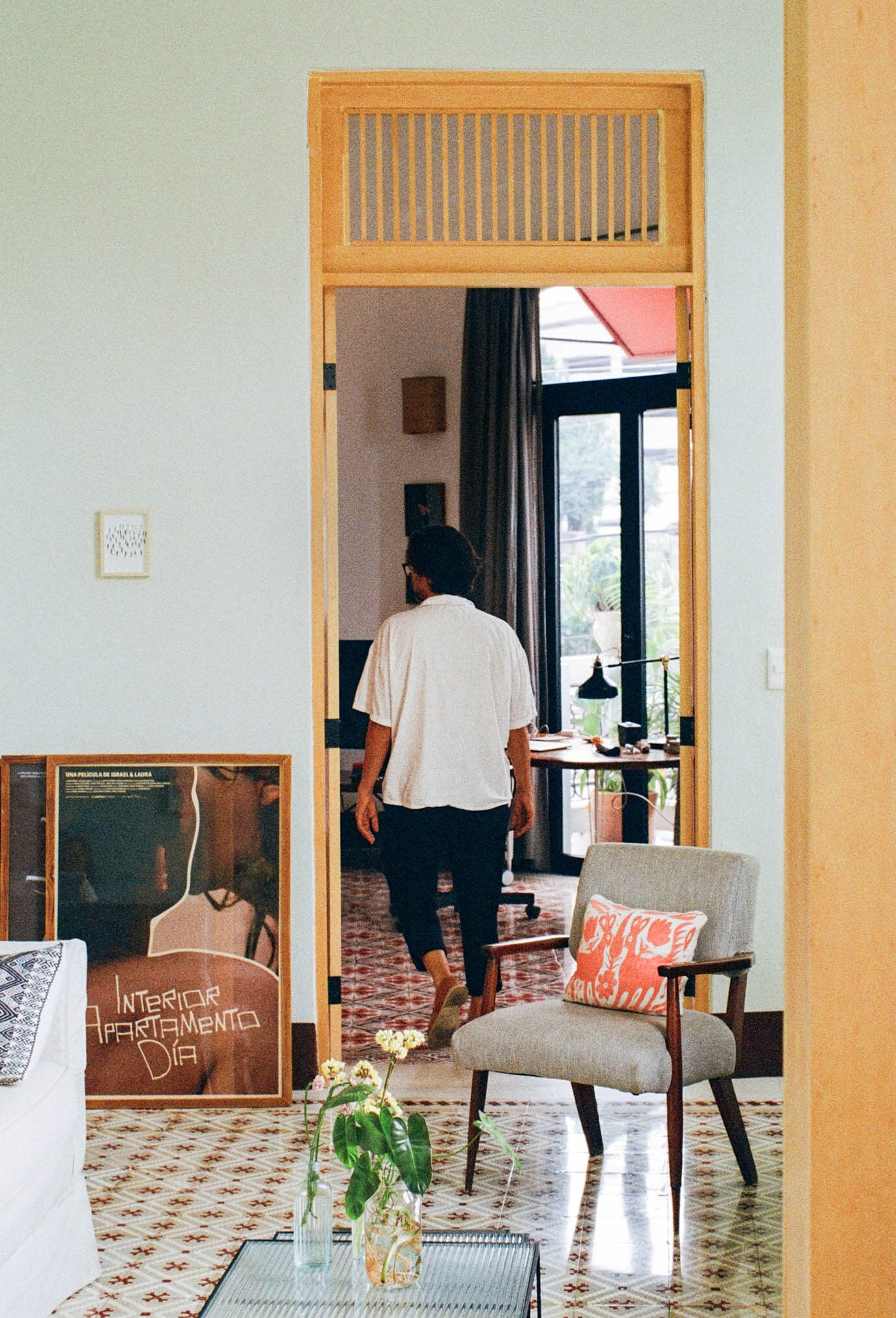
You’ve said before that the apartment is almost another protagonist in this film, implying that space shapes reality and relationships. Do you feel that protagonism of space in your personal life?

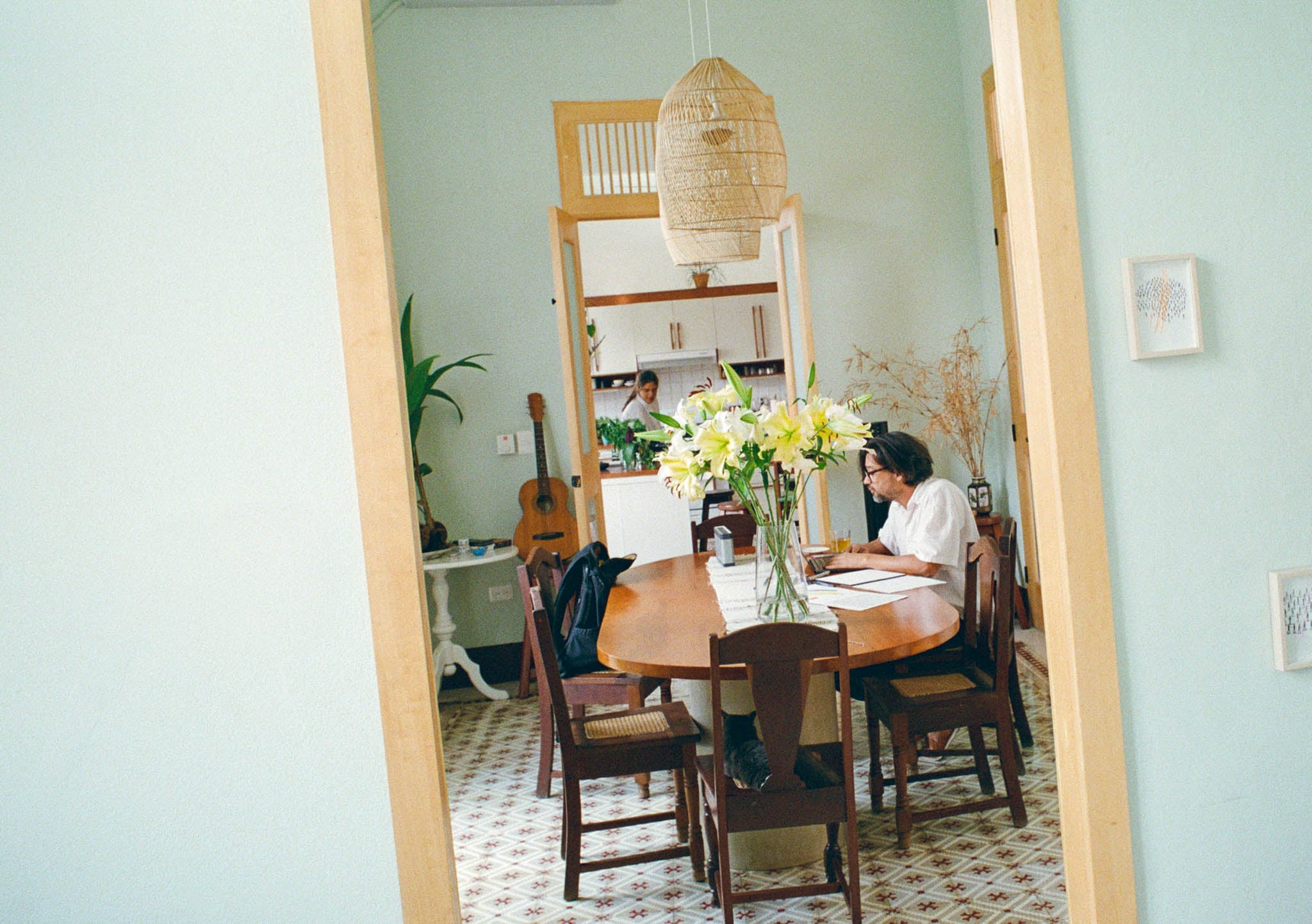
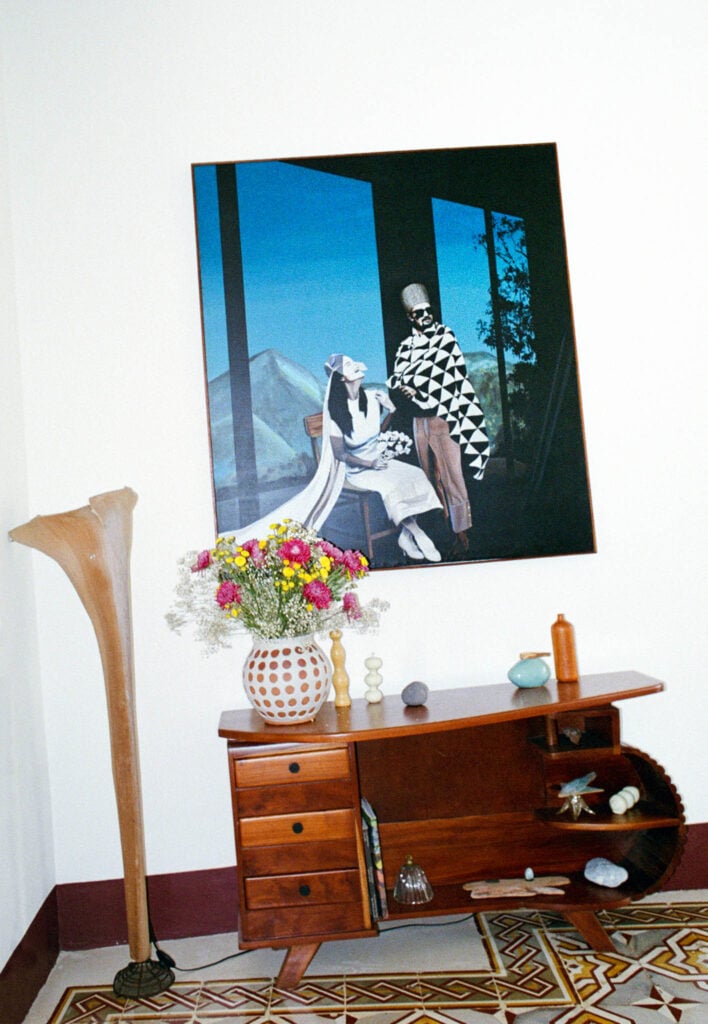
Laura: Absolutely. Yes, I’m very attached to my home. I like creating an environment, an atmosphere—just as I do in films. I feel that my home represents me; it’s an extension of who I am as a person and who we are as a family. It’s the place where you feel most yourself. It’s an essential part of life. It’s also the place where all the things you share with your partner come together.

Israel: Actually, the film began with the idea of a couple accumulating things and, through that accumulation, starting to question if they should stay together or not. Those things become a kind of—not exactly a burden, but something that formalises their relationship. It’s something that keeps them together. It started from there and yes, the apartment became an extremely important character within the film.

Laura: The apartment is what binds them for practical reasons, and what ultimately separates them when it’s time to renew the lease.

Do you still live between the Dominican Republic and Mexico? Do you have  different relationships with these two places?

Laura: We like to think so, yes—that we live between here and there. The truth is that we have spent a long time here in the Dominican Republic now, but since Isra is Mexican, it’s about time we spend a season there again. And yes, my relationship to this place is different from his. I have an entire history here: my childhood, my parents, my family… I mean, all my life. The streets mean different things to me than they do to him. When we leave for Mexico, the roles will change, and it’ll be my turn to experience the opposite situation.

Apartamento Magazine - A conversation with</br>Laura Amelia Guzmán & Israel Cárdenas
The product is being added to cart!