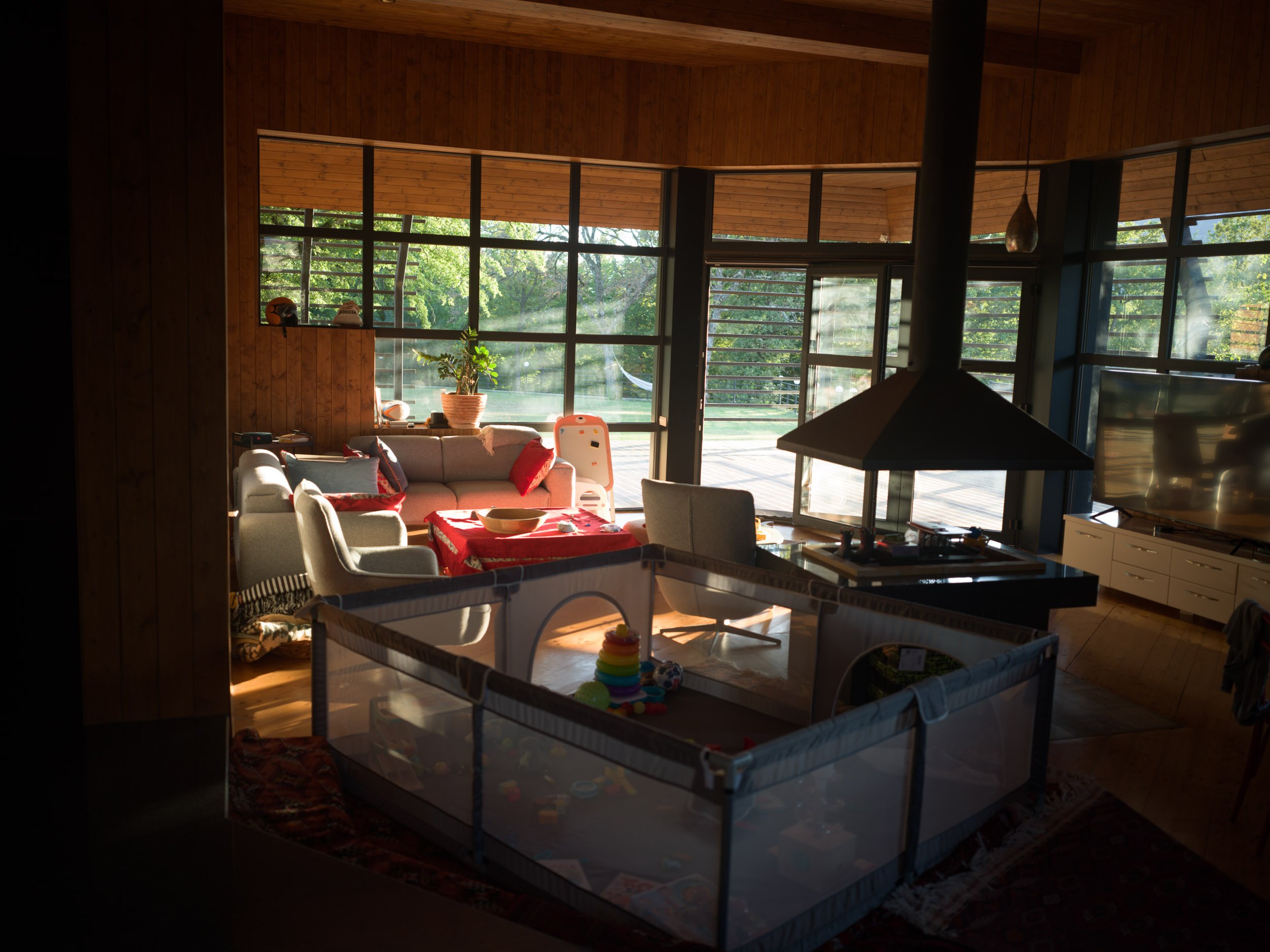
Berlin/Eastern Georgia: I don’t use the word ‘masterpiece’ lightly, but Dea Kulumbegashvili has already given us two: Beginning and April. Rarely have a debut and follow-up felt so self-assured, perhaps not since Andrey Zvyagintsev stunned audiences with The Return and then The Banishment nearly two decades ago. I arrived in New York a few hours too late to attend the Metrograph premiere of April—an invitation extended by the film’s cinematographer, Arseni Khachaturan. Instead, I caught it the following day at the Lincoln Center. The experience was so profound that, immediately after the credits rolled, I bought a ticket to the very next screening. Watching it twice in succession felt less like an indulgence than a necessity. With April, Dea gives us an unflinching portrait of rural Georgia, a landscape she knows intimately and one scarred by a painful history, even as it is alive with beauty. It follows Nina, a Georgian obstetrician played by Ia Sukhitashvili, who performs secret abortions, undeterred by the fact that they could threaten her practice and career. One scene in particular stayed with me: a live birth sequence. Considering how universal the experience is, it’s striking how rarely childbirth is depicted on-screen and how deeply it can resonate when shown without hesitation or sentimentality. What makes April so vital is not only its themes, but its form: the long takes and immersive sound design pull us into Dea’s world, one in which women navigate societies that masquerade as modern while remaining shackled to archaic, patriarchal structures. Men cling desperately to their waning power, while women endure, resist, and redefine the spaces around them. Dea currently lives in self-imposed exile in East Berlin, but she carries Georgia in her cinema. When I visited her home in the German capital, it also evoked the apartment in Andrzej Żuławski’s Possession, a film whose fevered atmosphere feels unexpectedly kindred to the humanoid creature in April, a reflection of the inner turmoil that haunts Dea’s protagonist. This is the kind of cinema I long for: demanding, immersive, unafraid of discomfort. The cinema of Michael Haneke and Abbas Kiarostami, of Chantal Akerman and Nuri Bilge Ceylan. And now, unmistakably, the cinema of Dea Kulumbegashvili.
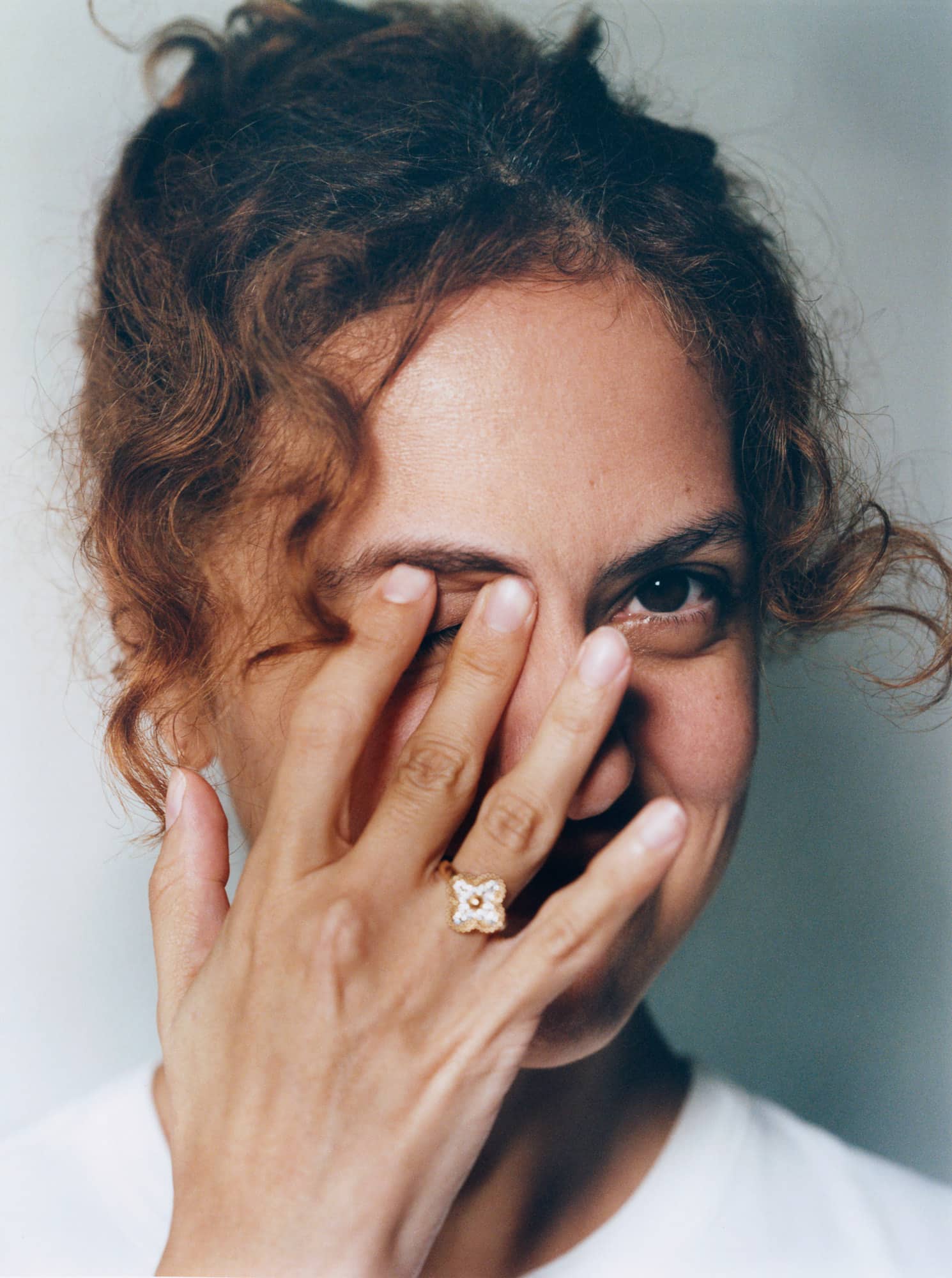
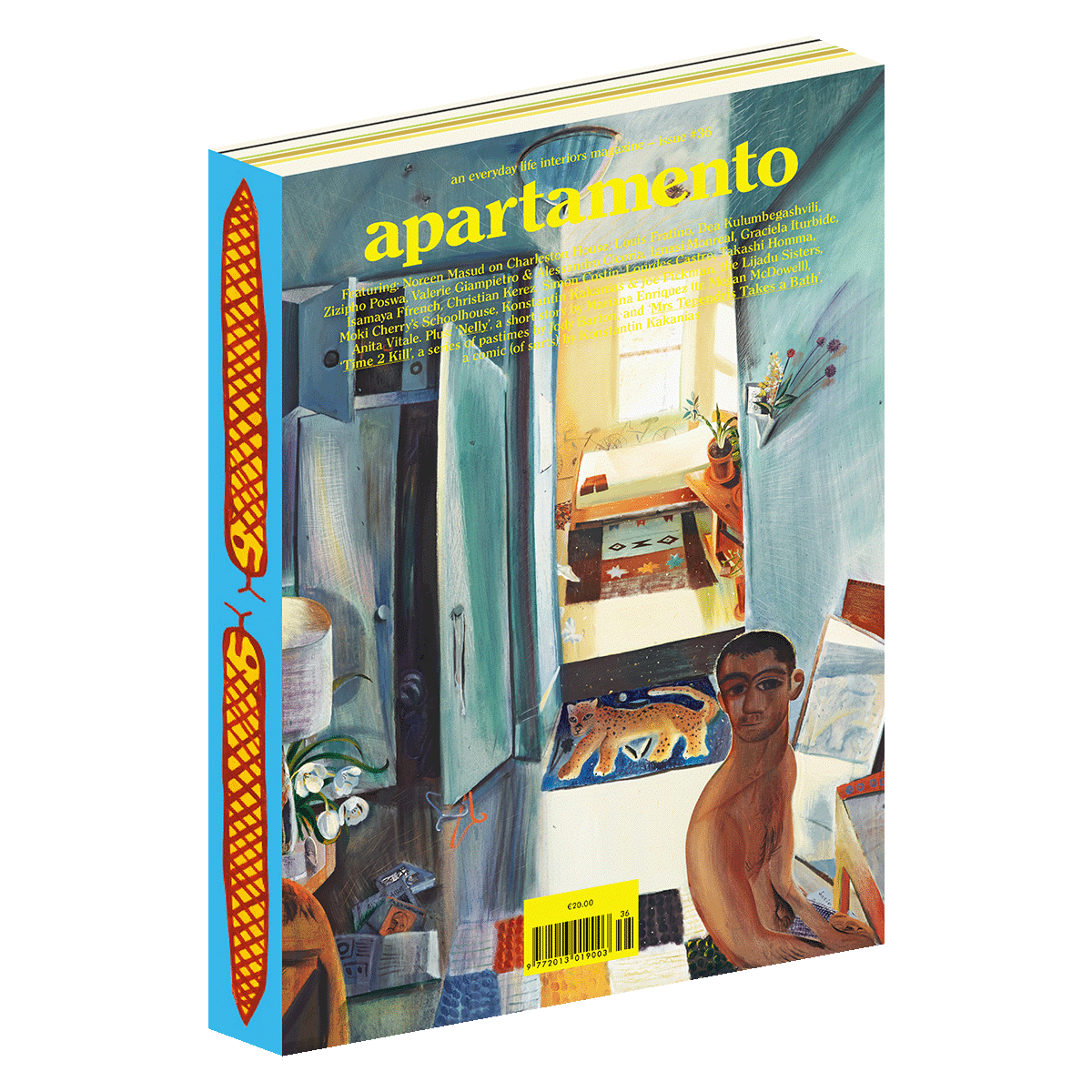
A conversation with Dea Kulumbegashvili for Apartamento magazine issue #36
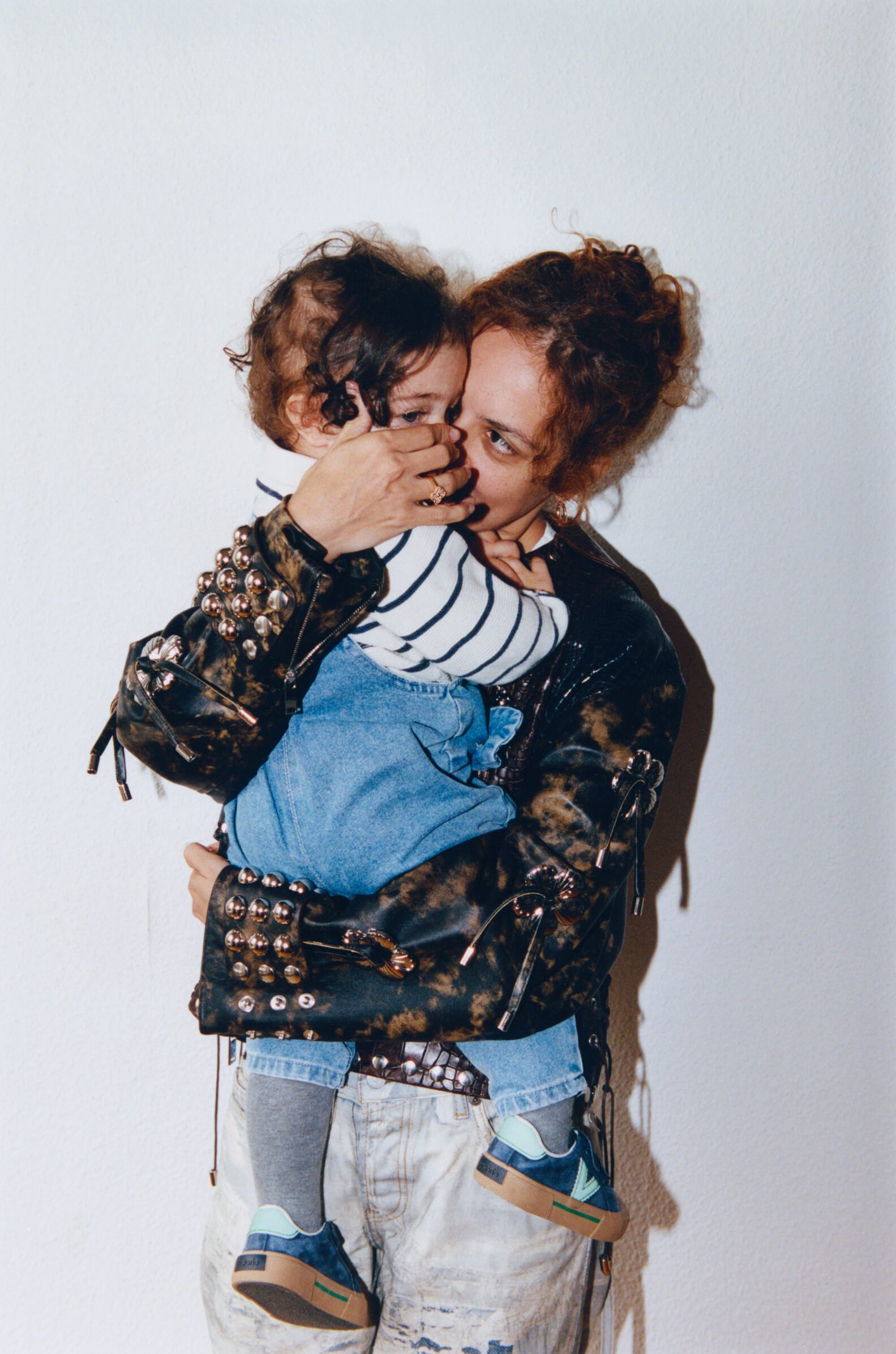
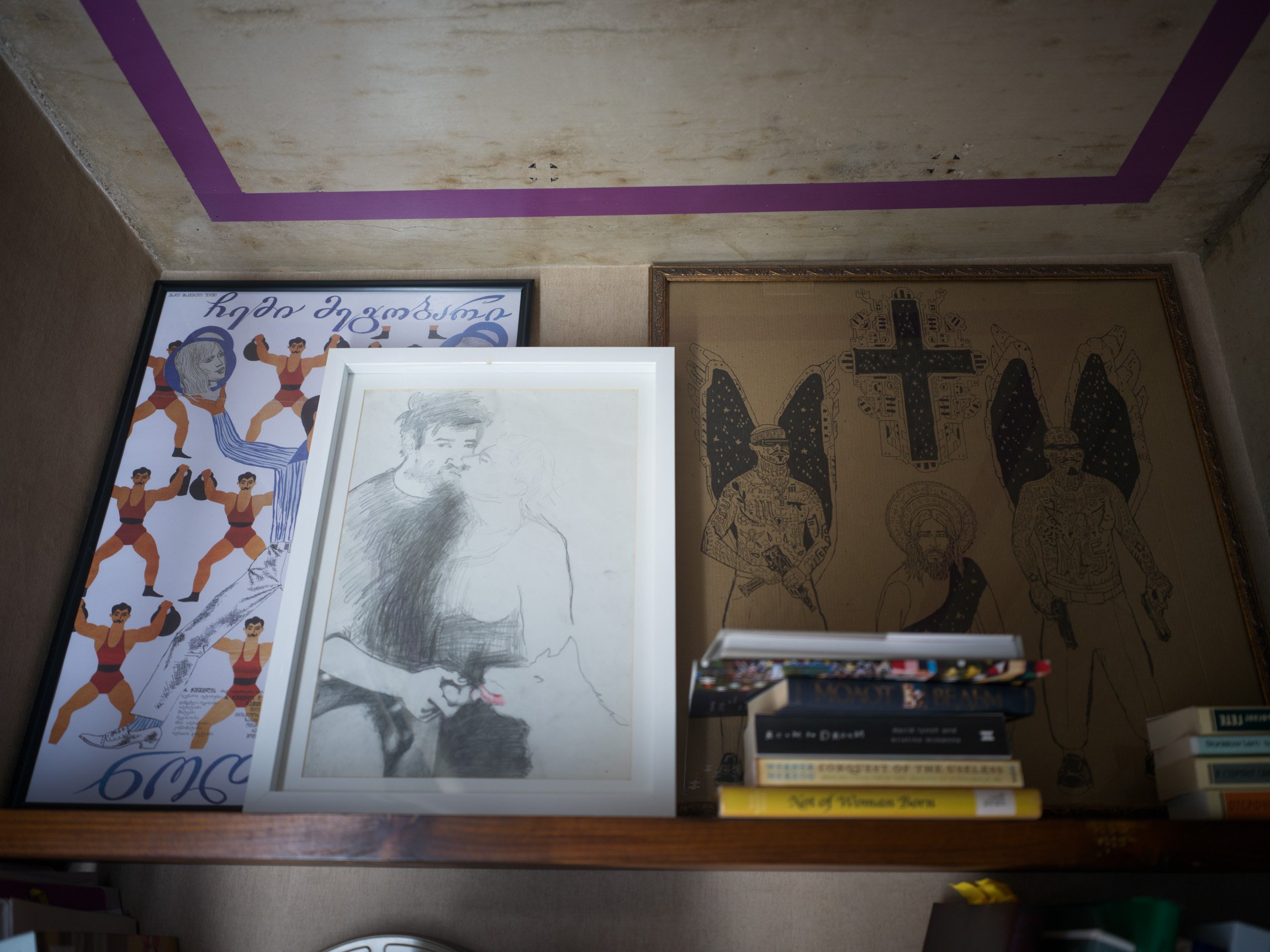
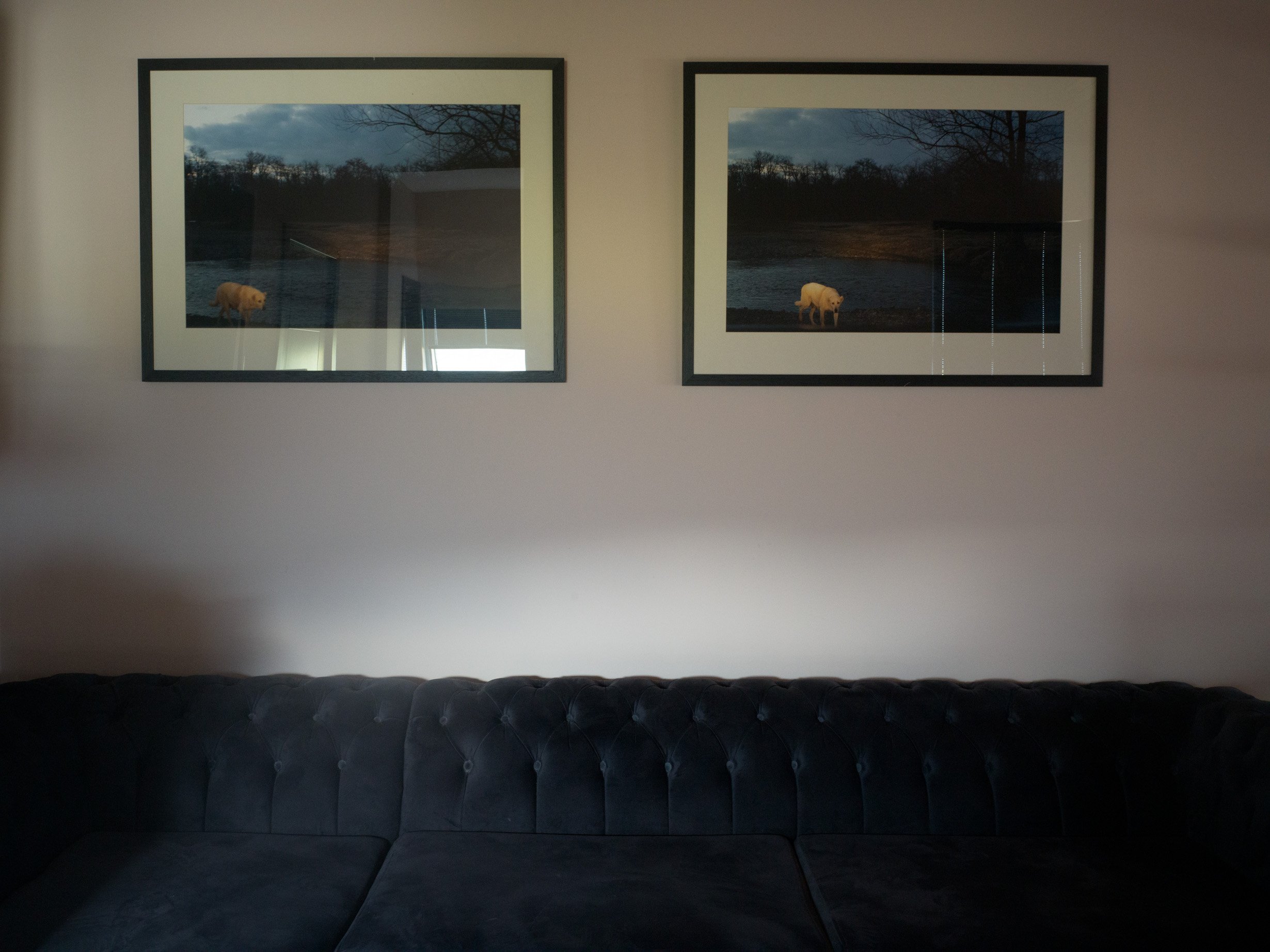
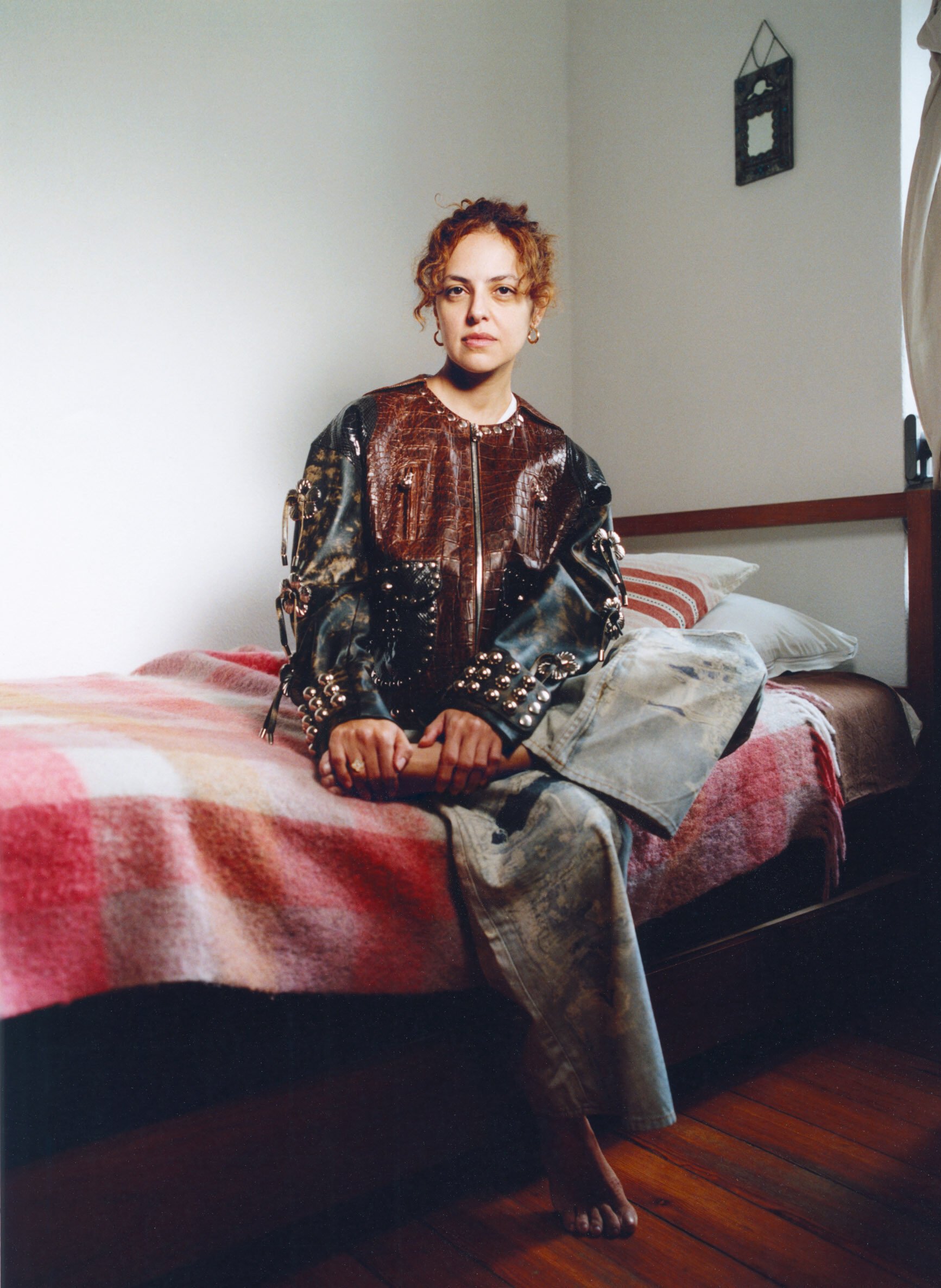
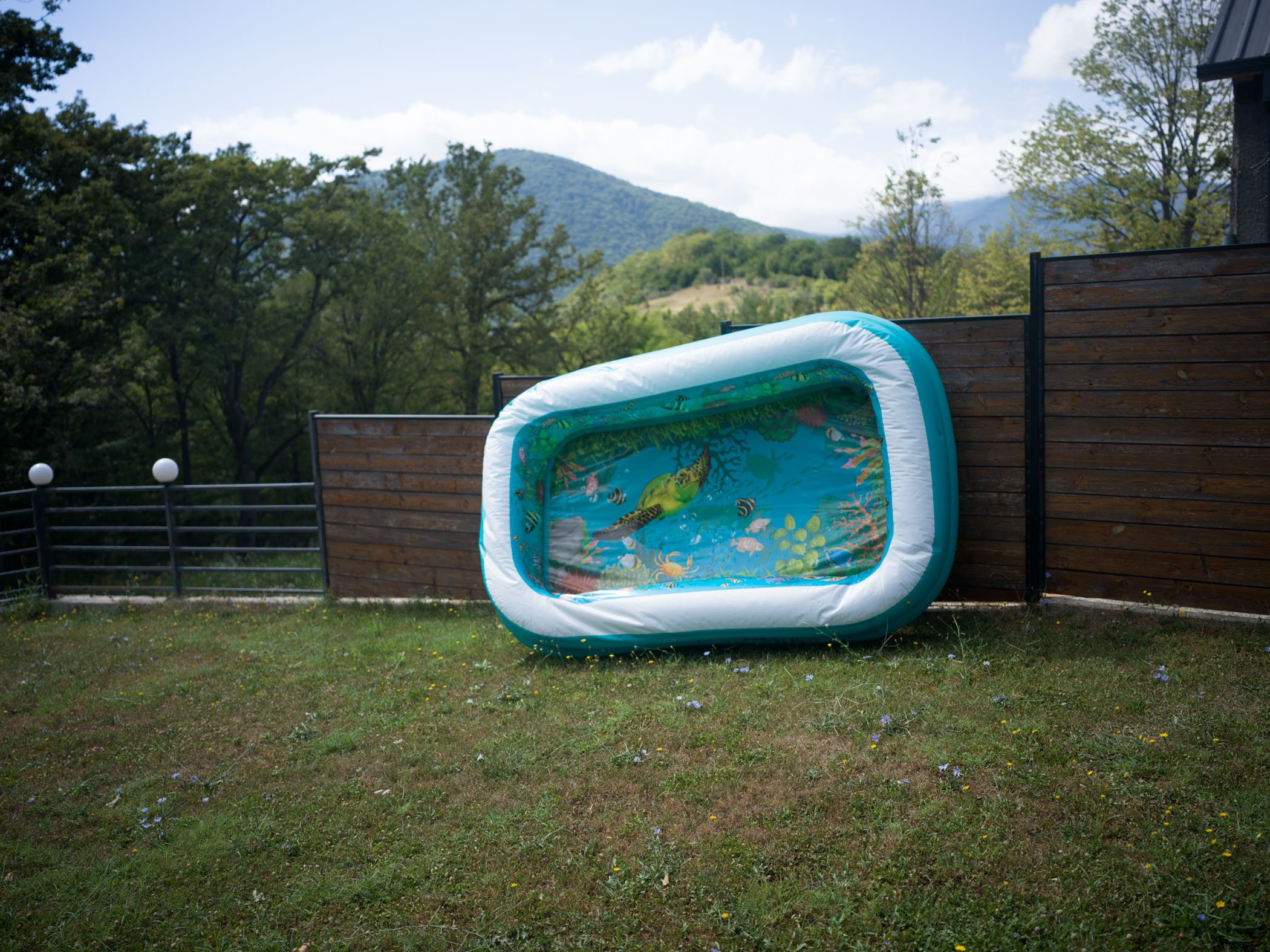
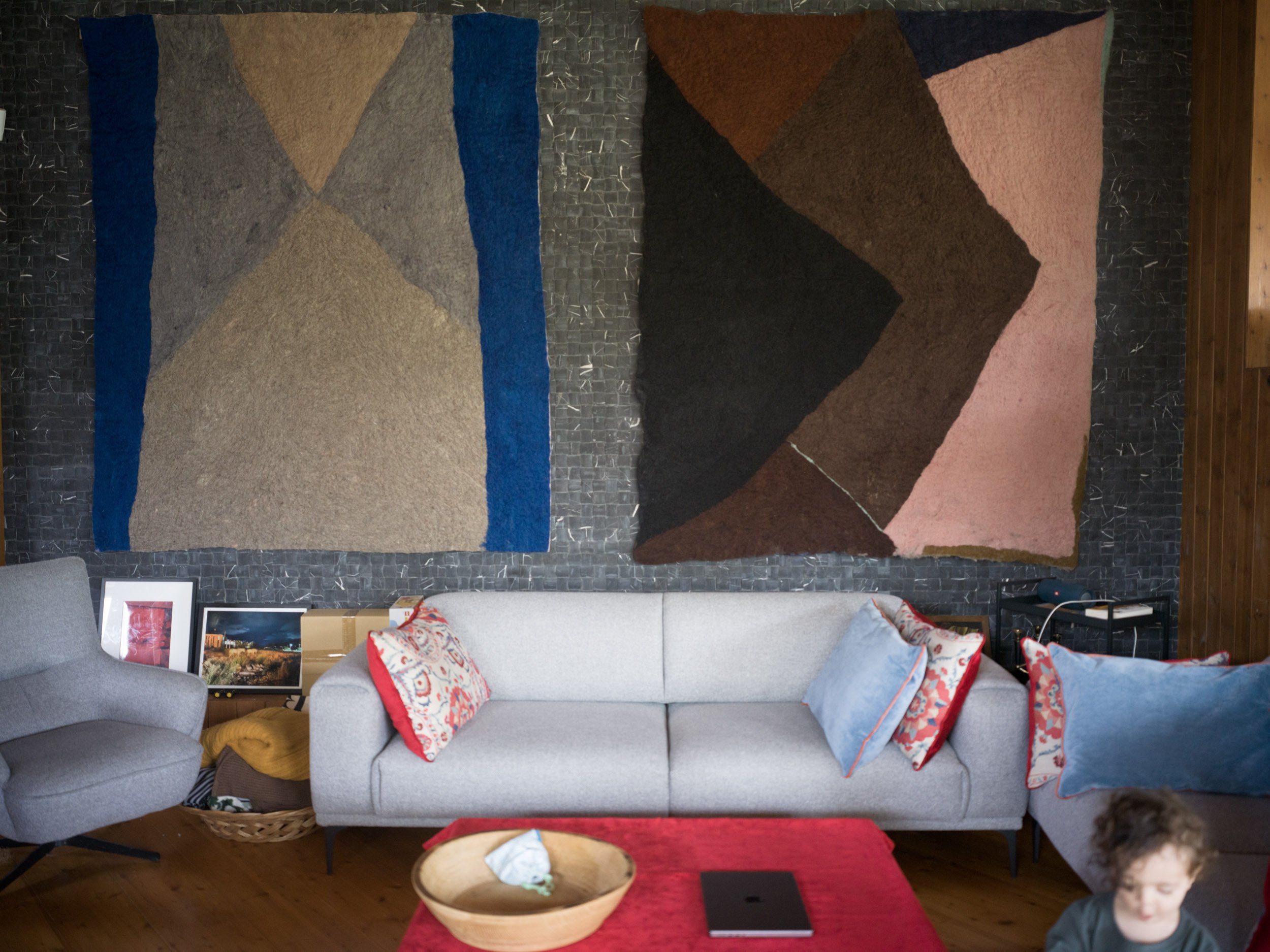
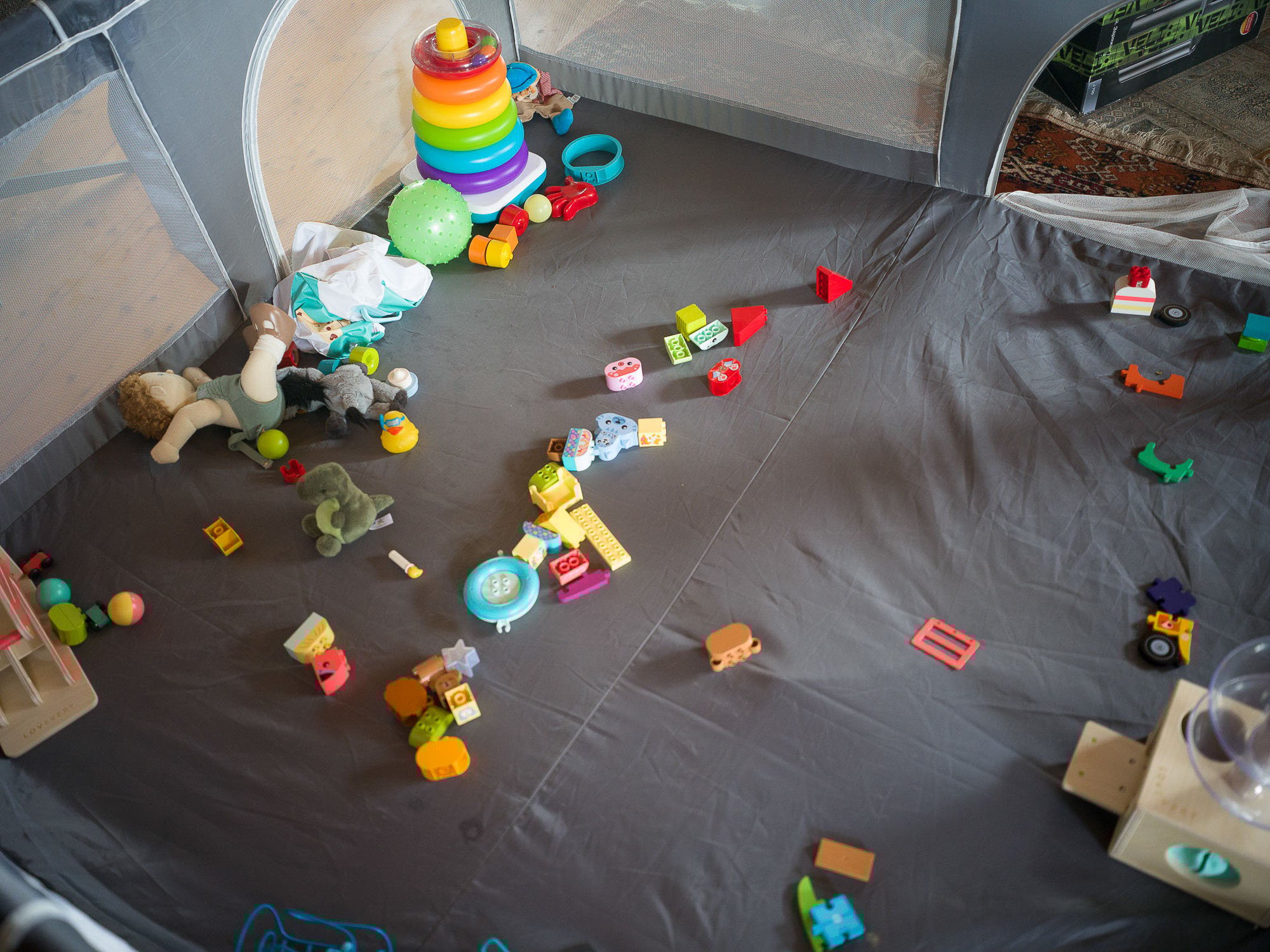
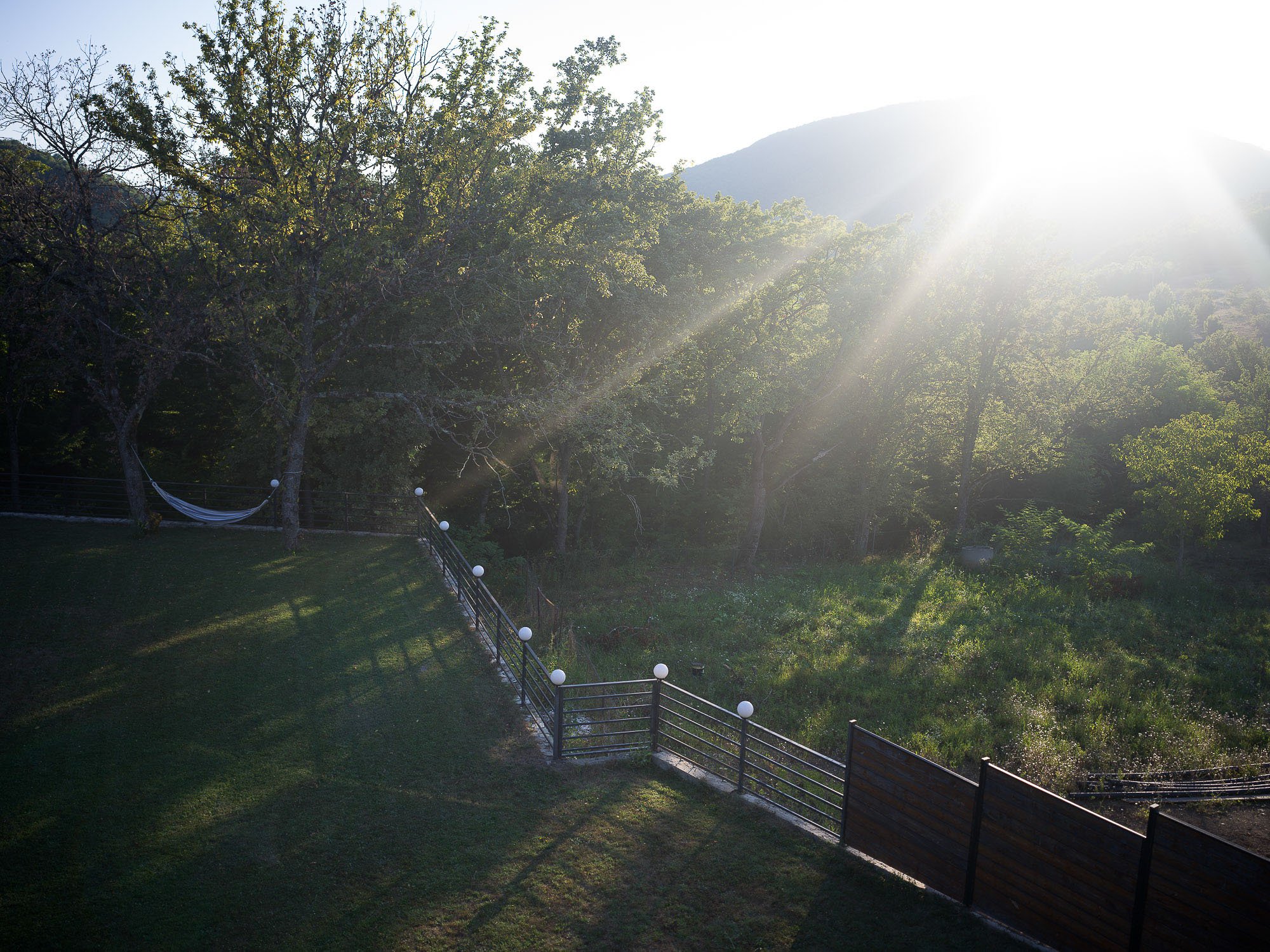
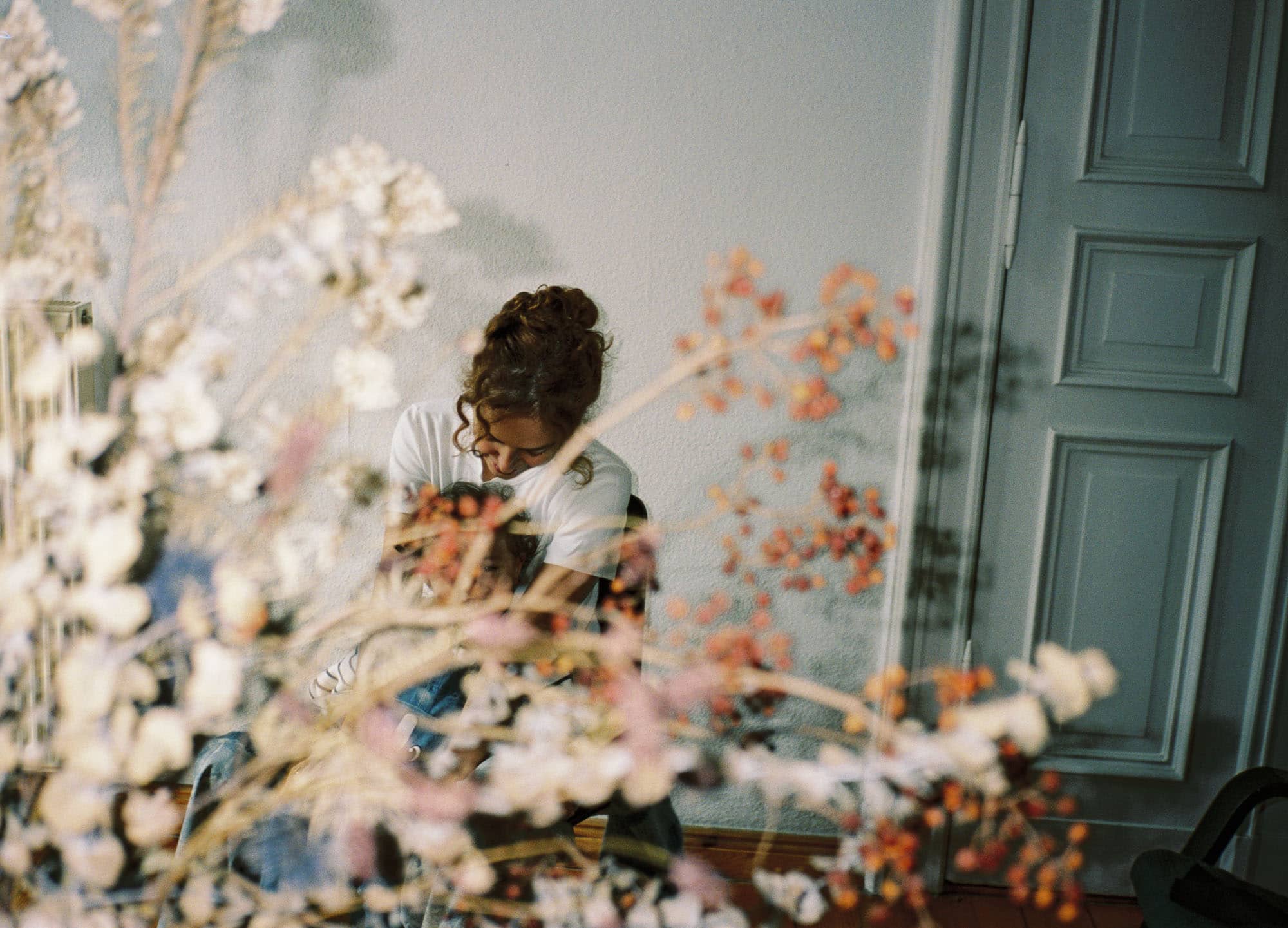
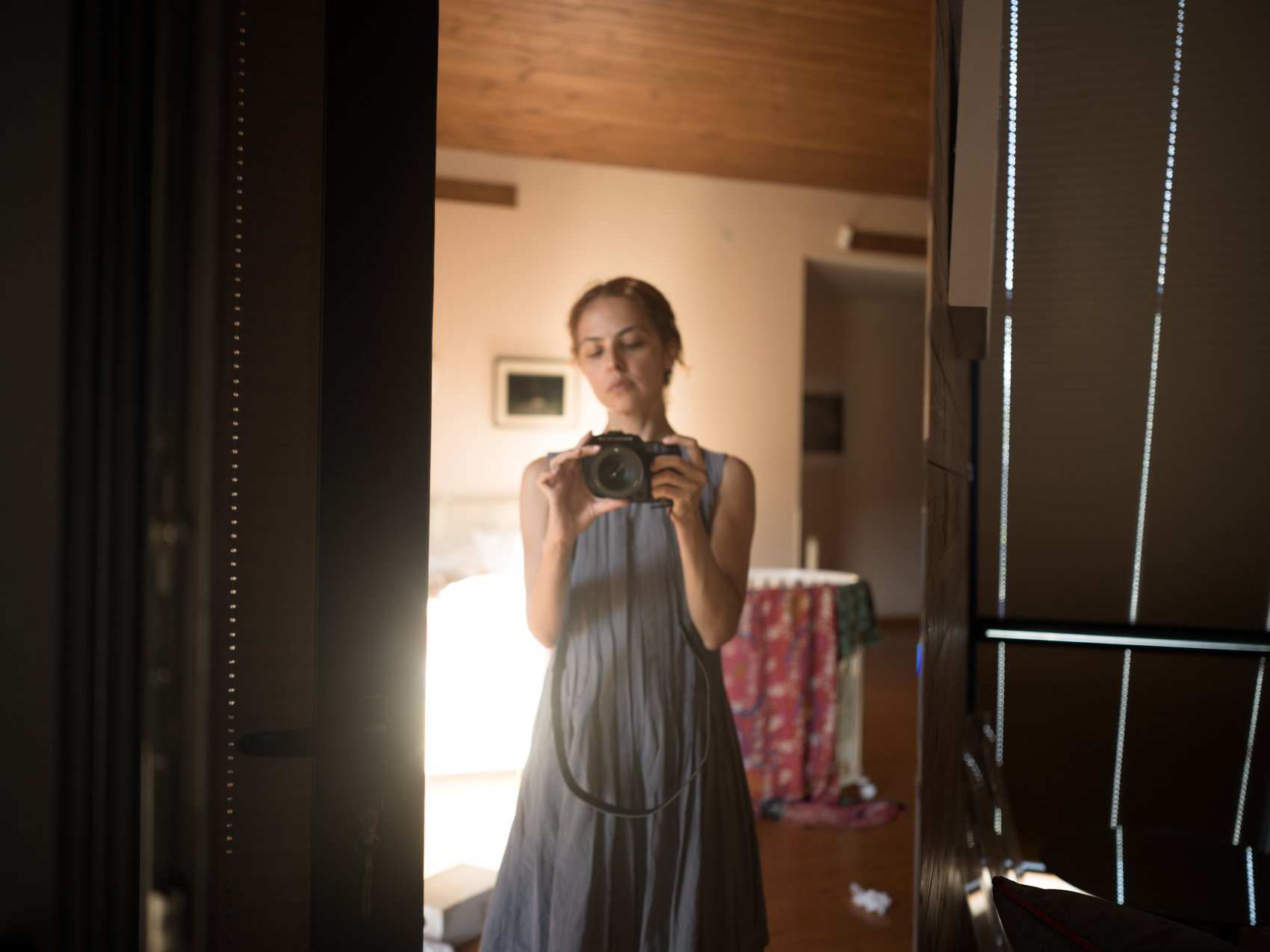
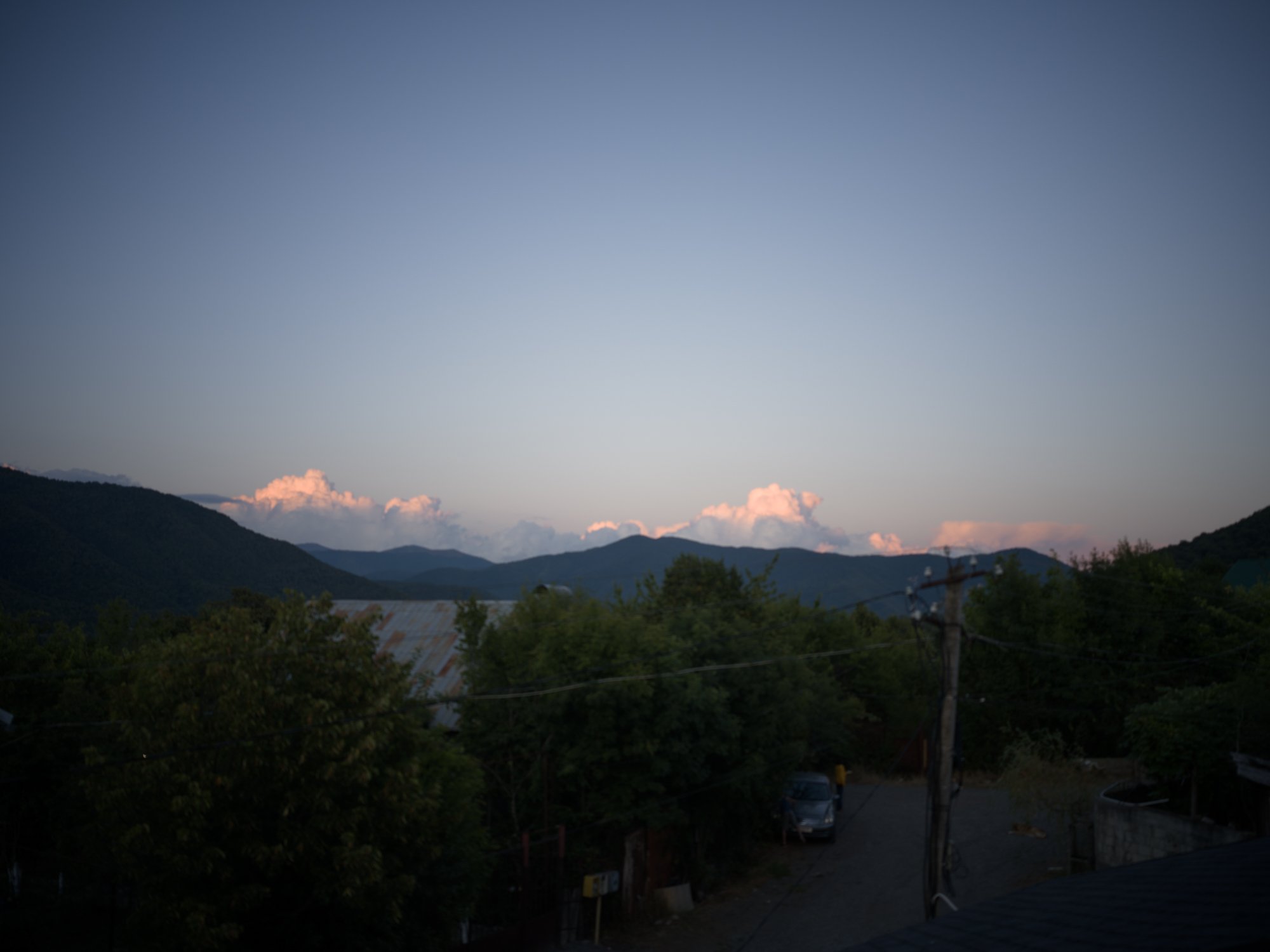
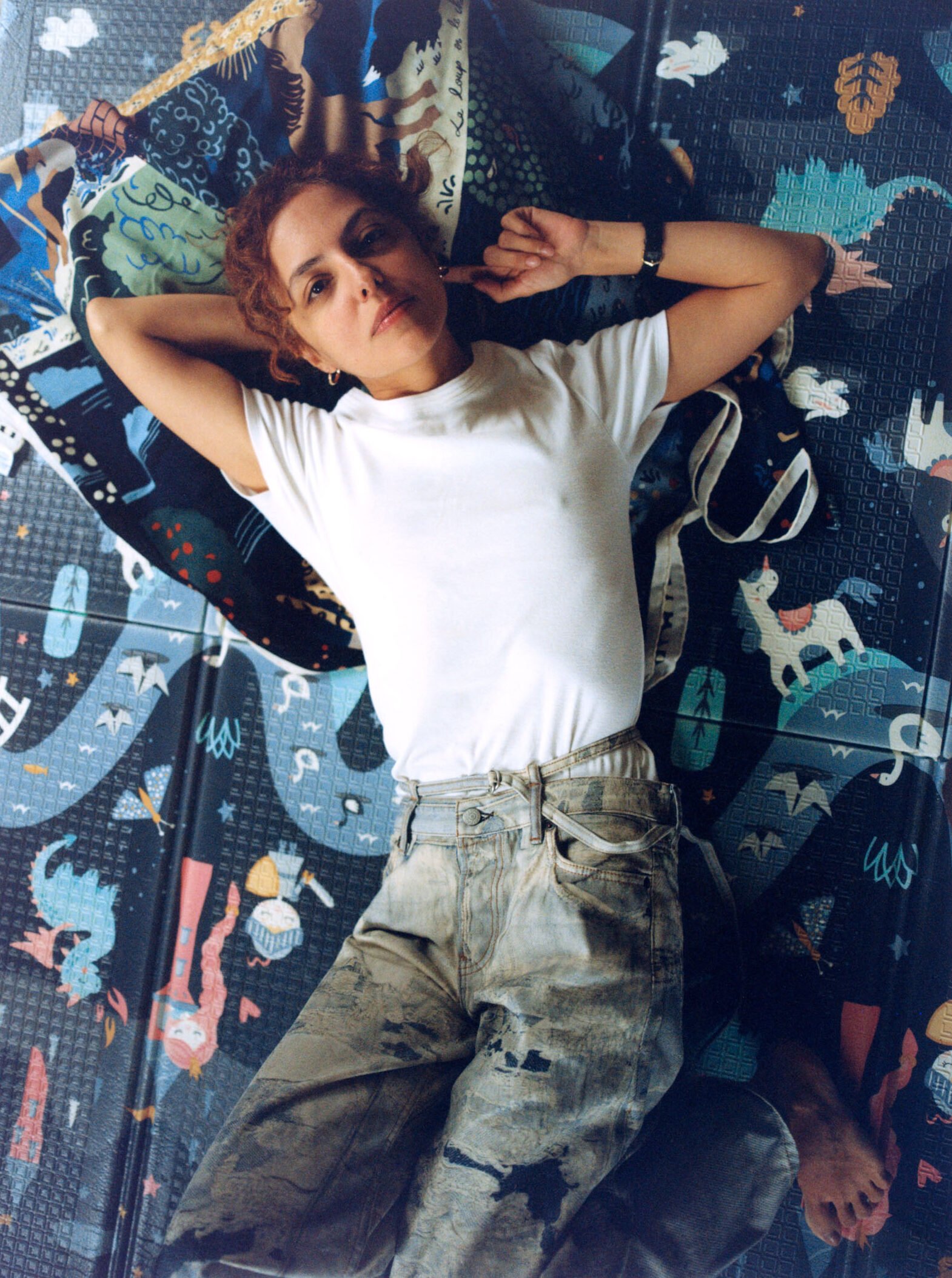
Portraits by Jelka von Langen & Roman Goebel. Photography from home by Dea Kulumbegashvili.
You depict rural life in Georgia. How closely do the characters in your films mirror those that you’ve met in your life?
Very closely. I grew up in this beautiful place in Georgia—it’s emotional for me to think about how it’s so distant from me now. It’s a special place, even in Georgia, because it’s on the border with Azerbaijan, between the Christian world and the Muslim world. In the area where I’m from, a big part of it was Muslim communities. I was always on the edge of two cultures. There were several different nationalities. When my mother got pregnant with me, she was underage. She didn’t really want to have a child. She also could not have an abortion. This might sound strange, but because I grew up with my grandparents, I always knew that my mother was not ready to be a mother when I was born. My grandmother comes from one of the first families in Georgia where women were given the highest and most comprehensive education possible. My grandmother was working with these communities, teaching women how to read and write. She taught at school, but she also went to the houses of the children who needed her attention more. She worked with children from the closed communities. I used to go with her because she didn’t have anybody to leave me with.
She was really an educator, right?
Yes. She went to hundreds, maybe thousands of families. She used to act as a mediator in very difficult situations; I remember there were some conflicts between families because a Muslim girl would run away with a Christian boy. Of course, neither I nor cinema comes close to what these people do, people who are activists or people who are working on the ground. They don’t get the spotlight, but they really make a difference. It’s a dream in my family now to create a space, a media centre for kids. I know all these children in the region because I invite them to come to castings. I don’t make it, ‘Oh, I’m going to pick the chosen ones’. I’m always like, ‘Maybe some of you will act in this film. Some of you will act in my other films. Some days, all of you can come on set, and you can see things. You can see how films are made. You can talk to us and understand that there are different professions you can consider’. I really believe that this is where the best cinema emerges, in the places where it’s least expected, with people who can bring experiences we don’t know about. I really believe in these children so much.
Every house has a memory.
Yes. The problem, even here, is this sense of detachment. We’re three generations removed from WWII? We thought that we made some agreement with each other. You see, after three generations, there is no more memory of why we made those agreements.
With the Georgian Civil War, that environment—how did it influence you? It must have heavily politicised you at the time?
In a way, it was a good and bad influence. I know that humans are capable of horrible things. I don’t have illusions, usually. When I came to Western Europe and then to the United States, people my age—I see them as more naïve in terms of disregarding, not acknowledging, or not believing certain realities. I hear it all the time now that people don’t believe the atrocities happening in Gaza are true. I believe those things because I have also seen horrible things. I believe that humans are capable of horrible things. Now more than ever, I hate the word ‘hope’. I’m never hopeful; I believe in humans. I guess, on the other hand, I learnt to see good and to see beauty despite everything, and to be able to love. During the Civil War, we had a really great library in this town, and I was the only member. I used to go there, and I read so many books. I learnt that, even in the darkest of times and the coldest of winters, it’s important to recognise that the experiences you have, good and bad, are not just yours; there are other people to connect with. I think that this is also what cinema lets me do. I believe there’s maybe one person in the audience who feels a lot of pain, hopelessness. Then they watch a film, and they see that they’re not alone, that there is somebody on this Earth who tries to look at things, or tries to open the window for others to look, to recognise other people’s suffering. Sometimes recognising that other people suffer is what makes you a person.
Why did you leave Georgia?
I left Georgia because I don’t feel very safe there. Again, I don’t want to talk like it’s just about me. In general, Georgia is not safe for people who don’t see themselves as being part of this system that functions with a lot of censorship, which establishes more censorship, which creates new regulations and rules for cinema, for theatre. Now, for example, you can be persecuted. Maybe they will not arrest you, but you will be in legal trouble if you offend somebody’s religious feelings. I certainly happen to do that with my work.
That’s mainly the Christian base?
Yes. Also, you cannot touch LGBTQ subjects at all. When I came from my hometown, a very small town, to the capital of Georgia, I met the people who became the reason I was ever able to start making films. All of them are gay. These are my biggest supporters, my biggest friends. I consider them to be the bravest people in Georgia because there is a lot of hate speech. We also need to understand that hatred is supported by the government on an institutional level. One person who I’ve known since I was 17, she also came from a very small village. She wanted to transition, and she went down a very painful, very difficult road to achieve the life that she wanted to have. She was recently murdered. The state allows for this kind of hatred, this aggression, by normalising violence against everyone who does not fit in. When I was making April, I was followed by the police. I was like, I cannot see my friends because I’m scared for them. I cannot lead the social life that I used to have. I can potentially endanger others who work with me, or who come to Georgia to explore the possibility of making films with me. I cannot do anything. What am I going to make films about in Georgia, honestly? All the things that are interesting to me, all the things that are important—I can’t do anything. I wanted to make a film about this community which, I guess, I know so much about, this gay community in Georgia and how it evolved. I can’t do anything. I don’t know how to exist there. I cannot call my mother and talk to her because she does not want to discuss politics or public life. There is a general sense among people that there is total surveillance. I don’t even know how much I can say. It’s strange because, of course, I miss Georgia all the time, and I love my country. But what is your country? It’s not just a territory or land. I don’t recognise my country anymore. I feel a lot of pain for not being there. If I have witnessed everything that’s happened up to now, is it better for me to leave and aspire to make films, or to stay in Georgia and not be able to make films, but to see what’s happening? It’s a difficult choice.
You talked about the police following you. I understand you had an incident with your cinematographer, Arseni Khachaturan, as well?
Yes. In Georgia now, there is a law that the government can sue you for anything you say. It’s very difficult to talk about anything.
OK. Then feel free to not talk about something if it in any way endangers you—
The thing is that this really happened. Arseni was in a car accident. Somebody just smashed into his car, and then Arseni was detained—not the person who was driving the other car, who was intoxicated. He was drunk. At that point, it was not clear to me why my cinematographer was detained. I was brought in as an interpreter, which is illegal because I don’t have a certificate, which is necessary to translate a police interrogation. We were in the police department for nine hours or longer, for the entire night into the morning. We were separated into different rooms. I had a very strange encounter with somebody who I think was a police investigator, although I’m not sure who this person was. I was put into a room alone with him. He was really, really pushing me emotionally. I don’t know how to describe that. He wanted me to understand, I guess, that worse things could happen if I got into police business because they knew that I was researching for the film. I was in the town where I’m from. They couldn’t understand exactly what I was doing. They wanted me to know my boundaries.
Do you think that was the moment when you felt you had to leave Georgia?
Yes. I started to feel that things were changing in Georgia. As a director, I was always going to difficult places. I could talk to police when they were upset with me for being somewhere they thought I shouldn’t be. I was never really scared until that point. For many years, I was part of the civil movement, and my close friends are civil advocates who have successfully defended people in their fight for justice. I thought I knew the system, and I thought I would be able to defend myself if needed. But after this incident, I understood clearly that something had changed.
What do you miss about Georgia?
Oh my God. Sometimes I just miss the view of the mountains in eastern Georgia, specifically, and the sound of this huge forest, this vast protected area known as Lagodekhi National Park. Then, because of its subtropical climate, there are huge storms, and you hear the roar of the forest. It feels so dangerous sometimes. The morning after these storms, we would see huge birds dead in our backyard. As children, there was some sort of unexplained mystery. Of course, I miss this.
One of the most beautiful moments for me in April was the scene of the storm, how the camera worked in this section and what it ultimately revealed. This is one of my favourite shots in any film from the last decade. I was blown away. How do you plan for something like that?
That’s the thing—that’s my home, you see? I have been in this field hundreds of times. I know storms there. I know almost exactly when they will happen. It’s like your home helps you make a film. You know, I operated the camera on this. I was on the crane, and I operated the camera, but then during the second part of the storm, it’s Arseni. We knew there would be a storm. I knew exactly when it would be. These fields are owned by farmers. People helped me find the owners, and I asked them to plow just half of it, to not touch the other half so the flowers would keep growing. Basically, it’s all planned. We marked the place for the camera, then you just had to wait for cinema to happen; that’s what I call ‘creating circumstances’. When there’s a storm, this is how the flowers will move. They’re so beautiful. You see that they’re so fragile, with the wind, so flexible, and this helps them survive somehow. They go on to exist. Their roots are strong. For me, cinema is made up of these exact things.
I’m interested in your sophisticated use of sound, which captures the essence of the nature you mention. It communicates perfectly with the visual side of the film, almost like a choreographed dance. Can you tell us about your process? I know you spent several months honing the sound in post-production for April.
Yes, but we also record hours of sound on location. We record more than we film. Sometimes people get annoyed, and I understand that. But it’s extremely important for me because I understand that the physics of how we perceive sound are very different from how we look at things. We divide the space horizontally and vertically and record in different places. It’s important how the wind in the grass is heard, to differentiate it from the wind in the trees and the different leaves. Also, as I told you earlier, a lot of my experiences are sound-based because the winter nights during my childhood were usually very long and dark. There was no electricity, and I could hear the world. This allowed me to see—not directly, visually, but with my sensorial abilities to see things. I guess it’s somehow part of what I try to do now.
Across both films, windows seem to be a very important part of your visual language.
That’s true.
Both as a barrier and as a site for looking. From inside the house, there’s always a view to the outside, to the country. Does this somehow reflect the interior world versus the exterior world? What’s the significance of the window in your films?
I don’t even know, honestly. But I know for sure that, through a window, what you see outside is not exactly what you see when you’re actually outside. It’s a matter of perspective—not just the frame itself, but of how you feel inside the building or inside the room, what happens in this room. What’s outside changes its meaning, in a way. Then for me—I always talk about this because I grew up around so much nature—I know that nature is indifferent, and it doesn’t stand for anything. It just is what it is. Also, I usually find houses that are real; people live in those houses. I really like to observe how people live in their homes and to replicate those things. I sit in the places where people usually sit. I need to understand how a room functions. I really stress this with set designers: they can’t change the colour or where a chair is.
Are your films meticulously planned, down to every last detail, or is there room for improvisation during production?
It’s both. They’re very meticulously planned. When I was growing up, I used to write a lot, and my grandmother encouraged me. She thought I would become a novelist. I write a film to the point of the tiniest detail: the way people walk, what we hear. Then when I do the sound, I always create an entire script for Foley. I like to supervise Foley, and I need to be in the Foley session myself. I always try to leave space for improvisation because I want to create circumstances for things to emerge and happen. Those are usually the most beautiful things.
Like the live birth in April. Why is it so rare in film to show something that is so natural, such as the birth of a child?
Again, even when I was planning to shoot this, there was this big discussion among producers about how much we needed to show, how much we should not show. ‘People don’t want to feel uncomfortable’. I don’t like to provoke anybody. I don’t like a cinema of provocation. I don’t want to make a film that only provokes you, and then we move on. I just want to be able to look at things as they are, even if they’re uncomfortable to see.
You researched for a long time?
Yes, for a year. I knew so many women in the process of their pregnancy, and then I attended the births. It’s never the same process; every birth is different. There’s a miracle that’s happening in front of you, but then at the same time, it’s also very mundane. Perhaps that’s what’s most magical about this, because many times as a child, I also saw animals being born, the goats and cows. You somehow understand that this is the most natural thing.
You were also pregnant while you were making April. How did that affect you? You spent a large period of time observing births and, of course, you were steeped in footage of abortions. What was that like for you?
First of all, I never thought that I would have a child. Then I started to work on April, and somehow I started to want to have a child. It became very important for me. I felt ready and able and capable, which I had never felt before. I gave birth myself, and I went back to the editing room when my child was three weeks old. Yves would go with me every day, and we would edit without sound because Yves would just lay on me all day. I started to see my film from a very different point of view, and I changed it a lot after I gave birth because I saw it with more tenderness. I think it was necessary. Before, I was harsher in my understanding that I can’t really change anything. Now, I want to change something. I know I will fail, by the way, but I want to try.
It must have been hard to decide to make a film like this in Georgia. Were you aware of that pressure during the process, or more so when the film was done?
I knew it would be difficult. I knew we needed to be careful, and we were very, very careful when we were making the film. Literally, everybody signed an NDA. We were very delicate during the process because the people who helped us were people who dealt with these subjects in their real lives. It’s important to create some security, or a sense of security. Why directors make difficult films in Georgia, I don’t know, but I know for sure that there are directors in Georgia, documentary directors, who deal with subjects where I don’t even know how they can succeed.
How do you feel about April not being shown in Georgia?
First of all, I feel invisible in the sense that everybody knows I’m a director, but they have not seen my film. Georgia doesn’t have any sales agents. Then distributors, they just don’t show your film. It’s like you don’t exist for them. Producers don’t push because they’ve found more ways of trying to work with the censorship, which I found futile. It’s impossible to communicate through censorship. In Georgia, people can watch my film using torrents. I support that—in a country with so much censorship, let them watch it illegally. It’s more important to see a film. It’s difficult because people have heard things. Even my own mother, she called me and she was telling me that I invent issues that are not real. She said, ‘Maybe in the West, people like you because you’re this director who deals with problems, but those problems don’t exist’. This is my cinema: the cinema of things we don’t talk about in Georgia.
Thinking about the various storylines for women across your films and the challenges they face, how does secrecy figure into what is possible for them? The secrets they keep seem to be a very important element for these women’s survival. It’s a theme throughout your work.
Because of this secrecy, I’ve always thought that Georgian society is very perverse. It’s almost like the more conservative a society is, the more we refuse to recognise all kinds of desires and needs. We still have all of those things because we’re human, and because of that, society becomes more perverse and more violent, and more extreme in its conditions for women in Georgia. I think that was one of the first things I realised as a child: as a woman, I needed to learn how to exist without being noticed because that was the only way I could have some freedom to dare, to have a life.
In Beginning and April, the men are dressed so similarly that they all appear to be the same character. They appear out of nowhere and demand anything. Men seem to either punish or protect, in a paternalistic way, the women in your films.
Yes. I also feel sorry for these men because they’re almost deprived of a complete existence. I think that the way society functions in these very oppressive communities corrupts boys so early. They’re denied the possibility to be sensitive, to thrive as full humans. I don’t know anyone who would willingly want to live like a half-human. There are so many suppressed emotions in all these men, and so much self-hatred. It’s almost like half of their mind just doesn’t work.
In terms of your career, how closely do you relate to your lead character, Nina, played by Ia Sukhitashvili? She’s depicted as a doctor on a solitary quest to help women in a call that is bigger than herself, and there’s the constant feel of society’s gaze upon her.
I do relate to the character. It’s not autobiographical, of course, but it’s very personal. These films, especially April, come from a very silent rage, a lot of anger. I was not in Georgia for a long time, and then during the pandemic, I was there, and I was very angry. When I’m angry, I’m not shouting, usually; it’s something very quiet for me. There was a lot of pain. There was a lot of disappointment. I felt a lot of powerlessness.
What was the root of that pain?
First, when I was making Beginning, I went back to my home, and I started to see things that I took for granted. Society functioned with so much hatred and so much oppression, and there was so much violence, so much I could not change. I could not do anything. For me as a director, the bigger question is, can cinema really change anything? Sometimes you feel very powerless—often you feel very powerless. Things you see while you’re working on a film… I went from one house to another, listening to all the stories that many women told me as they walked me through their experiences. I’m not changing anything for them. The film is not even seen in Georgia. It’s not like when the Dardenne brothers made Rosetta, and the Belgian government actually changed certain legislation. Georgia is not like that. In Georgia, film just disappears. I did not change anything.
What I’ve noticed in Georgia during my brief time there is that everyone is very proud of their country. Do you think this kind of criticism or analysis maybe hits a bit harder because of that?
Georgia is too self-sufficient, in a way, as a culture. On one hand, that’s the reason why we’ve been able to survive in this specific geopolitical situation—not only now, but across centuries. On the other hand, that’s the biggest reason why we can’t really, fully connect with the outside world. We have a beautiful culture, but it often remains very localised. I really grew up in a place that nobody would ever imagine a director or artist coming from. Then I went to New York and London and Paris, and I was able to question my identity a lot. Georgia itself, it’s true—you can’t criticise, you can’t question. The biggest part of the problem, even with my own friends, with actors who I work with, is that they always think it’s important to be a hero. To be a hero, you need to be patriotic. You need to be supporting a noble cause. I don’t like these so-called ‘heroes’. I like heroes who are abortionists, who work in the villages, or people like my grandmother, who used to go to families just to teach them how to read, and she never expected to be recognised for it. I don’t want to be a hero, and I don’t want to be, in Georgia, this person who will stand on the pedestal of, ‘I know what’s true, and I want to teach you, I want to lead you’. Not at all. You know Anna Akhmatova, a Russian poet? She was married to Gumilev, another Russian poet. One day, in the early Soviet Union, he told her, ‘Anna, if one day I start to preach to the nation, shoot me in my sleep’. I really love this phrase because I don’t see it as the aim of art, to preach to somebody.
And your film is not preachy at all. It’s merely a window into a situation.
That’s maybe my problem with Georgia, though, because there, you either need to preach, or you need to stand and address the protest, or you need to be teaching. It always has to be some didactic role, but I refuse that. I always want to have the mindset of somebody who’s wrong or who recognises the possibility of constantly being wrong.
What do you think would happen if your film was shown in Georgia? What do you think the reaction would be if you got a cinematic release and—
I have so much faith in the audience. I believe that people want to watch. I just don’t believe that the film would be hated.
Your next film is your first in the English language. Are you at liberty to talk about it yet?
I can’t really say much because I’m still writing. The only thing, which I already mentioned, is that it ended up being a very, very difficult topic. It’s so difficult that it takes me days to write a scene. Again, the more I work, the more I want to show the beauty of life and the possibility of loving each other.
There’s a focus on the everyday in your films. April is terrifying without being a horror film, in a way, but the horror is part of daily life. It’s in the desire to be. It’s very dangerous and very perverse in its framing of modern society. Do you have any thoughts about this?
I think it’s difficult to talk about small and ordinary things. If you talk about extraordinary things, like atomic bombs, it’s easier because it’s like we somehow have more words for it. We can’t really talk about the most mundane aspects of life. I love Chantal Akerman; I admire her because she does that so well. I’m not going to talk about Greek heroes and people who are changing the universe; I’m going to make films about people who can’t change much, who maybe want to but can’t. To see little failures, and to see the humanity in them. I really love the genre of horror. I wish that I could do more with it, but the horror that I love is not the loud screams. That actually annoys me. The things I’m really scared of are the things that don’t seem scary. It’s the doom of being, this existential threat. That’s what scares me.
What inspired the creature in April?
When I work, I always go into this space mentally and emotionally where things become a bit unbearable. I started to arrive at the conclusion that the human experience cannot make any sense in general—it shouldn’t, and we should stop trying. Then, in the face of this impossibility, maybe certain emotional conditions or empathy or other feelings arise. I was trying to find a way out, to escape or to get into this space that doesn’t feel logical. Then again, I was not able to find hope because I am a hopeless person. I can’t believe in hope. It’s like a game; it’s very Georgian somehow. This Georgian philosopher who lived during Soviet times, Merab Mamardashvili—he was mostly censored, and that’s why many people don’t know of him—he’s now being translated and published. In his lectures on Kant, he says that hope is the bastard of imagination. It kills the possibility to see.
Last question for you: it’s clear that you’re not a big fan of hope, but do you hope to make films in Georgia again?
No.
Related stories
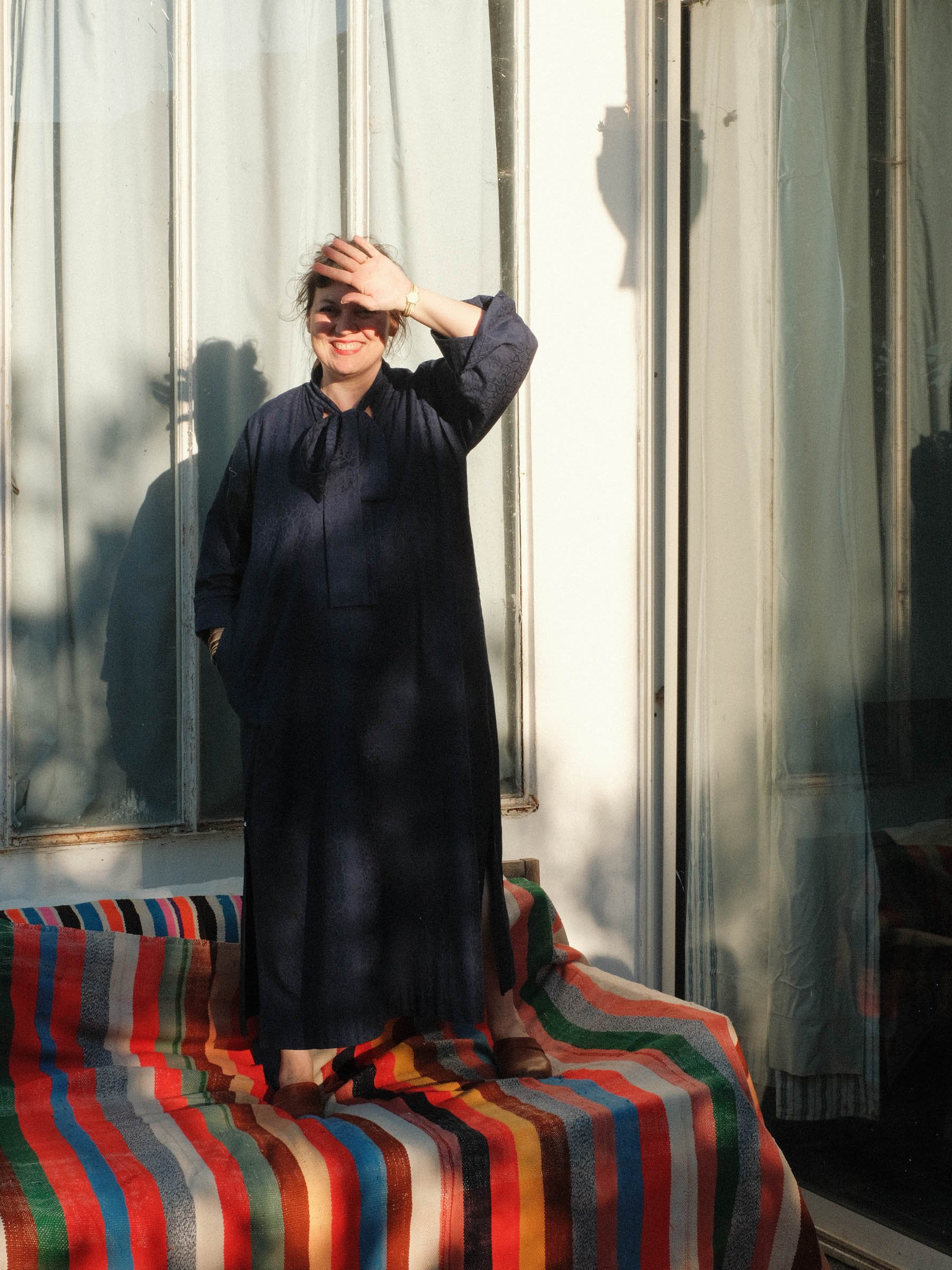
Yto Barrada
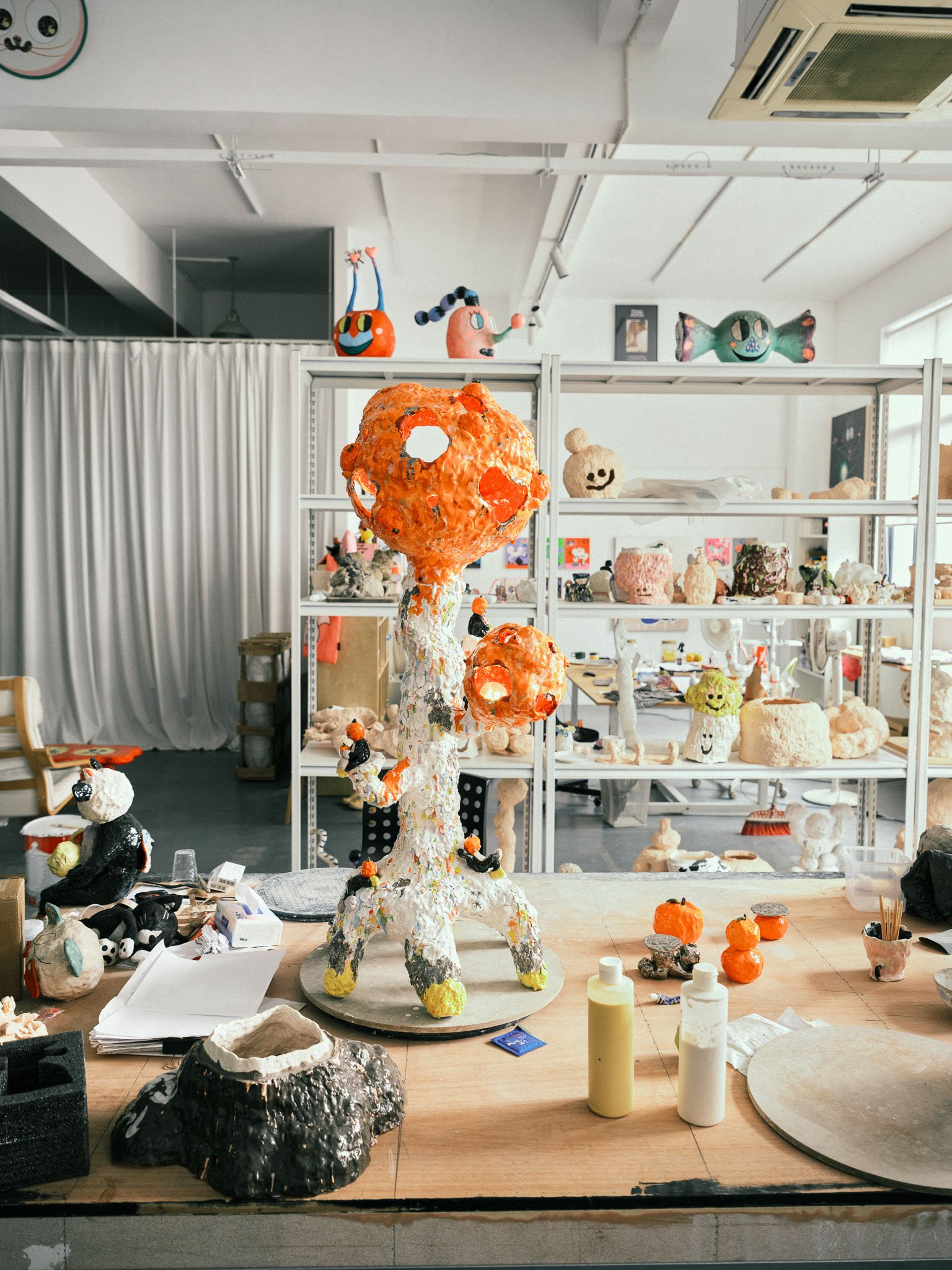
A conversation with Pan Wangshu
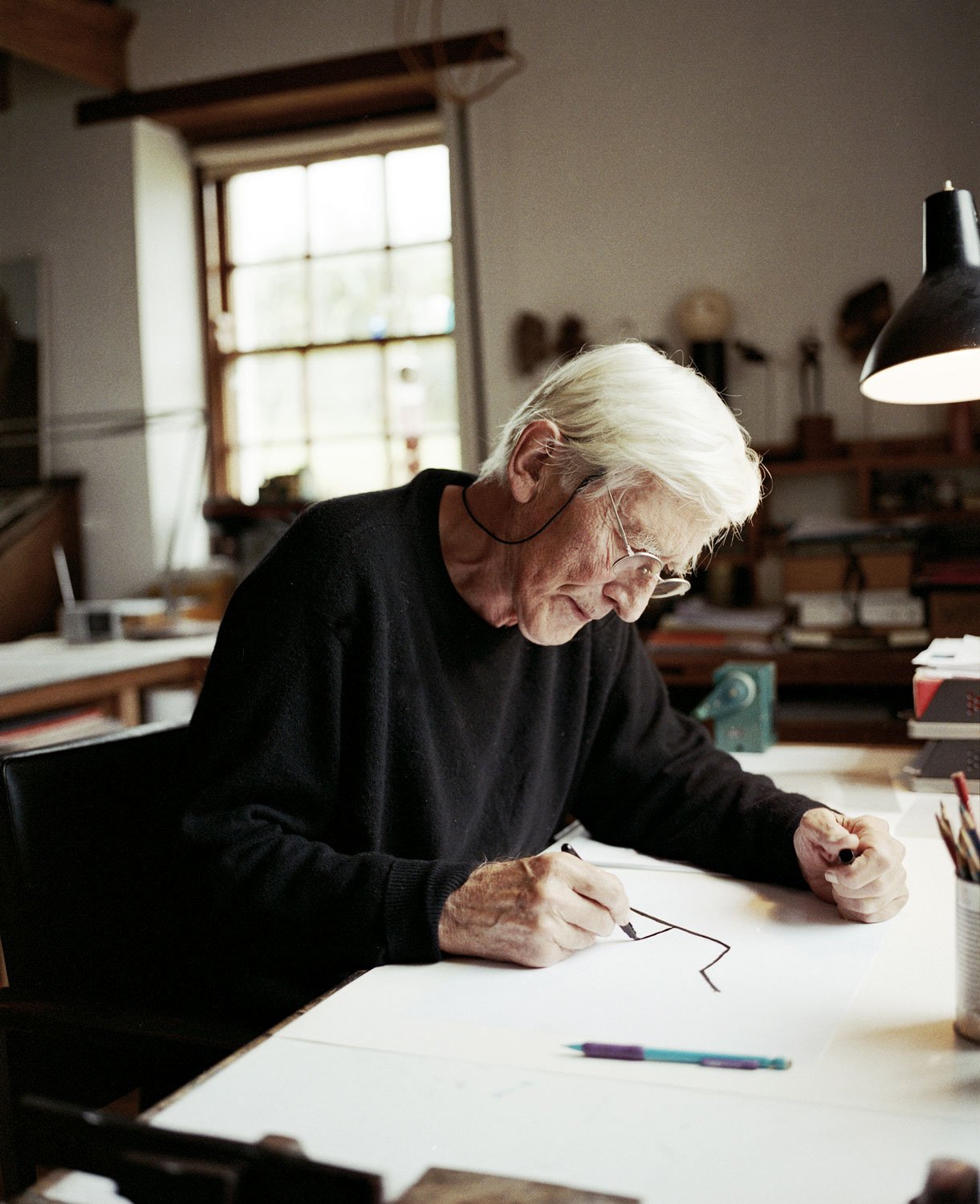
Tomi Ungerer
 close
close
Portraits by Jelka von Langen & Roman Goebel. Photography from home by Dea Kulumbegashvili.
01/14

02/14

03/14

04/14

05/14

06/14

07/14

08/14

09/14

10/14

11/14

12/14

13/14

14/14