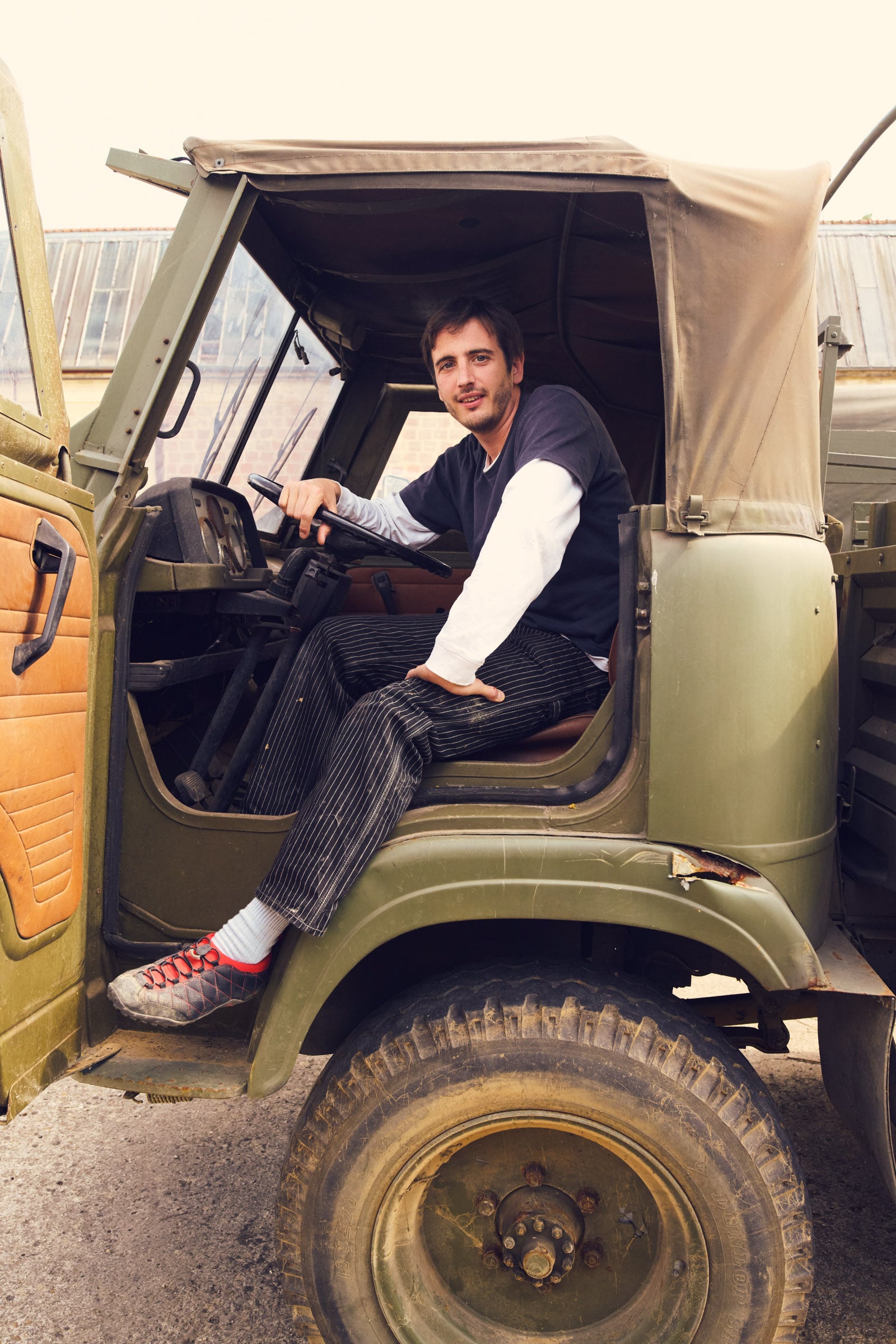
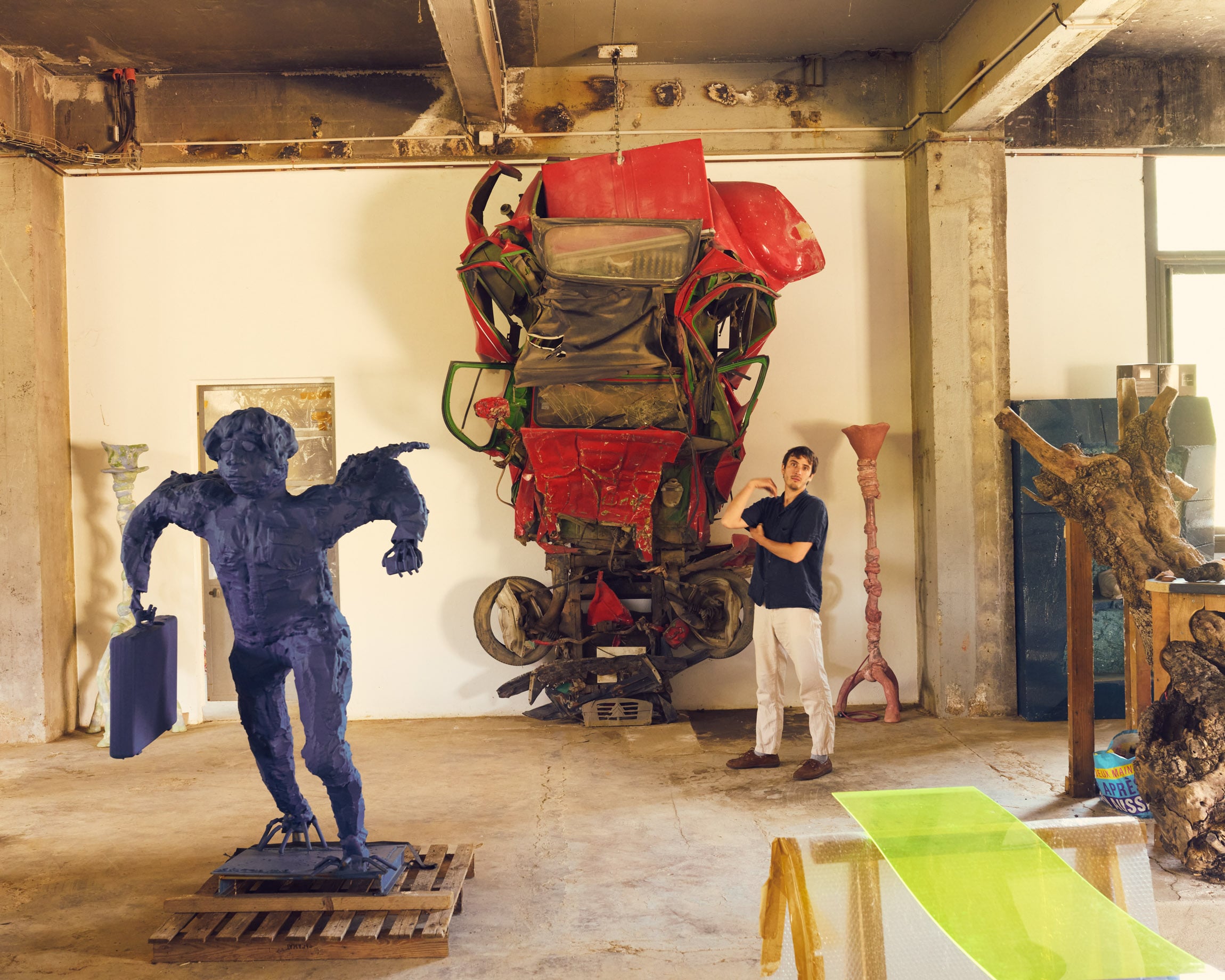
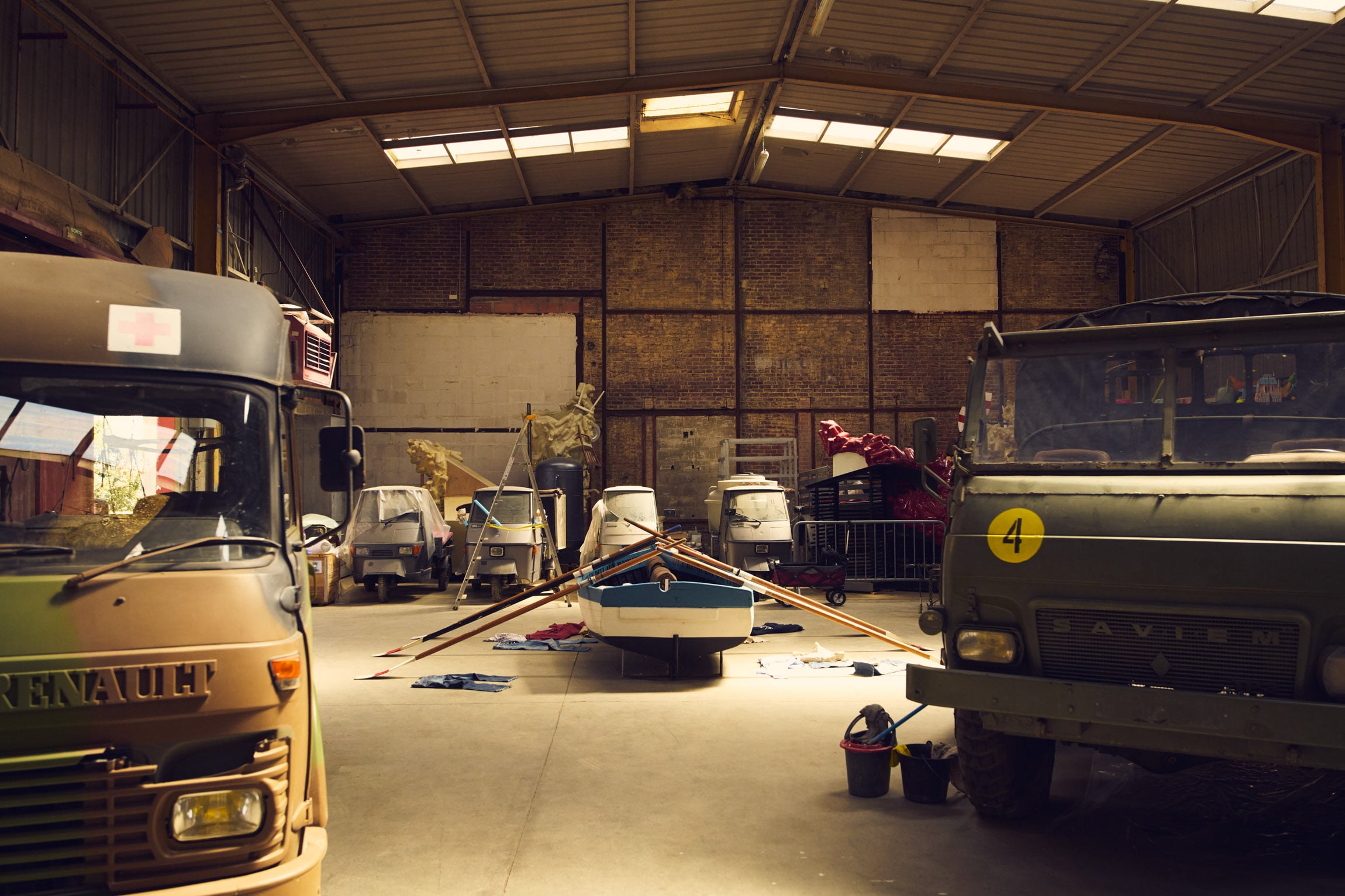
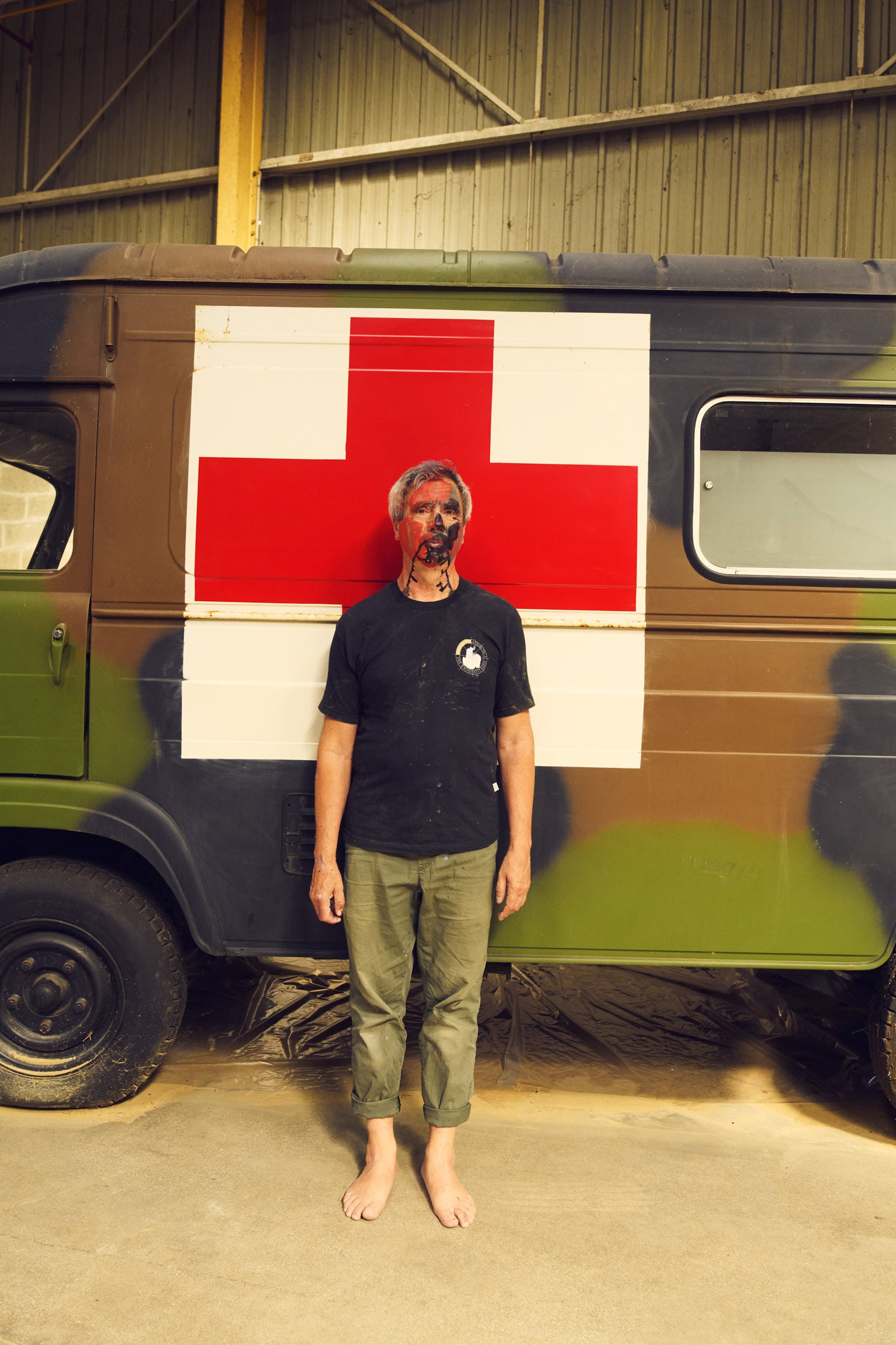
Les Moulins: Leo Orta’s work is defined by its relationship to the land. His organic designs blend with their environment: stone arch against mountain ridges, adobe figures on desert sand. ‘Nature is not an inert backdrop’, he said following last year’s Terra Etna exhibition at SARP Gallery. ‘It is an active, feeling presence’. The expanse of Les Moulins, a former industrial site in the French countryside, is his most longstanding inspiration. Founded by his parents, the artists Lucy + Jorge Orta, this childhood playground also serves as a precedent: Leo is keenly aware that he will inherit the legacy of this communal arts space, along with that of his family. The weight of that prospect—of sidelining his own art—must be immense. But he seems at ease here, eager to raise up a garden and find new ways to revive his parents’ living artwork. The first time we speak, the baroque ceilings of a Parisian café glow in the background, echoing city chatter. The second, Leo is framed by a clear rural sky, shrugging a fleece coat on and off. At Les Moulins, he pauses before each response, commenting on the sound of birds. ‘Today it’s the crows’, he says, before turning back to our conversation.

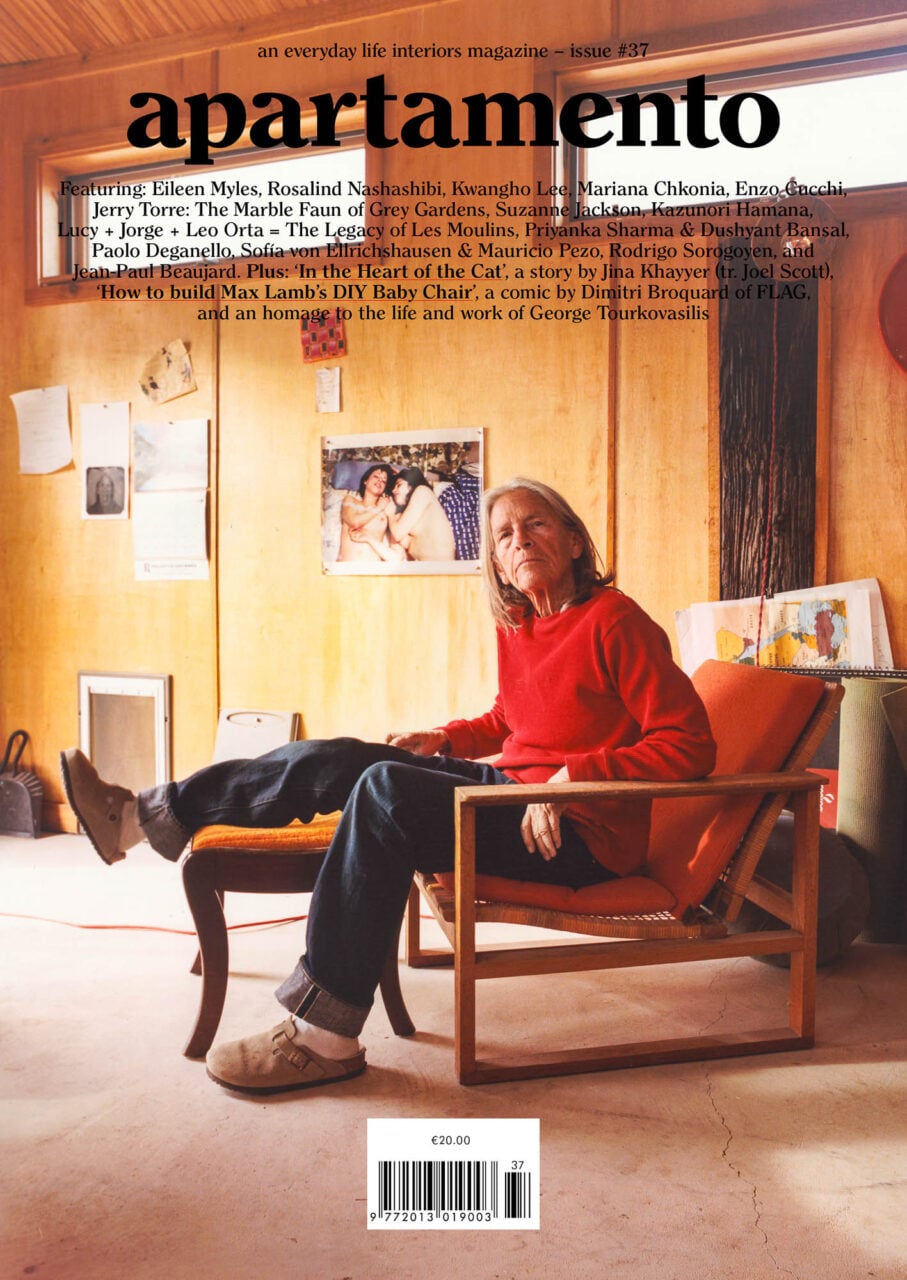
A conversation with Leo Orta for Apartamento magazine issue #37
Growing up, did you always know that you wanted to be an artist? Or was that something you realised later on?
I think I was afraid of being an artist because I would see my parents struggle. They were never home. Sometimes they didn’t know how to pay the bills. They were stressed. I didn’t want to do that. It sounded like a really terrible thing to go through. Something else that made me resist it is the fact that they’ve covered so much in their practice, whether it’s environmentally or socially. I felt like it would be hard for me to go into their domain and work on their topics because their ideas are already so strong. My parents pushed me towards, ‘OK, you have to study, make sure you get a good job’.
Do you have a first memory of your parents as artists?
I have the opposite.
Oh, really?
The first thing that comes to mind is the fact that, in school, sometimes you had to write down your parents’ jobs. My mum or dad would say, ‘Just put architect, put fashion designer’. Otherwise, there would be too many questions. People wouldn’t understand.
When did I first see them as artists? I have no idea, to be honest. I was maybe 10 or 12, and my brother and I were already going into my mom’s Nexus Architecture suits, we were fighting in her room as ninjas. I grew up with that. We would enter the front door of the house, and it was the textile studio. Every day, we were part of that workflow. It still feels the same in Paris. There’s never a disconnect between work and the house.
Did it take time for you to find yourself in your own practice?
Yes. In my first years at the Design Academy Eindhoven, I was still trying to figure out what I was going to do, how to find an equilibrium. A lot of the inspiration that I had either came from my parents’ art, or it was a continuation of techniques that I would learn from them. It took me some time to get out of that and really create my own path. One thing that helped me was to look at techniques that were living in sculpture and to actually integrate that in the design notion, where prototyping had another language. There was a free form inside the sculptural techniques that helped me explore materiality in an unconventional way.
Your work is often site-specific. Is there a particular landscape where you’ve felt most at home creatively?
I think the first time that I really felt like, OK, there’s something happening here, was when we went to Argentina in 2017. It was the first time I visited my dad’s country. It was 10 or 12 days of driving through fields and sleeping in small villages in the middle of the mountains.
Over there—I didn’t feel at home, but I was discovering my dad’s home. He escaped the dictatorship and all the political issues in Argentina. I think he really wanted to disconnect from it, and it created a disconnect for us as well. I speak Spanish, but I didn’t really learn it from my dad. I think there was a shyness around speaking it at home, maybe because my mum wouldn’t understand it. The fact that we didn’t speak Spanish together and that we couldn’t travel to Argentina only made it grow in our imaginations. He would tell us these bedtime stories where he was a scout in the mountains, stories about snakes, and I always remember these. I really felt inspired by the landscapes, even though no work came out of it. It made me want to explore other continents or other terrains
I think today, Les Moulins is the place where I feel the most comfortable. It was the first place where I had a connection to a rural perspective, because I’d grown up in a lot of urban landscapes. Going to Les Moulins was the trigger for me wanting to work more closely with the soil, with things growing out of the soil. I think the work coming out of Les Moulins is very much inspired by the rural landscape.
In your work with landscapes, do you show up open to what an environment will expose to you? How do you navigate that, versus imposing an idea on a landscape?
There was a recent workshop I did in Saudi Arabia on building mud bricks. There’s this traditional technique for building a house that includes shaping balls of mud, and then they pile those on top of each other. Because of that, the building isn’t straight—it has this organic aspect. I wanted to explore that playfulness of, OK, this naturality is not mine. It’s not something that I can do in my studio or that I can do in the urban landscape.
It’s difficult to go to a landscape you don’t know, to a culture you don’t know, and suddenly try to impose an idea. These workshops are actually way more valuable because you’re in direct connection with how the natural world in front of you works. For me, it’s important to have that time where you’re able to enter and be sensible to what’s occurring around you.
When you arrive to a new place, is there a particular point your eye goes to? Is there something that first draws your attention?
No, I let myself go as a free bird. If I go to a volcano, I want to go to the crater, obviously. But sometimes there’s just a small flower growing there—there’s the volcanic eruption, and there’s one little flower blooming next to it. You see that presence and that chaos. Or you’re walking, and suddenly you have several textures in front of you, the eroded rocks of the volcano and the blue sky. It offers a new angle on how to bring colours together, or how to bring those emotions into the work. I like to be alone in those moments, to be there and feel that emotion. To cry if I want to, or just sit and rest. The solitude of those travels is very important for me.
You’ve talked about your relationship to psychoanalysis and how that informs your work. Could you tell me more about how it applies to your practice today?
I think the very first piece where I was super conscious of that connection was the Phoenix Chair. That was a moment where I was in full burnout. I had a difficult relationship at the time with work, with my team, with creating. I entered a really dark phase, and I was conscious of it. I wanted to use that energy and push it into the work, or at least feel it into the work—to not only have the positive or the critical perspective, but to feel that inner self that other people can connect to. Burnout is something that everybody experiences, but how can you translate that into a piece?
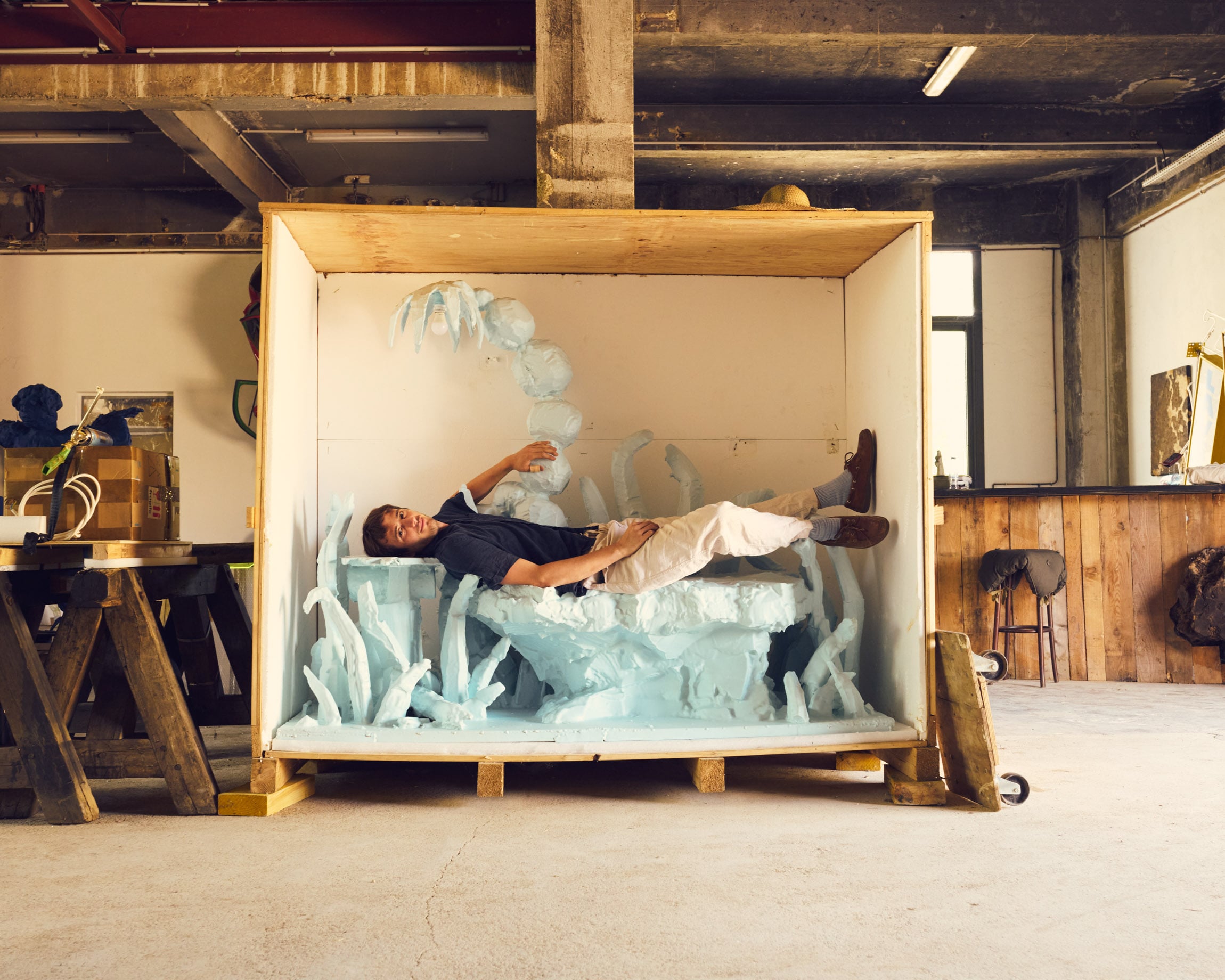
There’s so much depth to psychoanalysis and how you can read what’s inside your subconscious, inside your dreams, your mind. But how can you actually render that? I always come back to the work of Henry Moore because I feel like his approach to the body, the abstraction of the body—there’s so much power to it, to the way that an emotion can be brought forward by a certain angle or position.
You’ve cited Henry Moore as a reference before. What about his work in particular stands out to you?
Somehow, there’s a similar language there. He also has these very elegant, round shapes. I prefer that more smooth and refined aesthetic. It’s an emotion that I feel connected to. Even though, if you think about it, there’s nothing very smooth in the world. Everything’s so rigid and organic.
That’s also triggering my interest in the work of Antoni Gaudí and breaking a certain rigidness. My work doesn’t belong to a very rigid perspective—I don’t build a piece that sits in a corner or sits in a room like an architect would. I want to feel that the work can be free form, that it can stand there and break a bit of the rigidity that we’re living in.
A lot of your work is focused on what people would perceive as waste. There’s this sense of the cycle of an object, this idea that things can be reimagined. I’m interested in that circular quality of your process.
Creating something static—for me, it almost doesn’t exist. If you’re producing a piece in steel, at some point, it’s going to rust. It’s still going to breathe. There’s nothing entirely static or durable. Everything has an end, but it can also be reborn in another state.
That same idea of the cycle is something that’s inspired me recently in understanding how things grow from the soil and how we can use those materials. I had a dream of Les Moulins having—not a kitchen garden, but more of a field where I could produce bamboo, all the natural fibers used in basketry. To have a place where I could directly source materials, where I would rely on the seasons to be able to produce pieces.
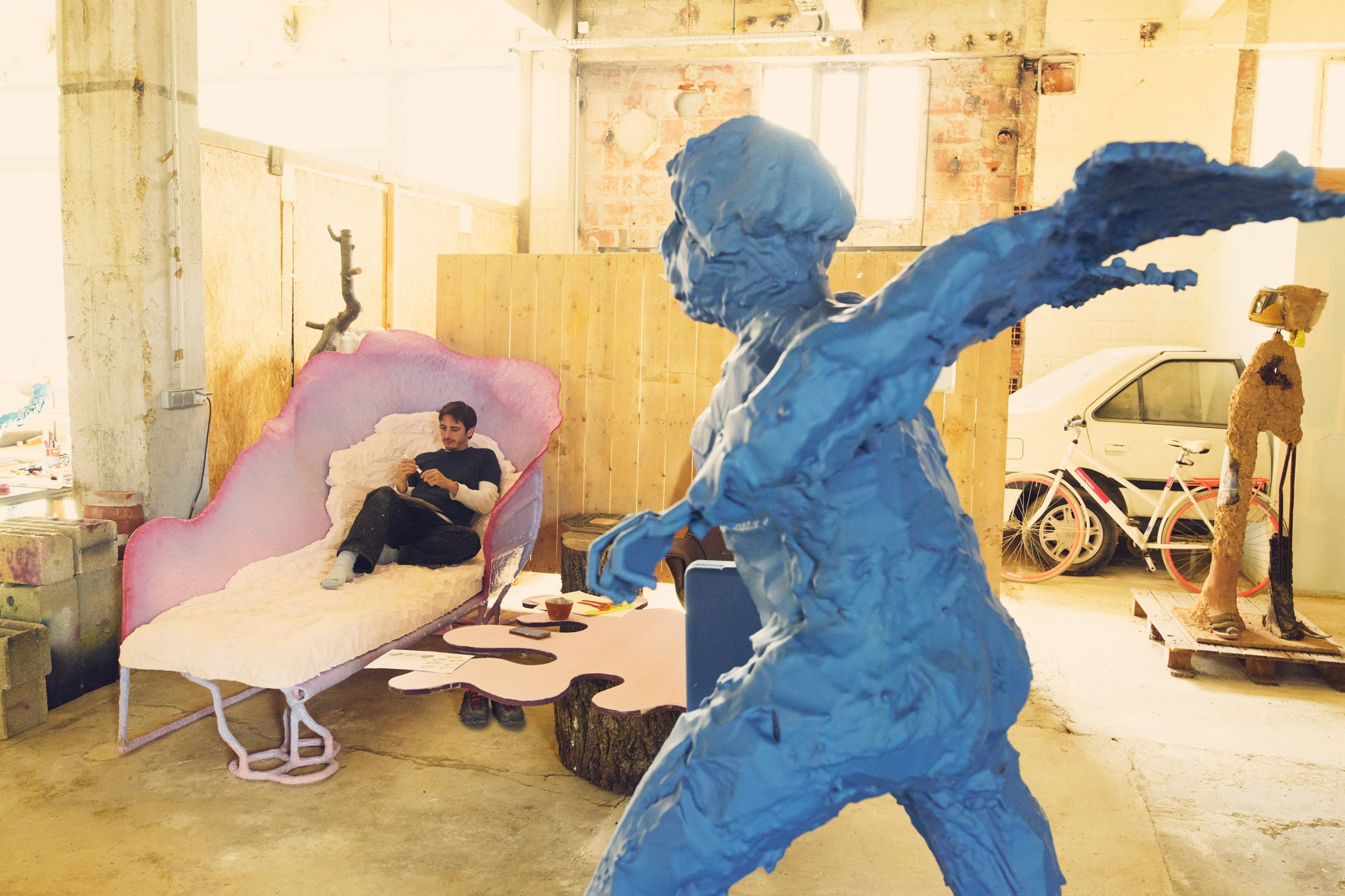
I wanted to ask about your recent exhibition, Uncanny in the man sane / Être-anges (ways of being), which played on a connection between human and animal forms. You wrote that it felt like a new venture for you in terms of scale.
When I was talking about scale, it was not necessarily the scale of the object. This idea of the artist who wants to make monumental work for the sake of making something monumental—that’s not a direction I wanted to go in.
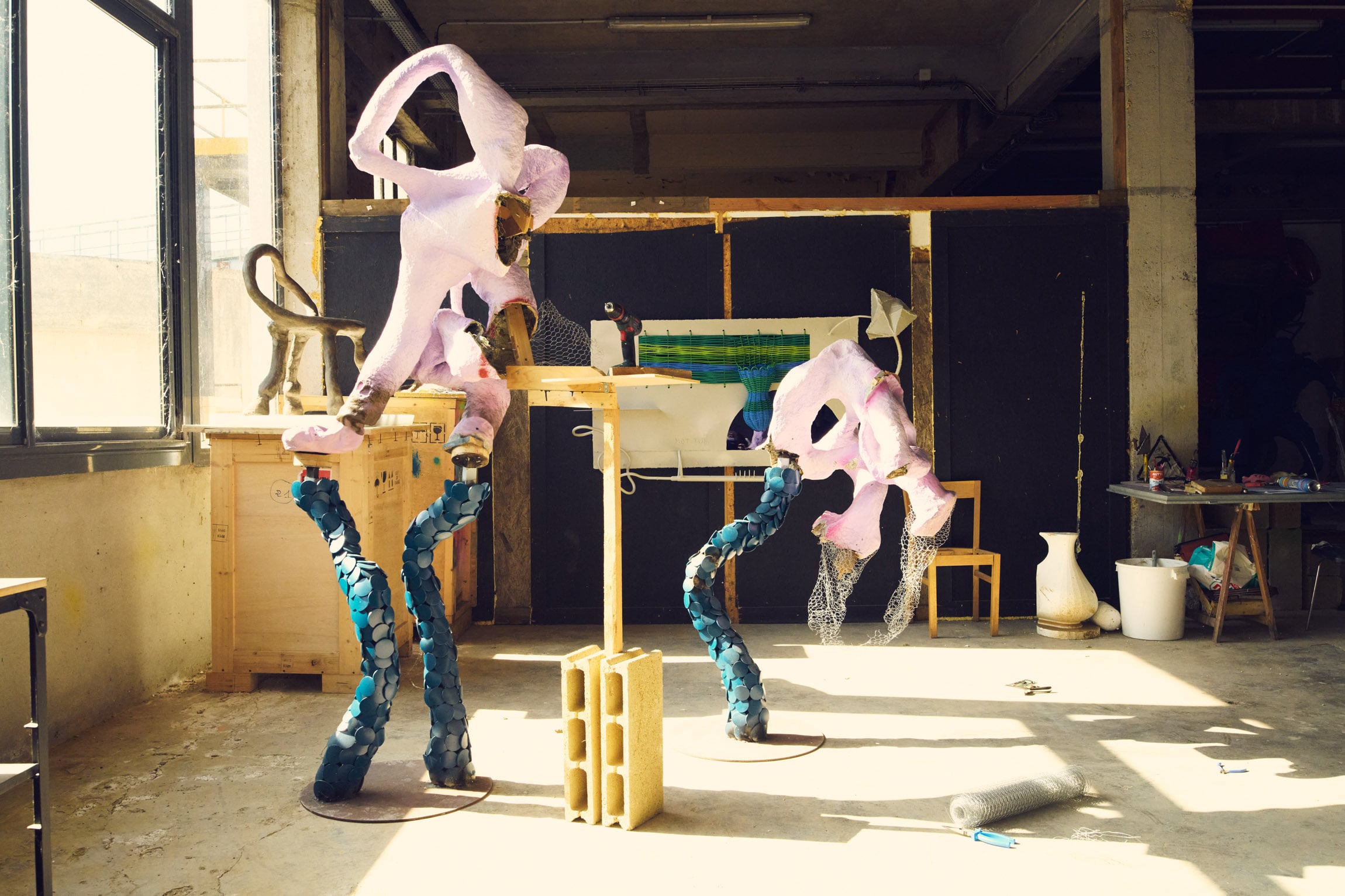
I’m more interested in how you confront a sculpture, how you feel dominated by it, how you enter another dimension. By this, I mean I wanted to explore how you actually exhibit sculptures. My typical answer in the past would be: It’s on the floor because you built it on the floor. This time, my trigger was: OK, I’m talking about this species, the spider, something that a lot of people are afraid of. Something that I also fear, in a way. Louise Bourgeois has built it [with Maman] so that you’re able to enter it, and there’s this notion of motherhood. From my perspective, I’m afraid of it because it’s dominating the self, it’s on top of you, it’s alien-like. For me, the challenge was to redefine how a piece can bring you into different states. The bats had to be hung from the ceiling. They had to go out of the conventional point of view of the eye—I wanted to challenge that perspective by having pieces that actually come out of the wall. I feel like that’s the scale I’m talking about: scale in an architectural space.
You’re thinking about how a piece will live in the world and what your audience’s interaction with it will be like. It seems like that participatory element, which also reminds me of your parents’ art, is a big part of your process. I was wondering, from your perspective, if there’s a certain aspect of their work that you feel deserves more recognition?
I wish the general scene of contemporary art, whether it’s collectors or things like that, would place more value on understanding that these pieces are actually something worth collecting, rather than just being shown in institutions. I feel like their work is way more validated by the public rather than the private. It’s not valued in a way that’s commercially successful, I’d say. They’re very much supported by grants and by institutions. I know at some point, they’re going to pass away, and there’s all that work that needs to be done on how to continue the legacy, whether it’s a foundation or placing the work. I know it’s going to be a tough one, because there’s so much of it, and it’s large scale. It’s a dual practice.
What’s your relationship to the responsibility of that legacy?
I know I’m going to have to put my practice to the side and find a way to maintain such a large-scale space and make it interesting for audiences. If you’re talking about the social work—well, then, what will the social interactions be like with the people around, with the environment? Maybe Nexus Architecture is something that has to be activated every month with the public. There won’t be any need for it to travel all over the world, but rather, people could come here from time to time and experience it, the way you experience Jean Dubuffet’s park or Niki de Saint Phalle’s park in the countryside in Italy.
The way you talk about it is inherently social. It’s a more democratic approach to the idea of legacy, which usually feels so masculine or constrained, in a way.
I feel like the magic of the work is that it has to be activated. It’s activism, basically.
I want to end with a rapid-fire round of questions and see what comes up subconsciously. First thing: What art form do you most enjoy engaging with that you don’t also practice?
Dance. Contemporary dance.
Is there an art world phrase that you would ban?
I don’t know how to put it into a phrase, but I hate when there’s censorship. It could be political, in terms of gender or race. Or even in my work, sometimes someone tells me, ‘I want to see more colour, I want it to be beautiful’. No—are you going to keep showing Berlinde de Bruyckere’s tied-up horse [No Life Lost—After Humanity] with that thinking? Art is all about integrity and integrity of ideas.
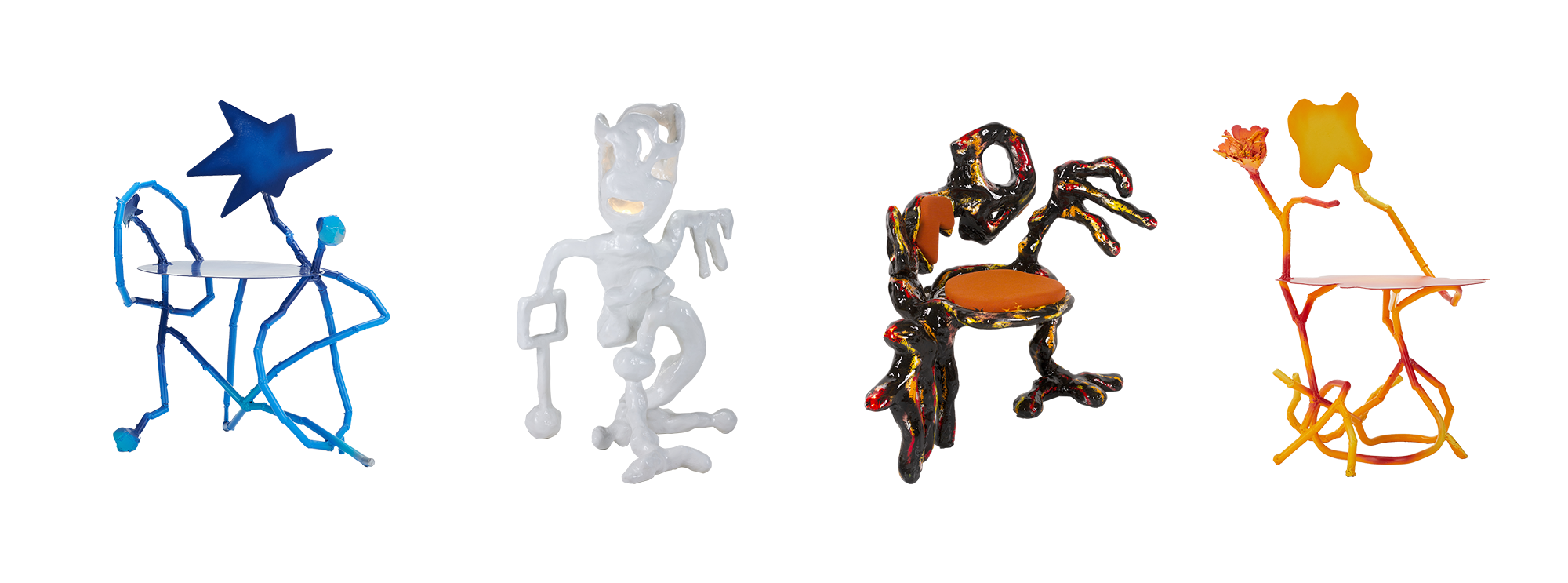
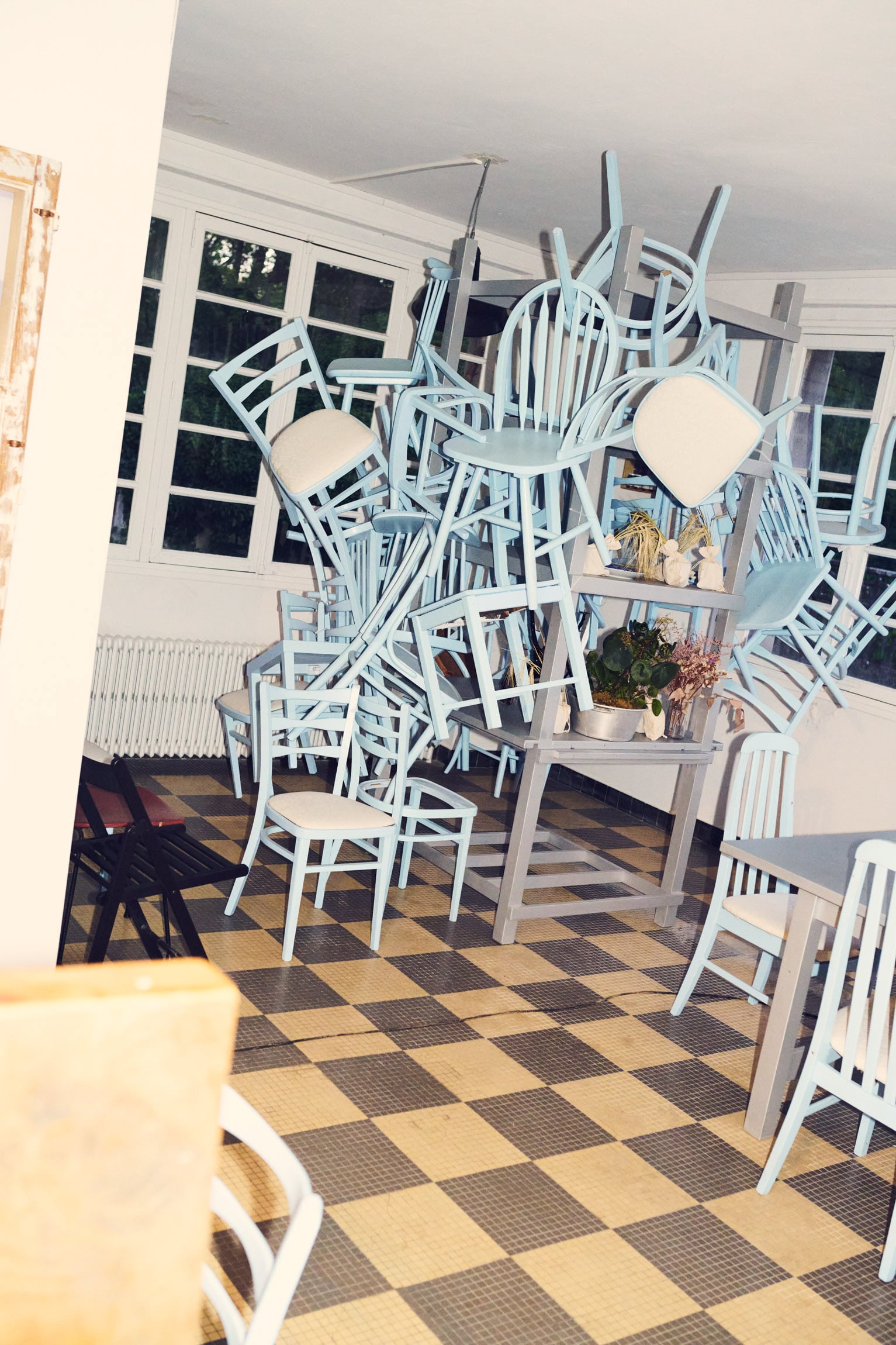
From left to right: Blue Star Chair, 2021; Ghost Lamp, 2022. © Room 6x8; Phoenix Chair, 2021. © Friedman Benda; Orange Flower Chair, 2021.
What’s your favourite piece in Droog’s archive? And the most underrated piece?
Favourite has always been Tejo Remy’s Rag Chair, even though it’s a very difficult question. I love his Chest of Drawers. I love Marijn van der Poll’s Do Hit Chair. I think the most underrated could be—I’ve always confused this with Droog, but TERRA!, it’s from an architectural studio [Studio Nucleo]. It’s a chair built with grass. They have a frame that’s filled and covered with seed, and then suddenly, an armchair naturally grows. Every garden could have one.
Who do you go to for advice?
A therapist.
What’s your ideal day in Les Moulins?
A sunny day and dinner with everybody around, friends and the community. And with a bonfire at the end.
And in Paris?
It starts with a coffee, ends with an espresso martini.
Related stories

Praxis, Agustín Hernández
Alice Moireau’s Manioc Enyucados with Cheese
 close
close
01/10

02/10

03/10

04/10

05/10

06/10

07/10

08/10

From left to right: Blue Star Chair, 2021; Ghost Lamp, 2022. © Room 6x8; Phoenix Chair, 2021. © Friedman Benda; Orange Flower Chair, 2021.
09/10

10/10