Willi Smith

Moving to Lispenard Street
Willi Smith purchased one of the few remaining derelict lofts on Lispenard Street in the early ‘80s. A few artists had already taken up residence in the crumbling building, the editor and co-founder of Paper magazine, Kim Hastreiter, being one of them. She was shocked at first when she found out about her new neighbour. ‘Smith had just bought the loft downstairs. The building was all poor people and all of the sudden this famous person moved in. The neighbourhood was not luxurious. I got mugged a few times and there were rats everywhere. Willi would ask me everything about the building—the neighbourhood made him nervous’. At the time of his move, Smith was at the pinnacle of his success, as the innovative mind behind the iconic brand WilliWear. He was a perfectly pressed, opera-going, business-savvy media darling. Chic, friendly, and unsullied—basically a New York impossibility.
In the mornings Hastreiter would see Smith’s limo waiting outside with his driver, George, in the front seat. The image was jarring. In the ‘80s, Tribeca was a forlorn neighbourhood with cavernous, barely residential spaces. A zip code for struggling artists and those on the up and up, no one expected established city dwellers to make their home here. By the ‘80s Smith’s face was easily recognisable by the average American. ‘No matter where he was, people were asking him for photographs’, Hastreiter says. WilliWear was bringing in millions of dollars in profit a year, and Smith had already amassed an impressive collection of antiques and objets d’art. He would have made more sense slipping out of a classic five on the Upper East Side. Instead, he chose to settle into what was essentially an art slum—a calculated and telling choice.
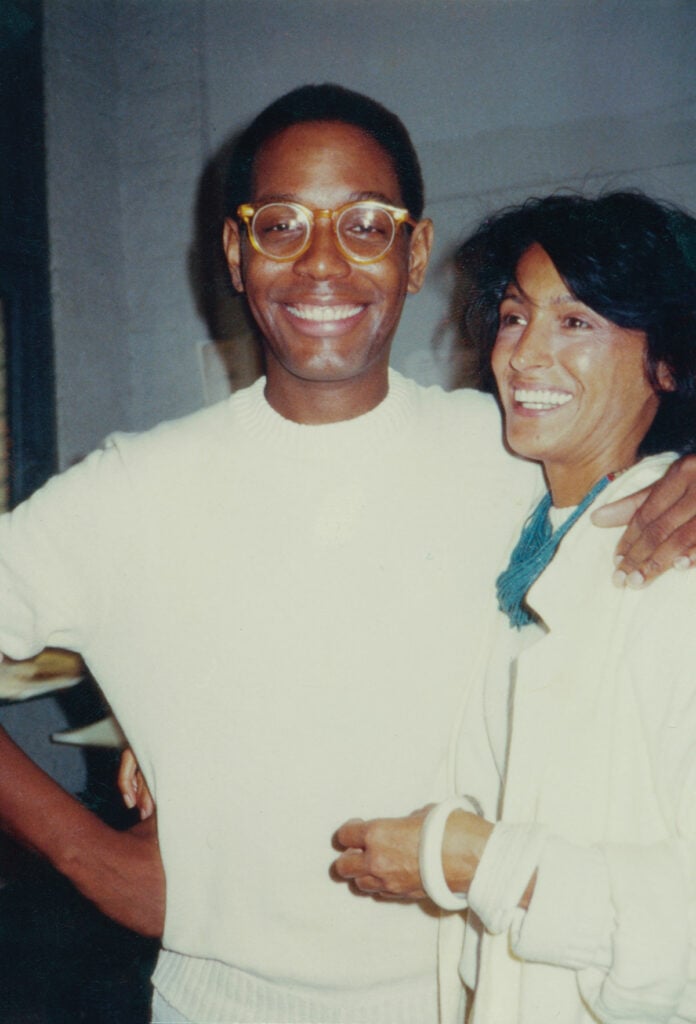
Well below Smith’s budget, the property did not present a massive financial risk. To put things into perspective, Hastreiter bought her loft, directly above Smith’s, for only $16,000 (roughly $50,000 today). The loft presented Smith with the opportunity to make a home entirely of his own, stripped of social signifiers, projections, and limitations. The writer Jarrett Earnest mentions a conversation in which the artist Lisa Yuskavage quoted one of Smith’s favourite anecdotes—‘style over status’—which is and was a radical concept. Smith was concerned with the lifestyle and needs of every social class, most notably the middle, regardless of the bourgeois circles he personally moved in. This appreciation for the quotidian pops up throughout his life and career.
His many homes were airy and layered. Spatially, Smith favoured an open floor plan that allowed room for experimentation. He had three separate homes in New York during his time there. We only have thorough photographic records of one of them—the Lispenard Street apartment—which he decorated with his close friend Rosemary Peck. The space is an extension of Smith’s person: elegant, charming, and warm. His presentation was deceptively simple; his business partner Laurie Mallet describes him as almost ‘preppy’, referencing European sportswear and what we know today as American streetwear. Ricky Clifton, who designed interiors for much of the New York art world during this time, and who befriended Willi in 1973, referred to his style as ‘preppy drag’, insinuating that his style was a self-aware performance of what people wanted to see. It’s likely his self-presentation was a conscious effort to neutralise the social threat of the Black man. Clifton remembers him in the ‘70s wearing ‘high-waisted pants, crazy shirts, big straw hats’. Smith’s style was at times a social commentary on the harmful stereotypes of African Americans—an issue he referenced with more humour than fury. ‘It was very theatrical’, says Clifton. His performative approach to getting dressed could be unpacked indefinitely, as an outlet for racial tension or a desire to make light of the stereotypes and difficulties Smith was up against as a Black American man. His home was a reflection of this layered interior world, providing refuge and a safe space for self-invention.
Collaboration
‘Smith was very inspired. He would design all the time. It didn’t take him long to create something fabulous’, says Mallett, who was also one of the designer’s closest friends. ‘So much excited him; he was always collecting and getting inspiration from the places he travelled to’. Another friend, the collector Corice Arman, remembers ‘him doing a whole fall collection in one sitting, standing up at the terrace table, drawing like mad’. This perpetual rush of inspiration was fed by everything Smith saw and experienced. Everything he witnessed he took note of, cannibalised, digested, and inserted into the next collection or project. WilliWear was a test kitchen of sorts. Mallet described the brand as ‘not just clothing. It was more of an “idea” company. That’s what made it exciting’. The cornerstone of WilliWear was collaboration. Mallet introduced this imperative to the brand. The conceptual artists Christo and Jeanne-Claude, friends of Smith’s since 1967, collaborated with him on the 1980–83 land art installation Surrounded Islands in Miami, Florida, for WilliWear’s first major collaboration with an artist. Smith designed uniforms for the 120 monitors who tended the work. The surplus merch ended up selling out from the back of a truck in Miami, effectively the first example of an ‘artist’s tee’ in contemporary fashion history, and an unexpected success. Smith went on to collaborate with Spike Lee, Jenny Holzer, Bill T. Jones, Nam June Paik, and a slew of other artists, under the advisement of Ronald Feldman Gallery in Soho.
Many of the conceptual artists that Smith brought into his work were experimenting with verbal and visual dissemination and communication. Christo and Jeanne-Claude’s public art interventions engaged massive amounts of people. Surrounded Islands tackled ideas around environmental responsibility and required civic and community engagement. The pair’s early art installations also pointedly rejected external sponsorship. This creative independence served almost as political commentary in a way that overlapped with Smith’s own work. He indirectly responded to immediate social concerns through his design. His work at its essence was about equality and inclusion, topics still deeply relevant today.
Smith was the first designer to introduce the concept of streetwear: accessible, mass-produced, good-quality clothes that could be easily mixed and matched. The clothes were meant for, and marketed to, everyone, in the truest sense of the word. Most of the clothes were unisex, offered in a wide range of sizes, and cut from materials that were easy to clean and maintain. Perhaps most interestingly, patterns for many of the designs were made accessible, so that WilliWear devotees could make the clothes at home. Smith consciously served as a blueprint, hoping to inspire other people from within his community to follow their creative dreams. His legacy birthed designers like Telfar Clemens, whose mission statement is ‘Not for You, For Everyone’.
Smith’s sketchbooks, one of which is preserved in the current Cooper Hewitt retrospective, show a wide variety of references. Alexandra Cunningham Cameron, the curator of the show, shared what she found in her research: ‘He was cutting out Andrée Putman interiors, Helmut Newton images, industrial aprons for farmers—his field of reference was so vast’. Interspersed among sketches, I found images of a Félix Aublet lamp, Cotton Club paraphernalia, 1920s flapper hairstyles, Italian Memphis interiors, Marcel Duchamp’s Bicycle Wheel, a high-tech rolling Fisher System 600 record player (a smaller version is visible in his Tribeca loft), Georgian furniture, examples of Grecian draping, and portraits of contemporary conceptual artists and cowboys. These sketchbooks were proto–mood boards, narratives comprised of scraps and ephemera seamlessly sewn together. Today this method of collection, collage, and assemblage is central to the work of many African-American artists. Recontextualising everything they see around them, these artists construct new futures from shreds and fragments of the past, present, and sometimes future. In a recent essay for the Paris Review, Sasha Bonét writes about Lorna Simpson’s work, stating that ‘collaging is a historical practice of Black imagination’. Tschabalala Self, Tau Lewis, and Arthur Jafa are all artists operating within this lexicon. And Smith’s work sits comfortably within that canon, too.
Smith designed the costumes for Bill T. Jones and Arnie Zane’s 1984 dance production Secret Pastures, bringing dimension and life to the stage. The performance began with two dancers in an interpretation of Thai fisherman pants—cream cotton that wraps and folds over the waist. As the players in the performance expand, so do the costumes. The palette gradually transitioned into pastels and candied hues. Separates appeared—full suits, dresses, a voluminous white coat with a lightness and buoyancy in direct opposition to its size. Jones’ choreography was unencumbered by Smith’s costumes; they were designed, as per usual, with function in mind. The street is a stage, after all.
Restraint was apparent on the runway in Willi’s work, but there was nothing restrictive or limiting in his execution for Secret Pastures, and we see this same nimble understanding of how to design clothes for different contexts in Smith’s one-off wedding dresses. (He also designed the groom and groomsmen’s suits for the wedding of Caroline Kennedy—JFK’s daughter—and artist Ed Schlossberg. They were American royalty, and Smith’s inclusion in their wedding says a great deal about his reach, in all directions.) At the time of the Secret Pastures release, Smith had already become intimately familiar with the classic operas, after a decade of voracious show-going, as well as contemporary dance at BAM, where he and Mallet were patrons. The costumes he designed for Secret Pastures were in no way derivative of what he had seen on stage already. While studying as an undergrad at Parsons, Smith was quoted as saying that he was deeply bored by the college’s traditionalist approach to fashion. Nothing outside of the discipline was considered. Clothes were the only reference for other clothes. Smith broke from this tired tradition quite easily. He, as many brilliant Black minds that came after him, knew what makes the clothes are the people in them, their experiences and attitudes, so he looked to them for inspiration. His frequent collaborations with artists were a testament to that understanding.
Collecting
Just as Smith wove conceptual practices into his clothing line, so did he bring the experimental practices of conceptual artists into his home. Twenty-three prints of Andy Warhol’s Cow poster were displayed in Smith’s 1970s apartment on Horatio Street in the West Village, designed by Vicente Wolf. Pop art proliferated in this space, perhaps a nod to Smith’s appreciation of American ideals. This seems to have been a notably playful period of his life. His Horatio Street apartment was noticeably more colourful and compact than the place he would move into nearly a decade later. Colour was a thematic focal point here, in more than one way.
In a 1972 interview with Style magazine founder Ki Hackney for Women’s Wear Daily, Smith openly discussed race, its role in his brand identity, and how it showed itself in his personal collection. Smith felt his Blackness played a positive role in his public image and openly leaned into his identity as a Black man. Also around this time, Smith began to collect Jim Crow-era decorative caricatures of Black people, generally in the role of nannies, servants, or slaves. In his 1972 apartment, a collection of Black Americana, including dolls and Aunt Jemima cookie jars and salt-shakers, began to form. Many of the pieces were gifted to friends of colour—Leonard Davis, for example, who worked for WilliWear and went on to amass a large collection of Black Americana. Smith recontextualised these painful signifiers of America’s past, utilising the objects as a reminder of Black people’s beauty and resilience, while acknowledging the humiliation and subjugation such stereotypes were born from. His expansive and intentional collection of Black Americana was rooted in an effort to reclaim racial agency. ‘Patrick Kelly used to collect a bunch of Aunt Jemimas’, remembers Hastreiter. An interesting footnote, as Kelly, a fashion designer, was Smith’s contemporary and also Black. Smith was singular in many ways, but his fixation with identity was shared by many of his Black peers. In this same article, Hackney commented that, ‘As Willi combines all the elements of his past and today’s thinking in his clothes so he does in his own life. He’s streamlining his clothes yet retaining softness, sensuality and warmth along with an up-to-date mood and he’s doing the same at home’.
Smith went on to refer to his Horatio Street apartment as his ‘ivory tower’, hinting at a desire for simplicity and function (explaining the mattress on the floor and the leather upholstery on his sofa, so that his guests could feel comfortable with their feet up), while also indicating that home was a space for unfettered thinking and experimentation. Unrelated items were juxtaposed: a plastic-wrapped pop sculpture by Christo displayed on top of an antique table, for instance. Pop art pops up again in the form of a limited-run poster by Michael English depicting a disembodied mouth dripping honey. Clifton recalls that the apartment was rather childish in comparison to his later homes: ‘When I first met him he was in this loft that wasn’t really decorated that much. The Tribeca loft was more grown up. His previous place was like a kid’s loft’. The playfulness and irreverence of Smith’s earlier apartments was carried over to Lispenard Street through the untraditional placement of his furniture, but his aesthetic mood took a decidedly serious turn.
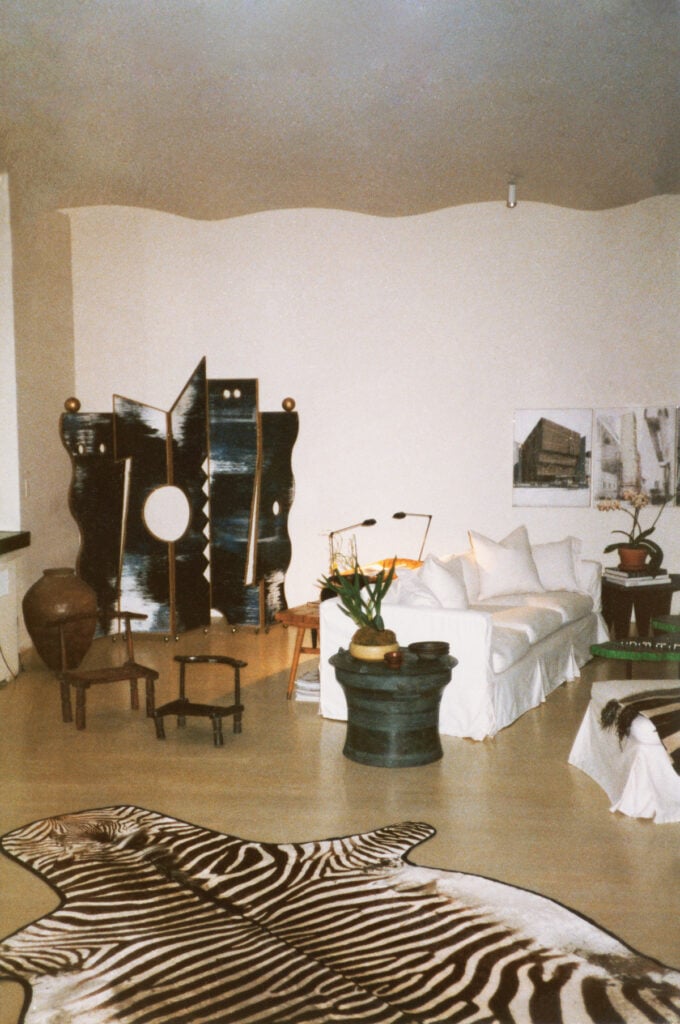
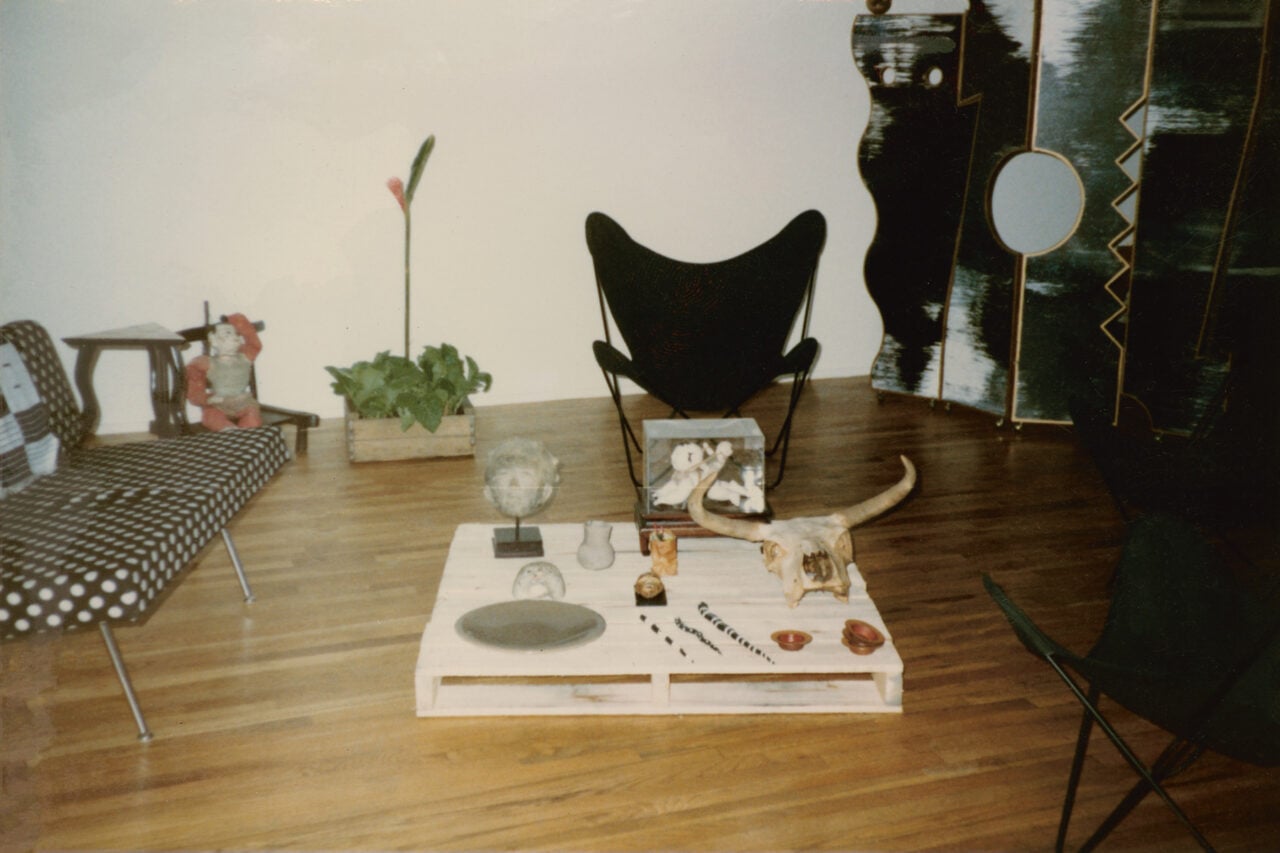
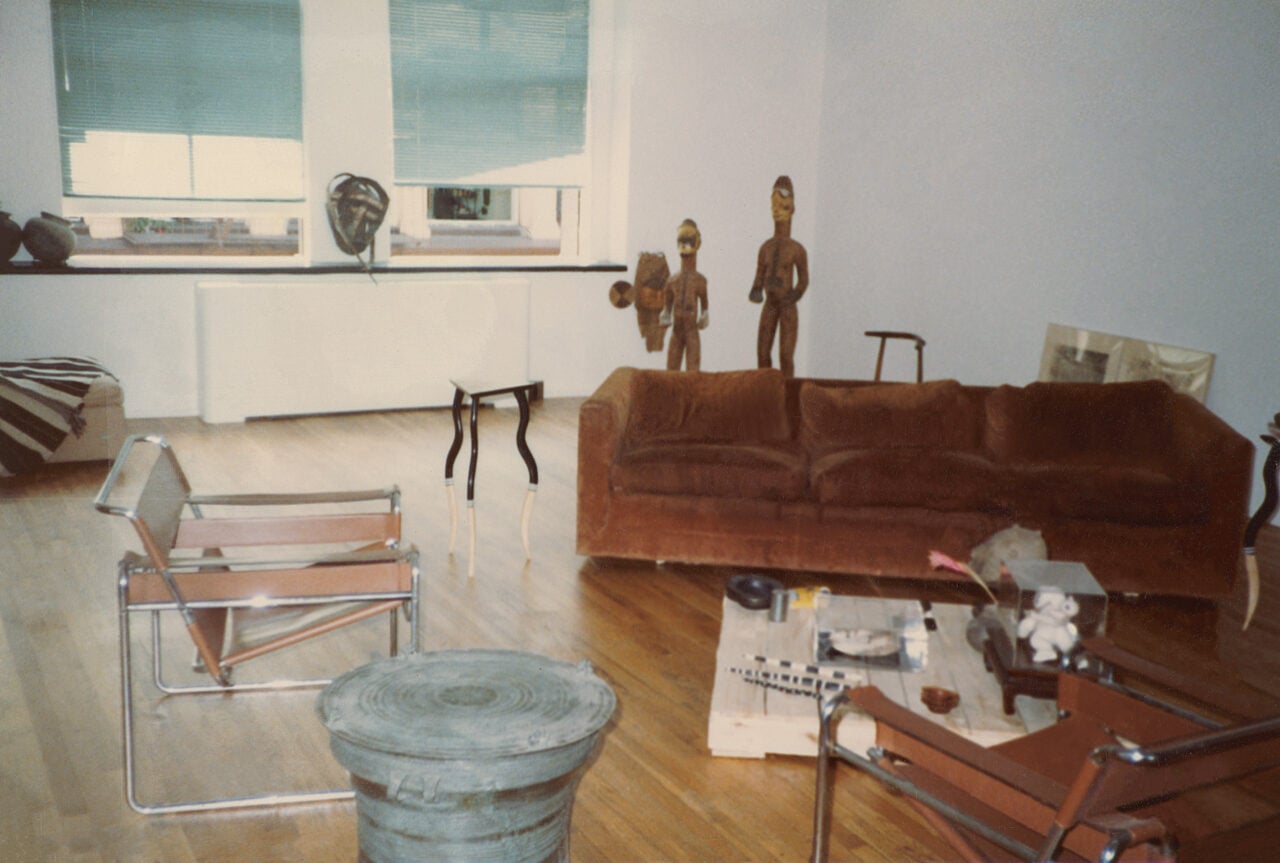
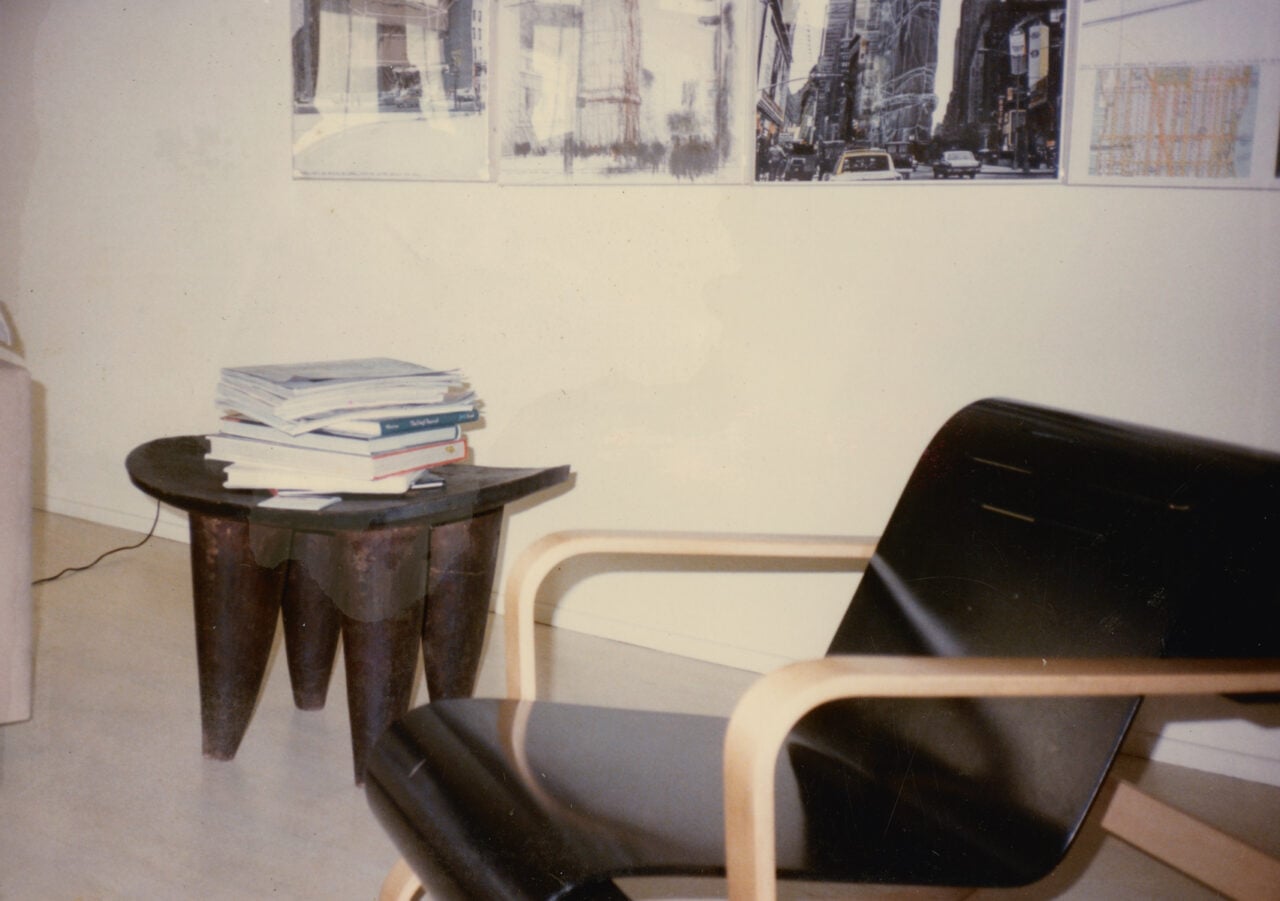
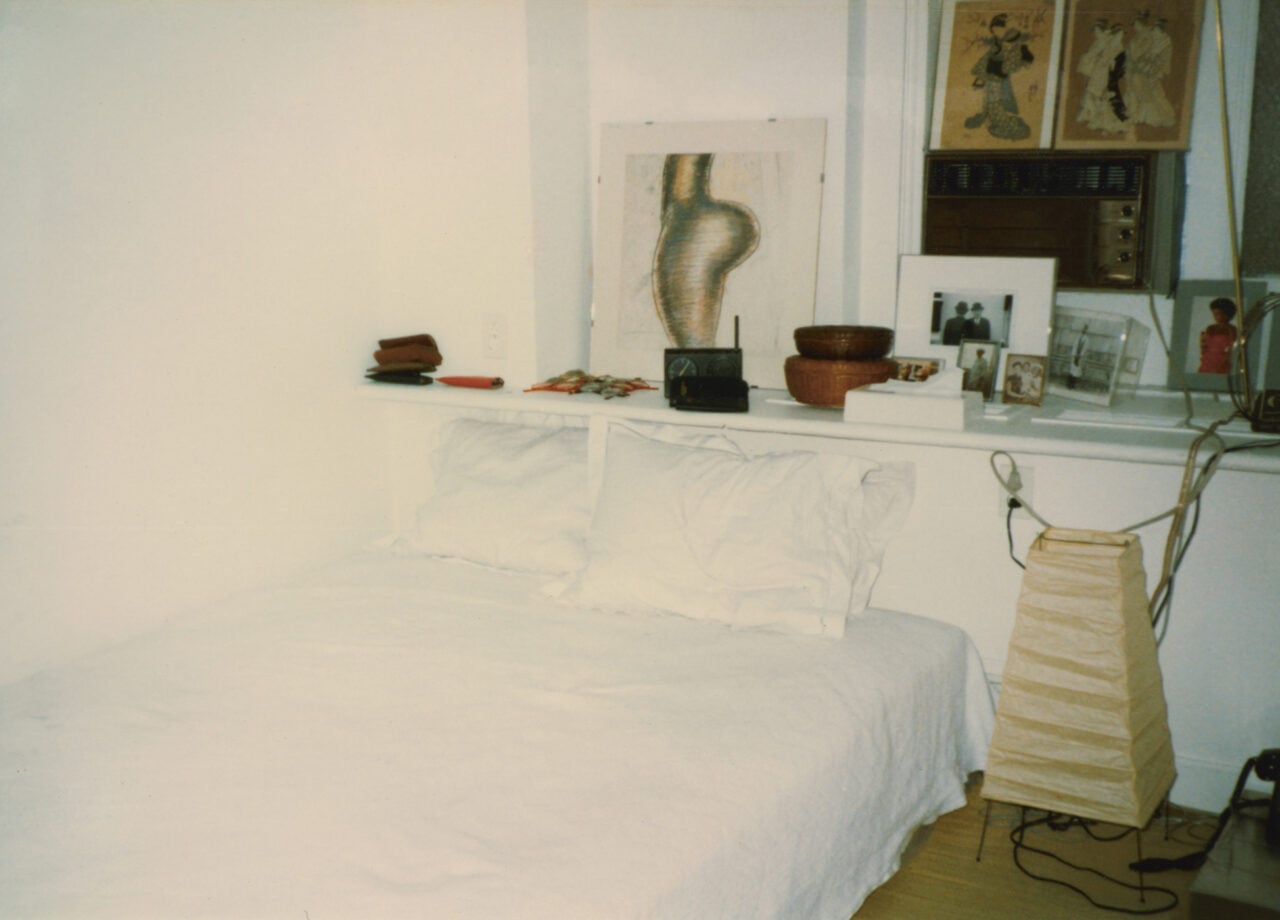
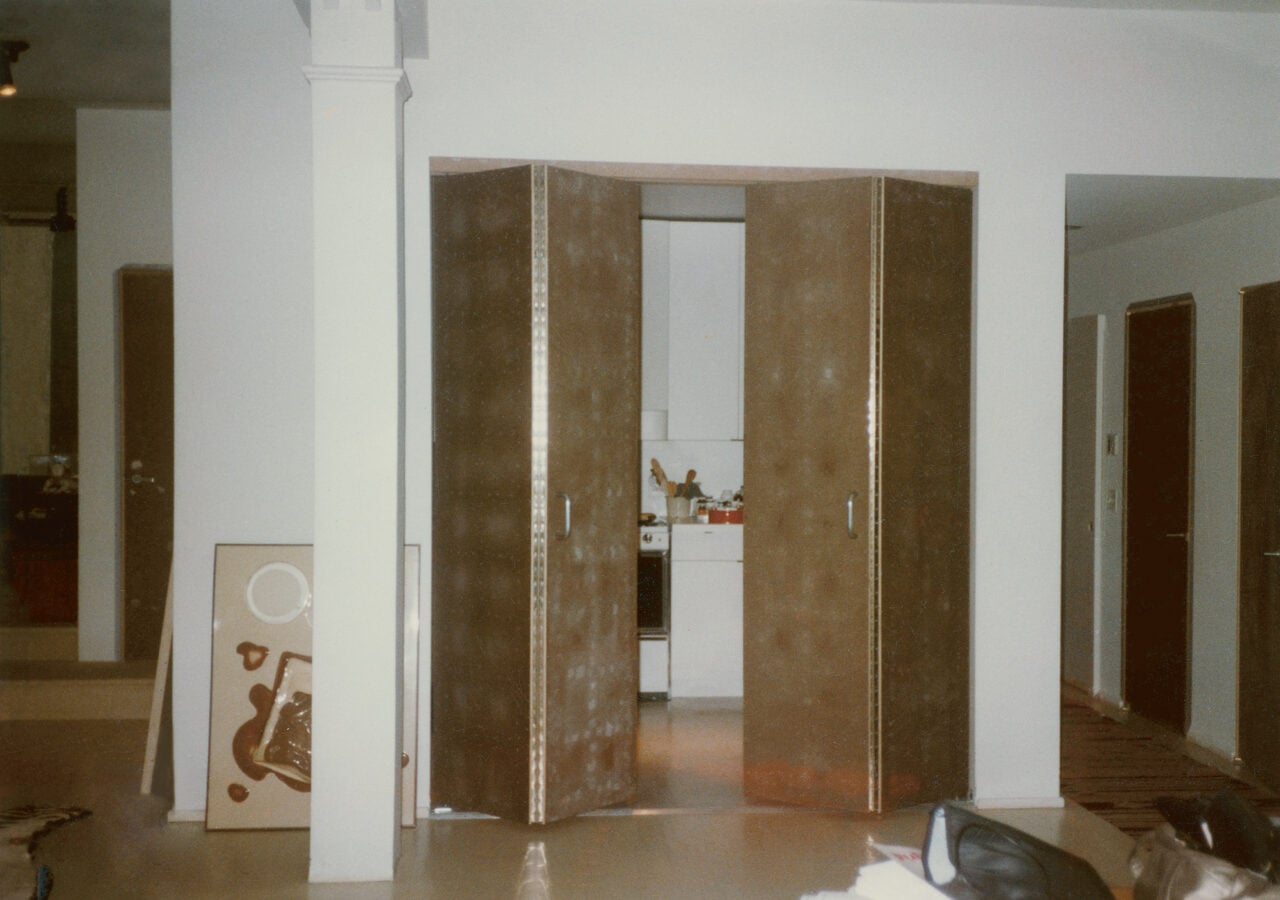
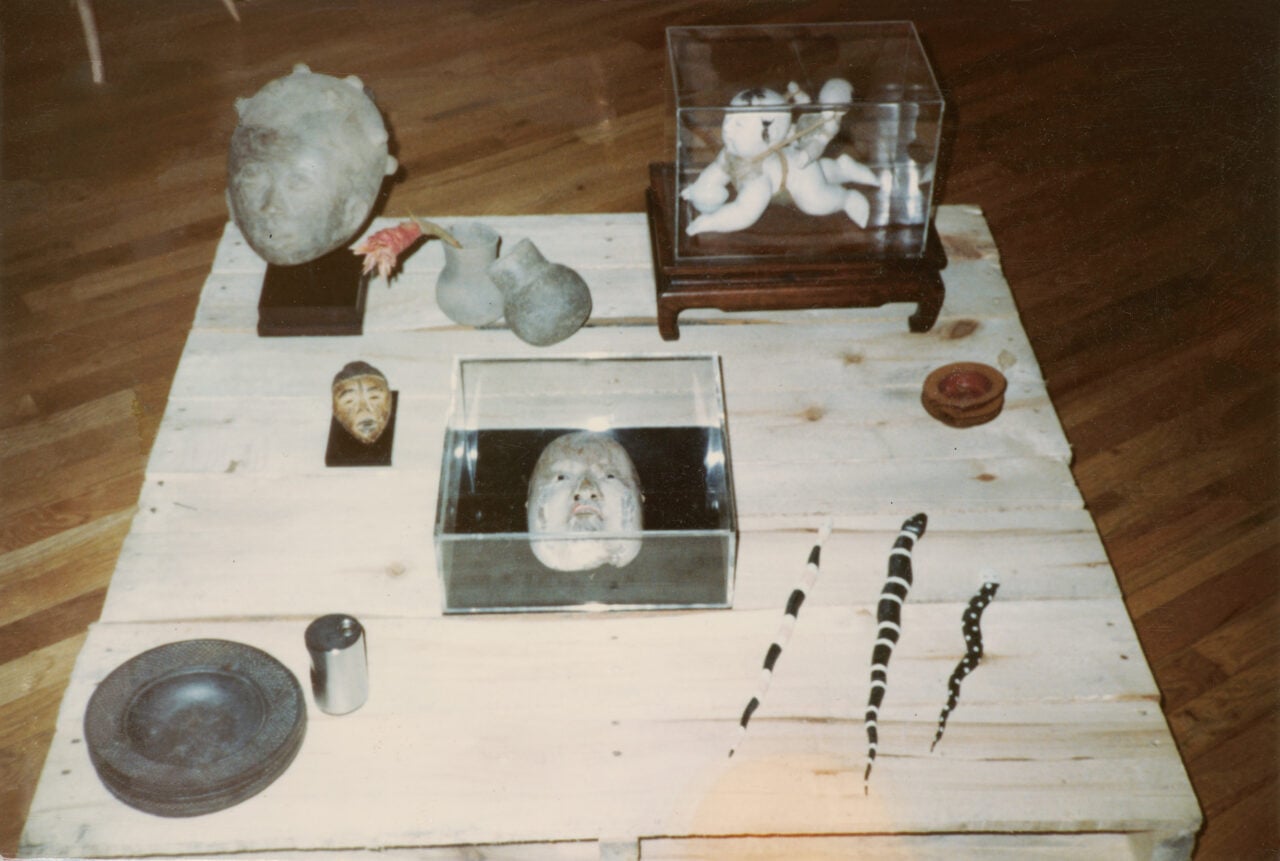
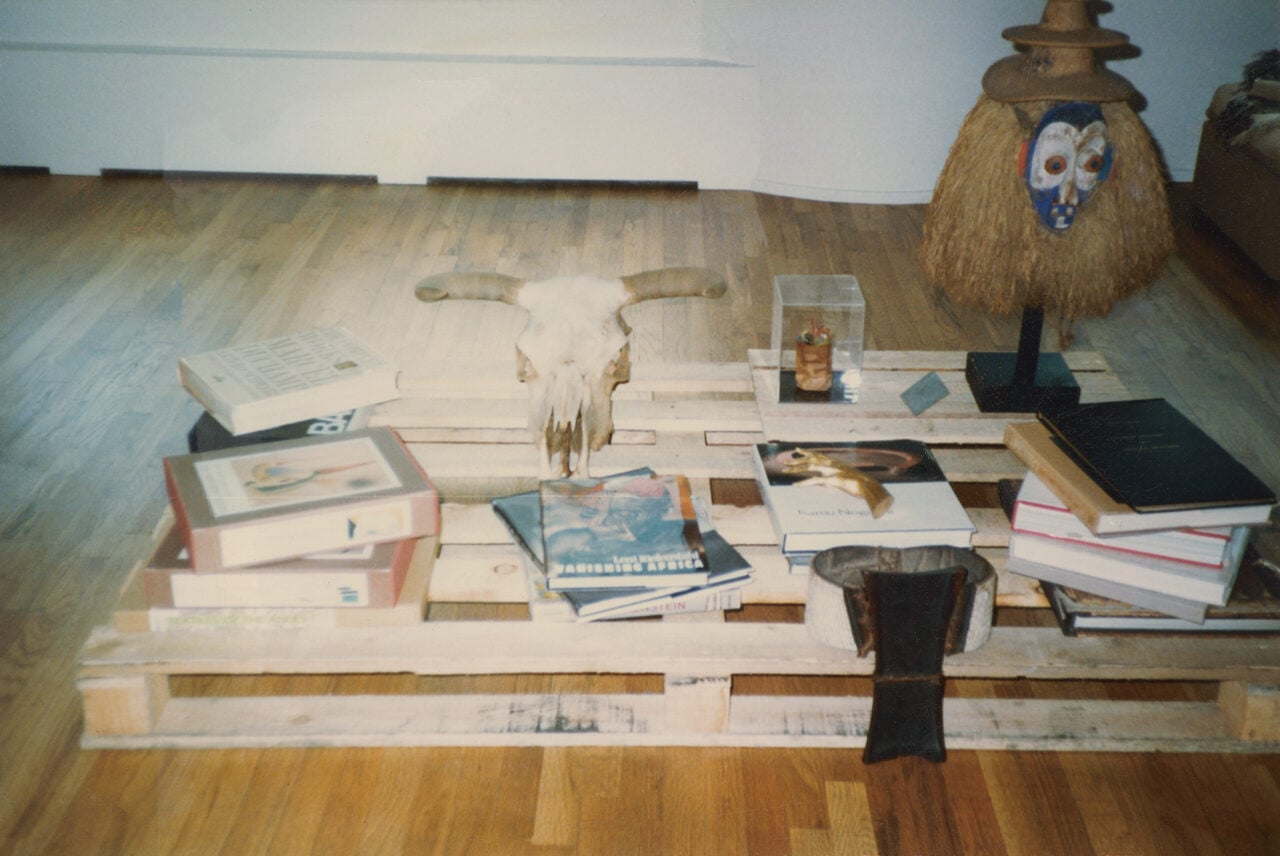
Smith and Peck (who designed the apartment) met through another fashion designer, Harriet Selwyn. She had worked with Smith while he was lead designer at Digits, the once-popular sportswear label. Peck’s artistic practice covered a number of mediums outside of interior design, including jewellery and painting, so she could easily cover the wide range of visual concerns important to Smith. The pair’s friendship began in the early ‘70s, and they lived together briefly while Peck helped decorate Smith’s home in Tribeca. The apartment’s open floor plan was flooded with natural light and afforded endless possibilities. Earnest writes in the monograph on Smith for Cooper Hewitt: ‘Smith had a collection of African antiques and contemporary art but very little furniture. One night, as they walked home from dinner in Chinatown, Rosemary spotted a stack of battered wooden shipping pallets. She knew they’d work. Smith hired a passerby to help and they brought two to the loft. Snapshots show one used as a coffee table holding a large potted plant, an arrangement of Japanese vessels, an African bust, and a 1978 work by Christo (a wrapped copy of the book Modern Art by Sam Hunter and John Jacobus). The scavenged pallet served those objects well and communed at ease with an Alvar Aalto chair and a wall arrayed with prints from Christo’s series (Some) Not Realized Projects (1971)’.
The shipping pallets used in Smith’s Tribeca apartment carried over the theme of industrial collapse and renewal visible in his showrooms and stores and referenced the readymades of Dada artists that Smith engaged with conceptually (and tracked in his sketchbooks). On the pallet in Smith’s home, we see arranged objects in stone, painted wood, iron, and clay. The predominant palette of black and white (Peck’s signature, which she attributes to a childhood spent in a nunnery) continues down to the smallest scale. Smith collected and displayed antique heads and figurines of various origin, carved wooden masks, the Japanese vessels mentioned by Earnest, and painted wooden snake decoys of unknown origin. Precious objects on a humble base.
In the WilliWear showroom, constructed by the architectural firm SITE in 1982, a lot was brought in literally and figuratively from the street. Mallet and Smith had discovered the firm through a window display they did for the Rizzoli bookstore. In the Cooper Hewitt monograph the writer and editor Michael Bullock notes, ‘The window featured a monochrome grey, half-finished brick wall and abandoned tools. Newly released design and architecture books were scattered throughout the simulated construction site. Their covers popped against the muted, unified backdrop’. Detritus was scrubbed down and repurposed in his showroom and stores, expanding on the concept of regeneration, to provide a fully functional port of operations. The design process began with a tour of the Chelsea piers—then a notorious spot for covert meet-ups and gay cruising—in which Smith pointed out the textural and structural interest of the area to James Wines, the cofounder of SITE. Wines took note of all he saw and quite literally brought in bits and bobs from the area, creating walls, desks, and racks for Smith’s commercial spaces. SITE’s design was unified by colour—grey in the WilliWear store and white in the WilliWear showroom and office.
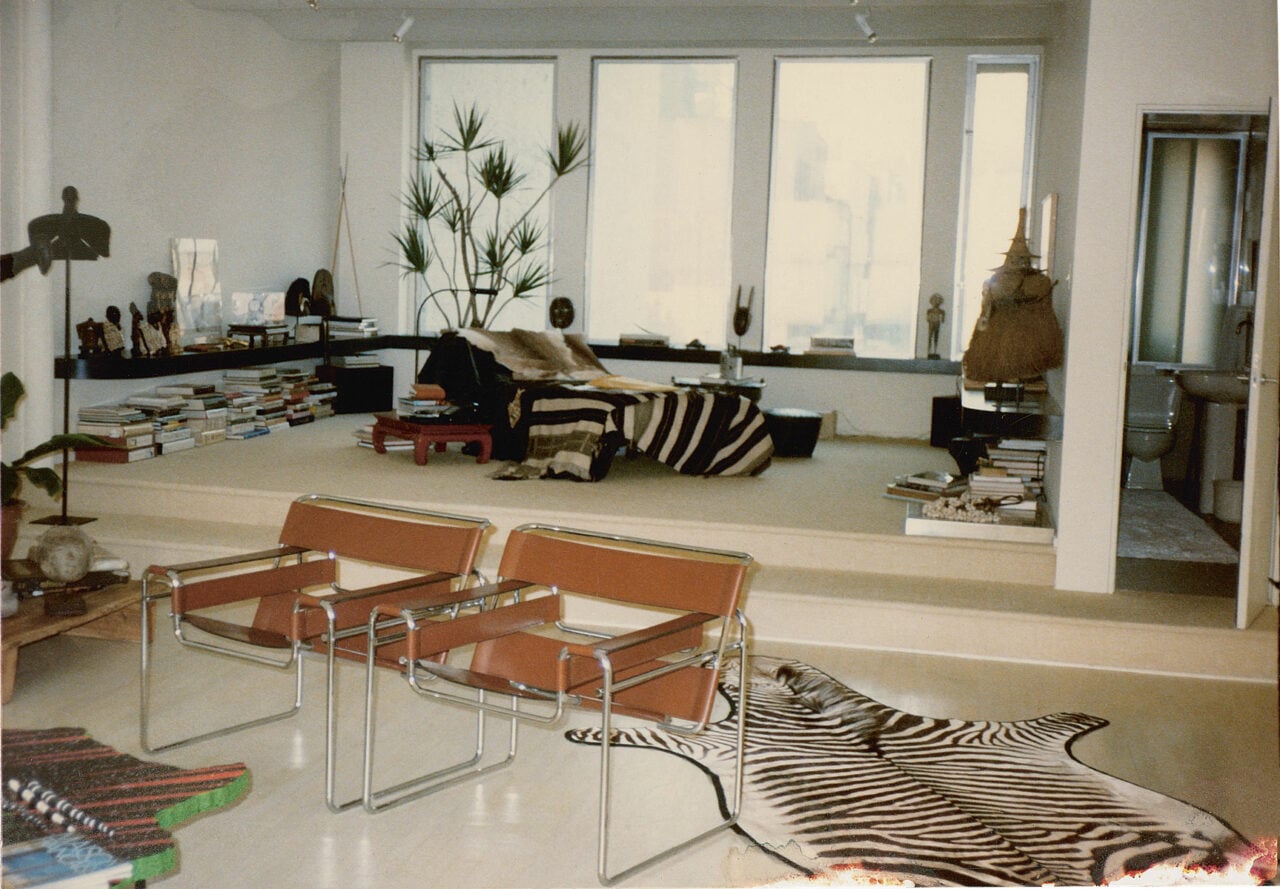
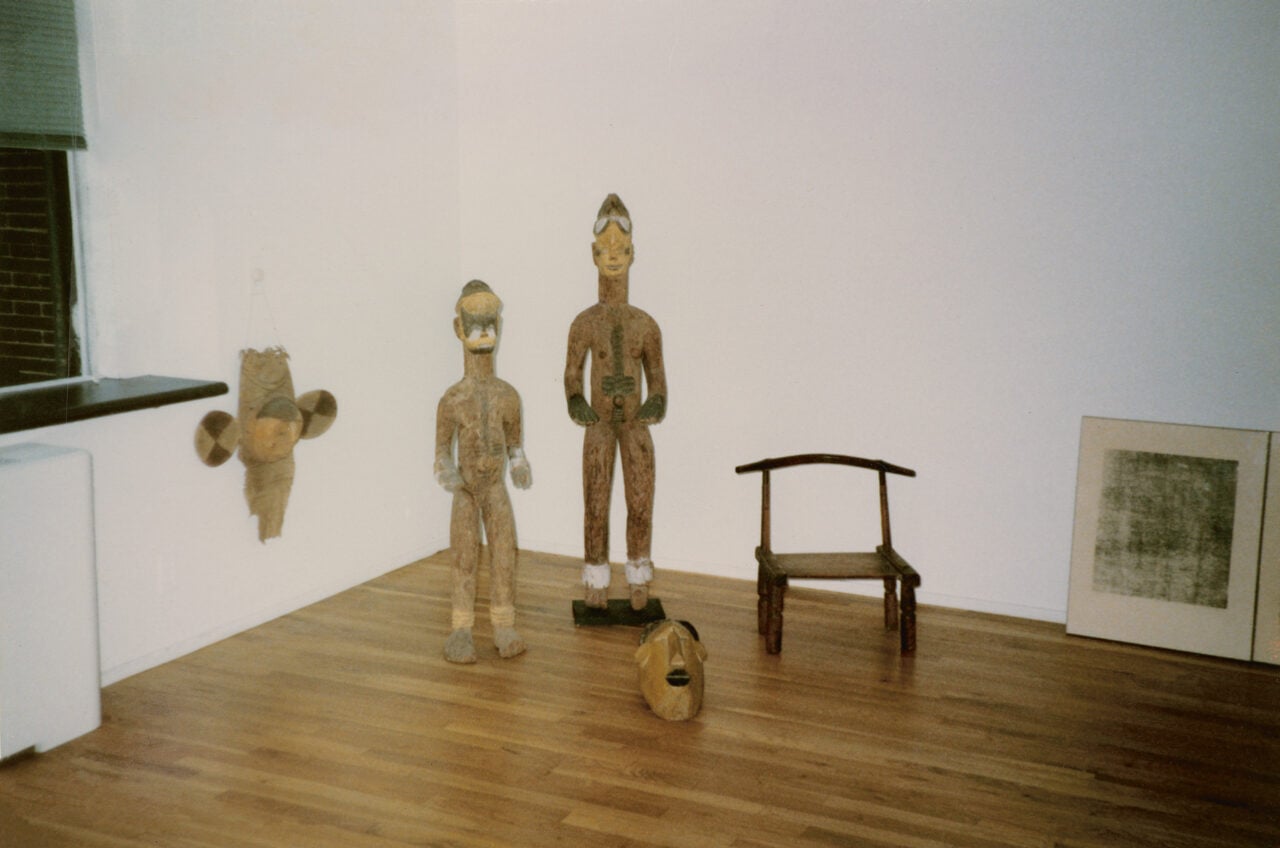
The multifunctional urban elements incorporated into Smith’s residential and commercial spaces indicated a radical desire for the paired-down and socially neutral. Though a voracious collector of fine antiques and objects, Smith never approached the usual hoarder-adjacent mentality (or living space) of many devoted collectors. One of the many areas that Smith showed interest in was African tribal art. For her 50th birthday, Smith gave Peck a copy of Susan Mullin Vogel’s book African Aesthetics (which was very popular among the cognoscenti at the time). In his apartment, Smith had a plethora of African antiques and sculptures, along with textiles, ceramics, and exotic skins both from his travels (he went to Paris, Italy, England, Jamaica with Mallett) and antique dealers in New York. The African sculptures had a spiritual and personal relevance to Smith. These works were activated by their original owners, mostly through dance (one of his favourite forms of catharsis) and linked Smith to his heritage and history.
Peck remembered spending many afternoons with Smith at Craft Caravan, the iconic Soho store steered by Ignacio and Caroline Villarreal, which dealt in African, East Asian, South American, and Indian textiles, carvings, jewellery, and objects. It was here that he picked up many of the Senufo figures and Dan masks that are scattered throughout the Tribeca loft. Cunningham Cameron also shared that ‘Smith was picking up things on his travels. He brought back masks and sculptures from Senegal for himself and his friends. In India he would buy primarily textiles; you can see little peeks of that through his apartment’. Smith also spent time in the iconic gallery Fifty/50, run by Mark McDonald, Ralph Cutler, and Mark Isaacson. Fifty/50 was frequented by the highest echelon of art world insiders (including the likes of Francesco Clemente and Julian Schnabel) and introduced mid-century modern to the New York elite. It was from here that Smith acquired most of his vintage furniture. Among treasures from these galleries, Smith also had functional works of art by dear friends—a coffee table in the shape of Africa by artist Dan Friedman, with a green border and black-and-red-striped top, and a postmodern folding screen also by Friedman with zigzags, cut-outs, and protrusions.
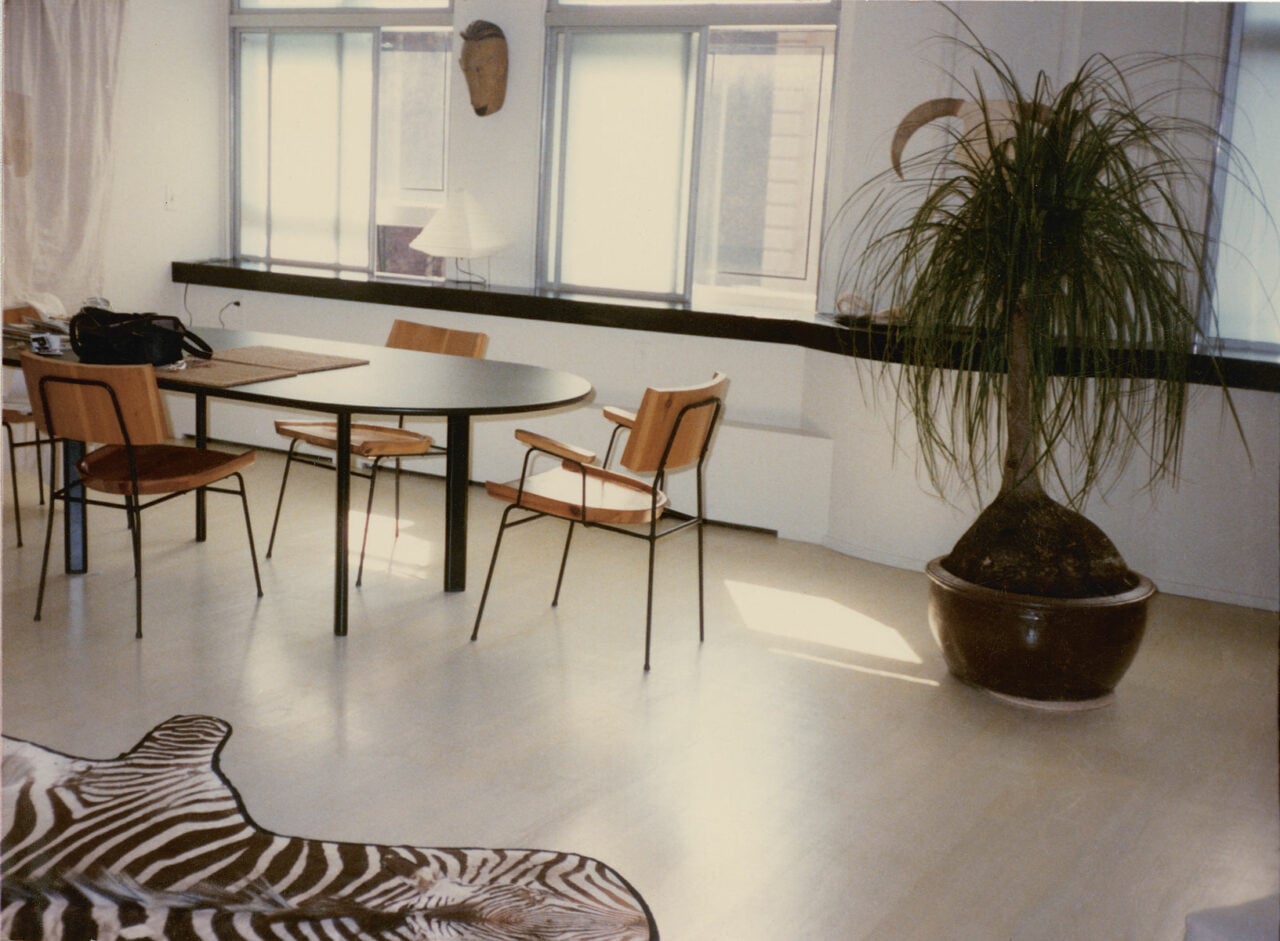
Interspersed among the African sculpture and postmodern experiments were rare Alvar Aalto pieces, Chinese Ming furniture that sat low to the ground, African stools, a Noguchi lamp, a pair of Marcel Breuer’s Wassily chairs in chrome and brown leather, black butterfly chairs, and a cream sofa and daybed (the latter covered in exotic skins and fur pelts). The furniture came after the objects, as Peck recalls. Fine art was also abundant in Smith’s home. Another close friend, the model Bethann Hardison, brokered the acquisition of an important painting by Jean-Michel Basquiat for Smith. The large yellow work was hung among paintings by Keith Haring, photographs of Harlem by Martine Barrat, lamps by Giacometti (toeing the line between fine and decorative art), and work by Tom Wesselmann, as well as the aforementioned pieces by Friedman, Christo and Jeanne-Claude, and Warhol. Fashion executive Jeff Tweedy is also quoted in the Cooper Hewitt monograph saying that Smith ‘was inspired by the photography of Seydou Keïta and the figures of Mama Casset’. In a 1986 New York magazine feature titled ‘Artlessly Artful’, by Marilyn Bethany and Oberto Gili, snippets of Willi Smith’s apartment are spread over five pages. The writer highlights the limited black-and-white palette and points out some impressive items from within Smith’s collection, namely a pair of fanciful horn chairs, upholstered in leopard velvet from the estate of the famous 1950s screen star William Holden. The floor underneath these chairs is covered with a painted canvas ‘rug’ by Joseph Melland, a decorative painter mentioned in a 1987 New York Times article as a ‘new talent’. His work referenced the cotton canvases used as floor coverings in English and American homes from the mid-18th century through the 19th. This inclusion is one of many examples that indicated Smith’s historical affinities, thoroughness, and the extensive nature of his reference pool. It was also this New York magazine article that inadvertently launched Peck’s interior design career, one she never intended to take on.
Friendship and identity
Smith’s friendships ran incredibly deep. Peck describes their relationship as ‘a love affair without sex’. He surrounded himself with people who understood what he was doing and could engage in dialogue around his and their own work. His relationships affirmed him as a person. Perhaps surprisingly, many of Smith’s friends were white. The circles he moved in were affluent, at times formal, and not terribly diverse. Unofficial segregation was then, as it is now, a very real reality, and though certain individuals could step into different racial groups or zip codes, this was not the norm. Queer identities were also restricted and binaries even more vigorously enforced than they are today.
When researching for the Cooper Hewitt retrospective, Cunningham Cameron and her colleagues discovered a potentially pivotal moment in Willi Smith’s early years. Shortly after beginning his studies at the New School, Smith was asked to leave the program after the dean caught wind of his gay romantic relationship. He left and never publicly spoke of the experience, but one could imagine the impact such a blow would have on a young person’s self-perception and understanding of the world. Interestingly, while at the height of his success, Parsons asked him to come back and teach—another triumph for him, though a little too late.
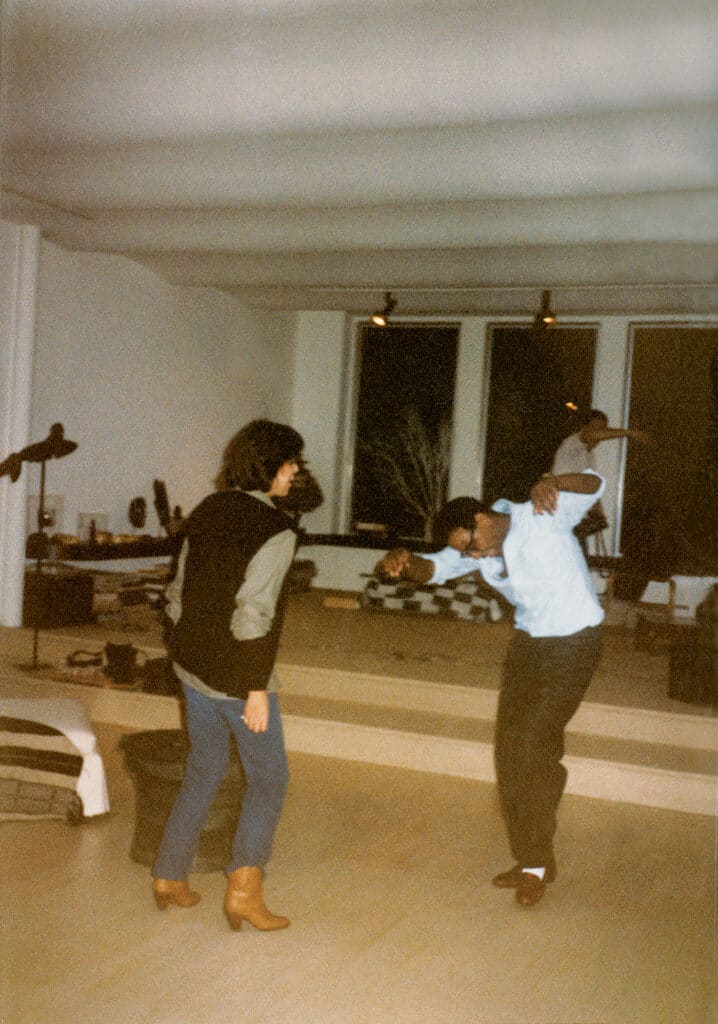
Smith’s career and public image were very controlled. He was out and he was clearly Black, but he styled a carefully inoffensive image of himself. In an essay for the Cooper Hewitt monograph, Hastreiter wrote, ‘He was an uncontroversial guy—not too gay, not too hip, not too famous to hug you. He was relatable and approachable, and so were his clothes. Willi could be your friend, your brother, your son, your uncle. He was beloved by millions of American women, including me’. Smith also had an active, if private, life on the gay scene. He and Ricky Clifton would regularly go out to the Gilded Grape, an iconic drag club on 42nd Street. ‘It wasn’t glamorous’, according to Clifton, but that was expected if you were gay in the ‘70s and ‘80s. Jeanne-Claude remembers Smith wearing a monkey hair coat and crossed pistol belt buckle at a bar in Colorado when he visited her and Christo. Both of these Willis coexisted in memory and in reality. He was honest about who he was, but not an open book, revealing only certain parts of himself publicly, sharing different sides with different people, as we all do. Peck remembers, ‘Willi was the kind of person that crossed over. There was no line there’.
The image that dominates archival material concerning Smith is one of an almost WASPy, very clean-cut, and palatable man. This is the public Smith of the late ‘70s and ‘80s. In the early ‘70s we catch glimpses of the designer that were slightly more experimental. When on a trip with Corice Arman (one of his closer Black friends) Smith fussed over his appearance with the care and concern of someone who has not fully settled into their ‘personal brand’. On that trip Arman remembers ‘we were going out together—some social thing in Monaco—and he came into my bathroom like six times. He kept on asking if he should put his hair up or down; he had braids then. He was also wearing a skirt of his own creation, and this is way before male American designers started wearing skirts’. The freedom and risk we see in this moment does not present itself frequently in research and records of the designer, which makes it that much more important and poignant.
Smith moved in very exclusive circles, especially in the last 10 years of his life, but he was never pretentious or embarrassed by his own background. He would bring Peck with him when he visited his Philadelphia grandmother (who raised him), Nana Bush, for Sunday dinner. This was a figure Smith was enamoured by. ‘He adored her’, remembers Hastreiter, while Peck recalls that ‘Nana Bush lived in a modest apartment in Philadelphia, furnished in a traditional style’. She seems to have been a pragmatic, wise woman. Smith even brought her into the city once or twice—once to cook a Southern-style dinner at his home for a small party of friends. Clifton would spend Thanksgiving with them. He remembers Nana Bush as ‘really perky’—perky and present. Nana Bush was the most supportive family member in Smith’s life, financially and emotionally.
The designer’s family was middle class. He even refers to himself as part of the bourgeoisie in an interview, with a prominent doctor stepfather and a cultured, progressive upbringing. Still, there were problems that no one spoke of. Tension existed between his younger siblings, and his mother was a complex figure for him. After she died, and shortly before his death, he felt her presence while on a trip to India. He told Peck that ‘his mother tapped him on the shoulder going down the Ganges, after she died’. Even in this anecdote, she was both a comfort and a harbinger.
Balancing his identity in a space that did not reflect his own personal history was a delicate dance for Smith. He honoured and acknowledged his heritage but was careful to do so in a discreet way. When Earnest was researching Smith he spoke with Lorraine O’Grady, a Black conceptual artist operating in the ‘70s and ‘80s. She had never developed a relationship with Smith, though he had a clear interest in the conceptual lexicon. O’Grady remembers him staying uptown in a very ‘fancy’ art circle. (Fancy here is code for white.) Clifton remembers that he was ‘very conscious of whiteness’ and would play with Clifton, who was often the only white person around when they hung out, calling him ‘Ricky Rockefeller’, in reference to his imagined white wealth, and goading him to utter racial slurs, for Smith’s own entertainment and that of Toukie, his sister.
Arman casts more light on how Smith dealt with racial tension internally: ‘He told me every morning he would get up, look in the mirror and say, “Willi you are going to do this today”. Being a Black man he had to navigate this world in a particular way. Even with his chauffeur, who would pick him up every day, he had to have a persona that would help him get through the day. He really was frustrated by that. He had to prepare himself to accept the disrespect, daily. He was Black, and no matter who you are you’re still Black’. His white friends had a different perspective, of course. When I asked Hastreiter whether Smith brought up race with her, the answer was no. But she did witness a lot: ‘He was very, very clean-cut. He never cursed. He was just like what I imagine every Black mother dreamt their child would be: he was polite, smart, he had money, but he wasn’t flashy. He was really good at dealing with white people. He worked with white people. He was surrounded by white people. He was really good at playing this role for white people’.
Part of his charm was performance, and part of his performance was for survival, but the extent to which he felt these things were necessary is unclear. Hastreiter describes him as ‘very proper and not at all controversial’. I wonder whether, like his sexual orientation, his Blackness was something that he treated with sensitivity and a degree of strategy. He must have had to. To be prominent and Black even today in America is an almost impossible position. Smith’s whole career was propelled by intellectual and artistic tension and collaboration. ‘Maybe Smith got an energy working with people very different from him’, offers Earnest. ‘Maybe he took that difference and used it as an engine to make something new’.
Legacy
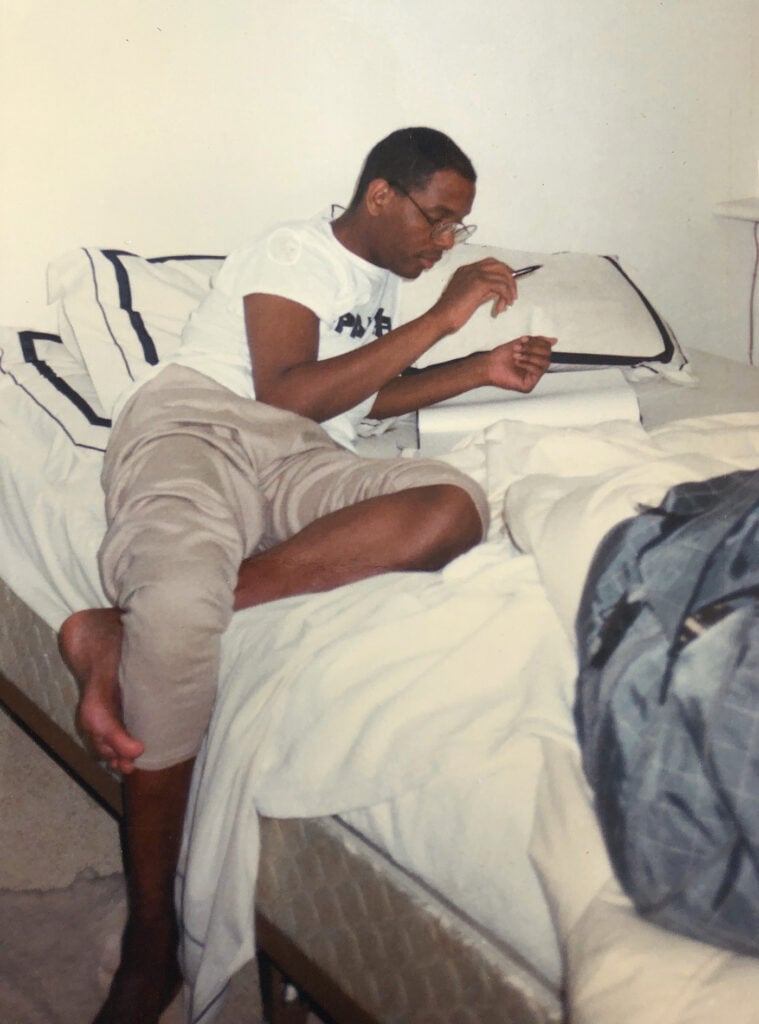
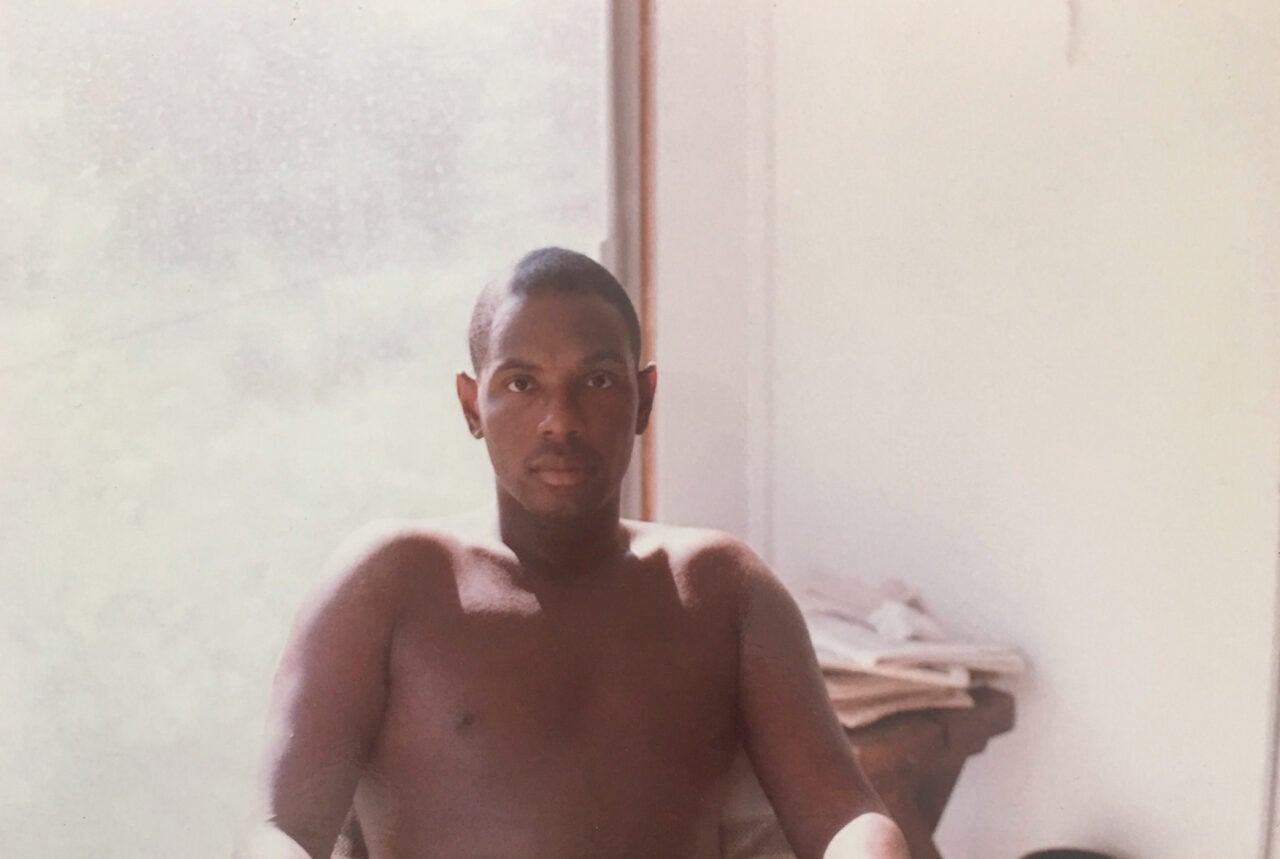
After going through a rather rough patch, Willi took up journaling. He would sit alone on his bed, or on one of his many Aalto chairs, and jot down his thoughts and how certain situations had left a mark on him. He layered experience and references endlessly and seamlessly—through words, fabrics, images and objects. His home was a collage, as were his collections, his journal, his brand. Peck remembers catching him in these moments. She would usually give him space so that he could continue those conversations with himself, but they could also be quiet together, alone in their own worlds, while in each other’s company. Willi used his home not just as a laboratory for new ideas, but as a haven. ‘His home was an oasis for him’, says Peck. ‘He loved beauty in any shape or form. He loved to make it or be in it’. The apartment on Lispenard Street was constantly in flux. Smith moved pieces around and subtracted and added constantly. It is clear through the photographs Peck took of the space that stagnation was not a natural inclination for Smith in any context. His space tells us a great deal about his character. A complex man, with profound intuition—and, more impressively, the strength to follow that intuition—he brought together disparate aspects of life during the ‘70s and ‘80s: conceptual art (still an exclusive field), personal and collective American histories, movement and dance, film and music, uptown and downtown. His frame of reference covered immense ground. For the first time in fashion history, here was someone bringing together the brilliance that is African-American glamour—church aunties on a Sunday, Black gentlemen accessorised to the nines, young, lithe athletes moving with precision—and aspects of the most inaccessible parts of American and European culture. He made his genius appear casual. He tapped into beauty from every corner of the world, in the process creating deceptively simple garments, spaces, and experiences that appealed to disparate communities.
Smith died abruptly on April 17, 1987, after only a few months of illness. The circumstances surrounding his death were murky at the time, but it is commonly accepted that he succumbed to complications arising from AIDS, compounded with a bug he may or may not have picked up while travelling in India. Many of his friends still alive today can barely speak of his passing—the pain is still fresh and the shock was crippling. Mallett did her best to keep WilliWear alive after his passing, but it shuttered in 1990, unable to retain the same pull without Smith’s singular mind at the drawing board.
As I write this, I’m wearing a linen WilliWear set—a batwing pullover linen top with side slits and the signature high-waisted ‘Willi’ pants in the palest pistachio green. These clothes were made for comfort. They are elegant, sturdy, and expertly tailored. It is clear the man who designed them knew how to live with grace and understood how to make ease and joy attainable by all. In a 1984 interview with The Morning Call, Smith is quoted saying ‘[Don’t] be afraid of curiosity … [it] stimulates the imagination’. Curiosity is the only prerequisite for learning, and knowledge is the natural sister of innovation. Smith brought these qualities together in his work and, to great effect, in his home. Without his innovation, the fashion landscape would be entirely different today. We wouldn’t have (or not in the same way) the hugely popular brands of the early 2000s—Rocawear, Baby Phat, Sean John—or the highly conceptual contemporary clothing designers that have embraced untraditional marketing and presentation formats. Hood by Air, Collina Strada, and Eckhaus Latta are just a few examples of designers who have consciously or subconsciously taken a leaf out of Smith’s book. He was the first to present his clothing as art. An early project of his for MoMA, ‘Art as Damaged Goods’, was a commentary on waste and imperfection in the fashion industry. ‘Smith created a conceptual installation with clothes plastered on the floor in a grid, with evidence markers around each piece’, states Cameron Cunningham. Smith introduced an expansiveness to the fashion industry that had not previously been there, opening up our understanding of what clothing could do, mean, and achieve. His home, as the base from which he dreamt and operated, is of immense importance as a focus of study. These images provide valuable glimpses into the personal life of a layered, elegant man who used his profound understanding of the world around him to create one of the most historically impactful fashion brands in recent memory.